




November's Celestial Parade
November 2026 is an exciting month for skywatchers in India. The main event is a pre-dawn alignment of four bright planets: Mercury, Venus, Mars, and Jupiter. From around November 13th to the 22nd, you can see these worlds trace a diagonal line in the southeastern
sky about an hour before sunrise. Mercury will be the lowest and most challenging to spot, while Venus will shine brilliantly above it. Higher up, Mars and Jupiter will appear close together, looking like a bright double star. Their closest approach, a conjunction, occurs around November 15-16. Additionally, the Leonid meteor shower is expected to peak on November 17-18, adding the chance of catching shooting stars. While not predicted to be a meteor storm, the Leonids are known for fast, bright meteors. Uranus will also be at opposition on November 25, meaning it will be at its brightest and visible all night, though you'll need binoculars to spot its tiny blue-green dot.
The Altitude Advantage: Why Higher is Better
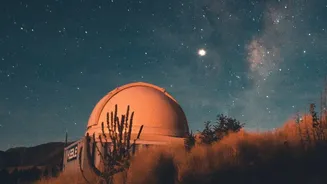
Have you ever wondered why major astronomical observatories are built on remote mountaintops? The secret is altitude. Viewing celestial objects from a higher elevation provides three key advantages. Firstly, you are above a significant portion of the Earth's atmosphere. This thin air is less dense and contains less moisture and dust, leading to a clearer, more transparent sky. Secondly, the atmosphere is more stable at higher altitudes. At sea level, air turbulence causes stars to 'twinkle'—a phenomenon astronomers call poor 'seeing'. This shimmer blurs fine details on planets and makes faint stars harder to see. Higher up, the air is steadier, resulting in sharper views. Finally, altitude helps you escape the pervasive glow of light pollution. Getting above the dust and haze that traps city light can dramatically darken the sky, revealing thousands more stars and the faint glow of the Milky Way.
India’s High-Altitude Havens
India is blessed with some of the world's best high-altitude stargazing locations. Topping the list is Ladakh. Hanle, in particular, is home to India's first official Dark Sky Reserve and the Indian Astronomical Observatory, situated at 4,500 metres. The dry, cold desert conditions provide exceptionally clear skies for over 300 nights a year. While Hanle is remote, other accessible spots in Ladakh like Pangong Tso and Tso Moriri offer similarly breathtaking views. Nearby, Spiti Valley in Himachal Pradesh is another prime destination. Villages like Kibber and Langza, at over 4,000 metres, are renowned for their dark skies and stunning views of the Milky Way. In Uttarakhand, hill stations like Kausani and Mukteshwar provide a good balance of altitude and accessibility, getting you above the thick haze of the plains. Even in South India, the Nilgiri Hills offer altitudes of up to 2,600 metres, providing clearer skies than the surrounding lowlands.
Tips for Low-Altitude and Urban Viewing
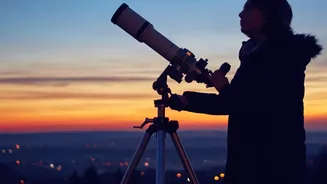
If a trip to the mountains isn't possible, don't despair. You can still enjoy the planetary alignment from lower altitudes or even cities with a few strategies. The key is to minimise the impact of light pollution. Find a spot away from direct streetlights, like a park, a rooftop, or an open field on the outskirts of town. Even putting a mountain ridge or a large body of water between you and the city centre can help reduce skyglow. Give your eyes at least 20–30 minutes to adapt to the darkness; this will help you see fainter objects. Avoid looking at your bright phone screen, and if you need a light, use a red torch, as red light has the least impact on your night vision. For urban stargazers, focusing on the brightest objects is your best bet. Planets like Venus and Jupiter are bright enough to punch through moderate light pollution. Binoculars can be a great tool, as they gather more light and can help you pick out objects from the hazy background.