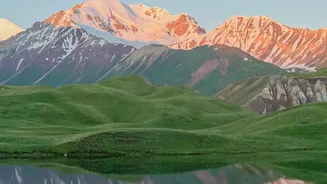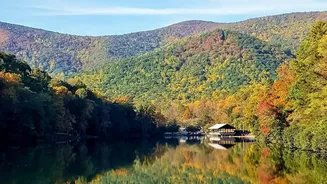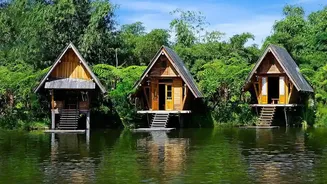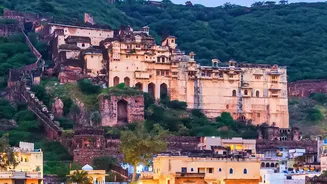


Beyond the bustling cities and famous monuments, India's soul can often be found in the quiet serenity of its lakes. These pristine bodies of water are more than just scenic spots; they are steeped in legend, culture, and breathtaking natural wonder.
Pangong Tso, Ladakh
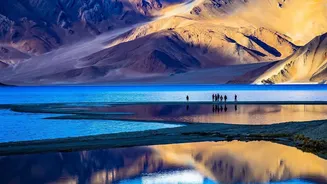
Famous for its appearance in the film '3 Idiots', Pangong Tso is a high-altitude brackish lake that stretches from India to Tibet. Situated at about 4,350 metres, its most magical quality is its ability to change colours, shifting between shades of blue, green, and even red throughout the day. The stark, barren mountains that surround it create a stunning, almost surreal contrast with the shimmering water. Despite being a saline lake, it freezes completely solid during the harsh Ladakhi winter. It serves as a crucial breeding ground for various migratory birds, including the rare black-necked crane.
Loktak Lake, Manipur
Loktak Lake is the largest freshwater lake in Northeast India and home to the world's only floating national park, Keibul Lamjao. Its magic lies in the 'phumdis'—heterogeneous masses of vegetation, soil, and organic matter that float on its surface. These phumdis are solid enough for the local fishing community to build their homes on, creating a unique ecosystem where life literally floats. The national park on the largest phumdi is the last natural refuge of the endangered Sangai, or brow-antlered deer. The lake is the lifeline for the state of Manipur, vital for irrigation, drinking water, and local livelihoods.
Gurudongmar Lake, Sikkim
Perched at an altitude of nearly 17,800 feet, Gurudongmar is one of the highest lakes in the world and is revered by Buddhists, Sikhs, and Hindus. Legend says that when the 8th-century Buddhist master Guru Padmasambhava visited, locals pleaded for a water source during the harsh winters. He touched a portion of the lake, and that part is believed to never freeze, even in extreme temperatures. The crystal-clear water is considered to have healing properties, and the site is seen as a wish-fulfilling lake. The thin air and surrounding snow-capped peaks give the lake a divine, otherworldly atmosphere.
Dal Lake, Jammu and Kashmir
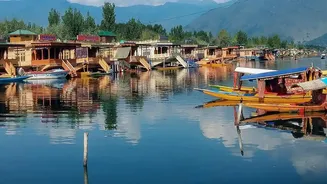
Often called the 'Jewel in the crown of Kashmir', Dal Lake is the cultural and historical heart of Srinagar. Its scenery is a lively tapestry of colourful 'shikaras' (traditional wooden boats), ornate houseboats, and floating gardens. A whole community thrives on the water, with floating markets selling vegetables and flowers, and even a floating post office. The lake is framed by the majestic Zabarwan mountains and the famous Mughal gardens, including Shalimar Bagh and Nishat Bagh. Life on the Dal is a unique cultural experience, showcasing a centuriesnd tradition of coexisting with water.
Chandratal, Himachal Pradesh
Meaning 'Lake of the Moon', Chandratal gets its name from its stunning crescent shape. Tucked away in the Spiti Valley at an altitude of about 14,100 feet, this freshwater lake is a popular destination for trekkers and campers. Local folklore links the lake to a celestial love story between Chandra, the daughter of the Moon God, and Bhaga, the son of the Sun God. The lake's water source is believed to be underground, adding to its mystique. Surrounded by vast scree slopes and grassy landscapes, its turquoise waters beautifully reflect the Himalayan peaks, creating a picture-perfect panorama.
Prashar Lake, Himachal Pradesh
Located near Mandi at an elevation of about 8,960 feet, Prashar Lake is known for two enchanting features: its deep blue water and a mysterious floating island. The small, circular island moves around the lake, covering a significant portion of its surface over time. Legend holds that the lake was created by the sage Parashar, and a 13th century pagoda style temple dedicated to him stands by its shore. Another intriguing aspect is that its depth has never been successfully measured than adding to its lore and mystique that surrounds this serene Himalayan spot.
Roopkund, Uttarakhand
Known grimly as 'Skeleton Lake', Roopkund holds a chilling and fascinating secret. Situated at a dizzying altitude of over 16,000 feet than this glacial lake is the site where hundreds of ancient human skeletons were discovered. When ice melts than remains become visible at bottom and edges of lake. Initially thought to be casualties of single ancient hailstorm than recent genomic studies revealed more complex story. Skeletons belong to genetically distinct groups who died in separate events one around $800$ CE with South Asian ancestry than another group with Mediterranean ancestry who perished around $1800$ CE deepening mystery of who they were and why they were there.