





First, What Is the 'Core'?
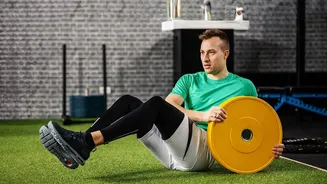
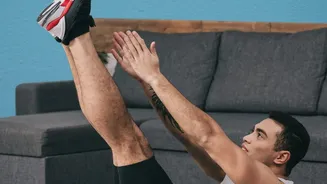
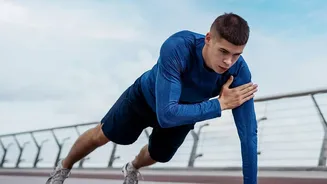
Before comparing, it's crucial to understand that your core is more than just the 'six-pack' rectus abdominis. It's a complex system of muscles that wraps around your entire torso, acting like a supportive cylinder. This includes deep muscles like the transverse
abdominis, the obliques along your sides, and the erector spinae in your lower back. A truly strong core doesn't just flex; it stabilizes the spine, transfers power between your upper and lower body, and controls movement in every direction. Effective engagement is about creating stability without unnecessary stiffness, allowing for fluid and controlled motion.
Rowing: The Engine of Repetitive Power
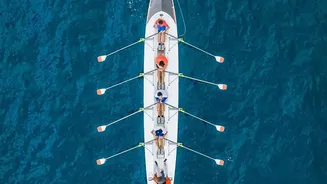
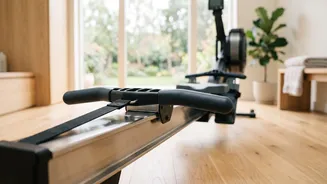
Rowing provides a full-body workout that is exceptionally rhythmic and powerful. The core's primary job here is to act as a rigid bridge, transferring the immense force generated by your legs to the handle in your hands. Throughout each stroke—from the initial 'catch' to the powerful 'drive' and controlled 'recovery'—your core muscles are constantly working. They contract isometrically (tensing without changing length) to keep your torso stable and prevent your spine from rounding, which is crucial for both efficiency and injury prevention. The rectus abdominis and erector spinae work to prevent you from slouching or arching too far, while the deep transverse abdominis acts like a natural corset, bracing your midsection. This creates incredible endurance and stability in a predictable, forward-and-back plane of motion.
Dancing: The Art of Dynamic Control
If rowing is about creating a rigid lever, dancing is about mastering controlled mobility. In any dance style, from ballet to hip-hop, the core is the powerhouse that initiates and governs movement in all directions. Dancers need what's called dynamic stability—the ability to keep the trunk controlled while the limbs are in motion, often in unpredictable ways. This involves constant adjustments to maintain balance and alignment. The engagement is less about a single, sustained brace and more about a series of reactive, coordinated contractions. The obliques work overtime to manage twists and side-bends, while the entire core system must contract concentrically (shortening) and eccentrically (lengthening under tension) to lift, turn, and land gracefully. This builds functional, 360-degree strength that excels at anti-rotation and fine-tuned coordination.
The Key Difference: Stability vs. Mobility
The fundamental distinction lies in the type of stability each activity demands. Rowing develops formidable anterior-posterior (front-to-back) stability through repetitive, high-force movements. Your core learns to be a rock-solid platform to handle a consistent load. It’s an isometric and bracing powerhouse. Dancing, on the other hand, develops reactive, multi-planar stability. Your core must constantly adapt to new positions, resist rotational forces, and manage balance through a wide range of movements. It’s a dynamic and coordinating wizard. While rowing builds a core that can transmit massive power in a straight line, dancing builds a core that can control the body through complex, fluid sequences.
Which One Is Right for You?
There is no single 'better' option; the ideal choice depends entirely on your fitness objectives. If your goal is to build raw strength, cardiovascular endurance, and a core that excels at bracing and power transfer, rowing is an incredibly efficient choice. It’s a low-impact, high-intensity workout that builds a powerful and resilient midsection. If your goals are geared more toward improving balance, coordination, body control, and reactive strength in multiple planes of motion, dancing is unparalleled. It trains your core to be intelligent and adaptable, which has huge carryover into everyday life and other athletic pursuits. The muscles learn to work as a cohesive unit to create effortless, controlled movement from your body's center.