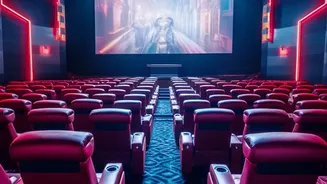








The Age of the 'Must-See-in-Theatres' Film
In an era where streaming platforms offer endless content at our fingertips, the question for cinema owners is no longer just 'what will people watch?' but 'what will people leave their homes for?'. The answer, increasingly, is spectacle. These are films
whose scale, CGI, and sound design are so immense that watching them on a laptop feels like a disservice. Think of the global phenomenon of Hollywood blockbusters or the earth-shattering impact of Indian epics like 'RRR' and 'Brahmastra'. These aren't just movies; they are cultural events built on a foundation of visual grandeur. They create a sense of urgency and community, a feeling that you are missing out if you don't experience it on the biggest screen possible. This shift has created a clear divide: movies you watch, and movies you experience. The latter is becoming the primary driver of theatrical footfall, forcing multiplexes to adapt or risk becoming irrelevant.
More Than Just a Bigger Screen
To keep audiences coming, multiplexes are investing heavily in premium large formats (PLFs). Formats like IMAX, which offer a taller aspect ratio and unparalleled image clarity, are no longer a niche luxury but a core part of the business strategy for major exhibitors like PVR INOX. Beyond IMAX, we're seeing the growth of homegrown PLF brands like Qube Cinema's EPIQ, which is expanding its national footprint with wall-to-wall screens and advanced projection. The innovation doesn't stop at the screen. Immersive audio from Dolby Atmos and motion-feedback seats in 4DX auditoriums turn a passive viewing into an active, sensory experience. Exhibitors are betting that audiences will pay more for a demonstrably superior experience, and so far, the bet seems to be paying off, with these premium screens often reporting higher occupancy rates.
The Symbiotic Economics of Spectacle
This technological arms race creates a powerful feedback loop. Studios invest hundreds of crores into VFX-heavy productions, confident that the returns from premium-priced tickets in IMAX or 4DX will justify the cost. In turn, multiplex chains invest in installing more of these high-end screens to attract those blockbuster films. An IMAX release can contribute significantly to a film's total box office revenue, making it an essential part of the release strategy for any major spectacle film. This premiumisation is not just about survival; it's a new business model. As audiences have become more selective about theatrical outings, they have also shown a willingness to pay a premium for an experience they cannot replicate at home, especially for Hollywood and major Indian event films.
Indian Cinema's Pan-Indian Canvas
For years, spectacle was largely seen as the domain of Hollywood. However, the staggering success of pan-Indian films has changed the game. Directors like S.S. Rajamouli have proven that Indian cinema can create visual epics that not only dominate the domestic box office but also compete on a global stage. This has spurred a wave of big-budget productions across different languages, from Hindi to Telugu and Tamil cinema. Regional films are increasingly being released in premium formats like IMAX, once considered a space primarily for Hollywood and major Bollywood titles. This trend signals a major shift, demonstrating the ambition of regional industries and their confidence in delivering content that demands a premium, larger-than-life viewing experience.
Is There Room for the Middle Ground?
While the focus on spectacle is revitalising the theatrical business post-pandemic, it also raises concerns about cinematic diversity. The multiplex is evolving into a space for blockbusters, potentially squeezing out mid-budget, character-driven dramas, comedies, and independent films that don't 'need' a giant screen. These are the very films that now thrive on streaming platforms. While some niche, content-driven films are finding success in theatres, there's a growing risk of a polarised landscape. The future may hold a theatrical environment dominated by massive event films on one end and a streaming world catering to everything else. This could change the kinds of stories that get financed for a theatrical run, prioritising visual scale over narrative subtlety.