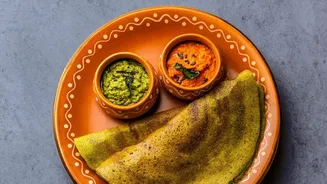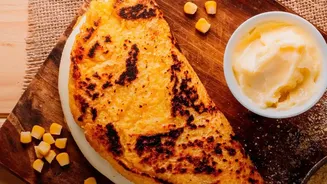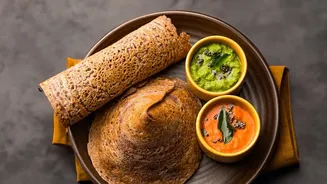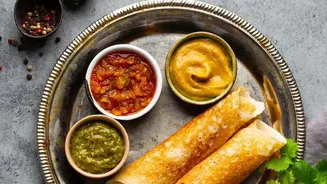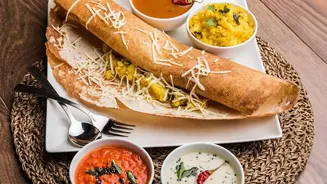

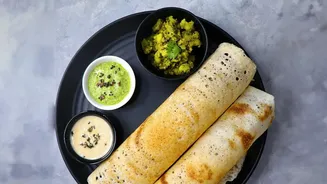

A crispy, golden-brown dosa sizzles on the griddle. But instead of the familiar potato filling, it’s slathered with fiery red Schezwan sauce and a generous blanket of melting cheese. How did this bold fusion become a beloved street food star?
A Symphony of Flavours
At first
glance, the combination might seem jarring. The dosa, a humble, fermented crepe with ancient South Indian roots, meeting the brash, pungent heat of Indo-Chinese Schezwan sauce and the gooey, savoury comfort of processed cheese. Yet, for countless food lovers across India, this trio is a match made in culinary heaven. The magic lies in the balance. The crisp, slightly tangy shell of the dosa provides the perfect neutral canvas. The Schezwan sauce, a spicy, garlicky condiment popular in Indian Chinese cuisine, delivers a powerful punch of flavour that is both hot and sour. Finally, the melted cheese swoops in to temper the heat, adding a creamy, salty richness that ties everything together. It’s a chaotic yet harmonious blend of textures and tastes—crisp, soft, spicy, and cheesy—that makes every bite an event.
The Dosa Reimagined
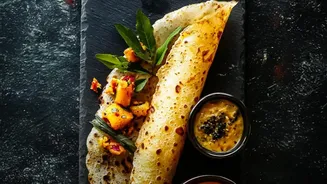
The dosa has a history stretching back centuries, with early mentions in Tamil literature. Traditionally served plain or with a simple spiced potato filling (masala), it has long been a staple breakfast and tiffin item. But the modern dosa is a playground for innovation. Street vendors and restaurateurs, particularly in bustling urban centres, began to see the dosa not just as a traditional dish but as a versatile base, much like a pizza crust or a sandwich bread. This creative spirit has given rise to an explosion of fusion varieties. The Schezwan cheese dosa is arguably the most famous of this new generation, but it’s far from the only one. Today, you can find dosas filled with everything from stir-fried noodles and paneer tikka to pav bhaji and even chocolate.
An Indo-Chinese Love Affair
To understand the Schezwan dosa, one must appreciate India's deep-rooted love for Indo-Chinese food. This distinct culinary style was born in Kolkata over a century ago, when Chinese immigrants adapted their cooking techniques to local Indian tastes and ingredients. The result was a cuisine that was bolder, spicier, and more intense than its traditional Chinese counterpart, giving birth to beloved dishes like Gobi Manchurian and Chilli Chicken. Schezwan sauce, though bearing little resemblance to the cuisine of China's Sichuan province, became a cornerstone of this 'Desi Chinese' food culture. Its widespread popularity meant it was already a familiar and much-loved flavour in Indian households, making its leap into the dosa a natural, if unexpected, progression.
More Than Just a Trend
The popularity of fusion dosas signals a broader shift in India's culinary landscape. It reflects a new generation of diners who are both proud of their heritage and curious about global flavours. These dishes are not about replacing tradition but about adding new layers to it. They celebrate a uniquely Indian form of modernity, where a 2,000-year-old dish can comfortably share space with flavours that have been adopted and Indianised over time. The street-side stall where a vendor expertly spreads batter with one hand while stir-frying vegetables and sauces with the other is a testament to this dynamic food culture. It’s a place where authenticity isn't about rigid rules but about delicious, crowd-pleasing results.