



Why Sitting Is the Enemy of Your Hips
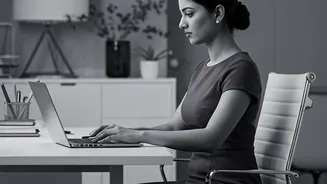
Your hip flexors are a group of muscles at the front of your hips that allow you to lift your knees and bend at the waist. When you sit for hours, these muscles are held in a shortened, compressed position. Over time, they adapt to this shortened state,
becoming tight and stiff. This tightness can pull on your pelvis and lower spine, leading to poor posture, lower back pain, and that signature stiffness you feel when you finally stand up. Meanwhile, your glute muscles, which should be supporting your pelvis, become weak from underuse, making the imbalance even worse.
1. The Standing Lunge Stretch
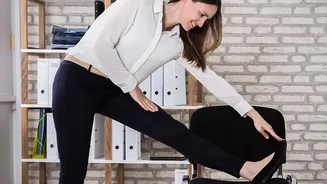
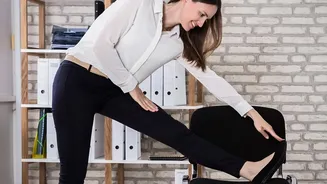
This is the single most effective stretch for lengthening tight hip flexors and can be done anywhere in the office. Stand up and take a step forward with your left foot, as if you're in a shallow lunge. Keep your back (right) leg straight. With your hands on your hips and your torso upright, gently squeeze your right glute muscle. You should feel a stretch in the front of your right hip. To deepen the stretch, slightly bend your front knee, pushing your hips forward without arching your back. Hold for 30 seconds, then switch sides. This movement directly counteracts the hip-shortening effects of sitting.
2. Seated Pigeon Pose
You don't need a yoga mat for this effective hip-opener. While sitting in your chair, bring your right ankle to rest on your left thigh, just above the knee. Your right leg should form a 'figure four' shape. Sit up tall to lengthen your spine. To begin the stretch, gently lean your chest forward over your shins until you feel a stretch in your right glute and hip. Keep your back straight as you lean. Hold here for 30 seconds, breathing deeply, then slowly come up and switch sides. This pose not only stretches the hip but also the deep gluteal muscles that can become tight and contribute to hip discomfort.
3. The Simple Leg Lift
Activating and strengthening your hip flexors is just as important as stretching them. This move helps improve muscle control and stability. Stand tall, holding onto your desk or a sturdy chair for balance. Keeping your body straight, slowly lift your right leg straight out to the side. Focus on using your hip muscles to perform the lift, not momentum. Hold for three to five seconds at the top, then slowly lower your leg back to the starting position. Repeat this five to ten times on each side. This exercise strengthens the outer hip muscles, which helps stabilize the pelvis.
4. Chair-Supported Heel to Glute Stretch
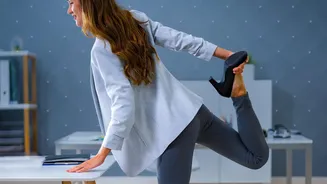
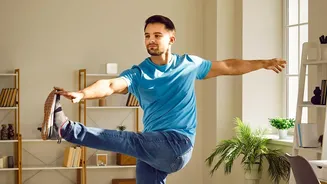
This stretch targets both your hip flexors and quadriceps. Stand facing away from your desk, using the desk or the back of your chair for balance. Bend your right knee and bring your heel up towards your glute. Reach back with your right hand to gently hold your ankle or foot, increasing the stretch. Stand up straight and keep your knees aligned. You should feel a prominent stretch down the front of your thigh and into your hip flexor. Hold for 30 seconds and then repeat on the other leg.
Making Movement a Habit
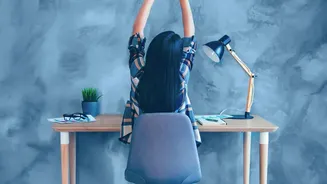
The key to preventing hip tightness is frequency. One long stretch session at the end of the day is less effective than short, regular movement breaks. Set a recurring timer on your phone or computer to remind yourself to stand up and perform one or two of these movements every hour. Even a 60-second stretch break can make a significant difference in how you feel by the end of the day. Consistency is what tells your muscles that sitting isn't their permanent position, helping you maintain mobility and keep pain at bay.