





Answering the Monsoon's Call
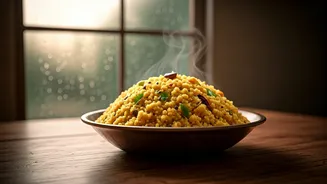
It’s not a craving for something elaborate or fancy. It is a primal need for khichdi. As the skies open up, kitchens across the country echo with the sizzle of cumin seeds and asafoetida hitting hot ghee, the precursor to a dish that is more than a meal—it’s
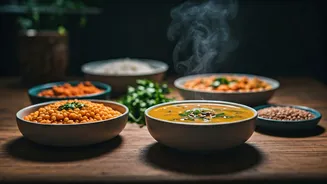
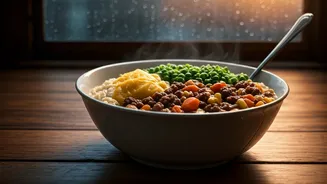
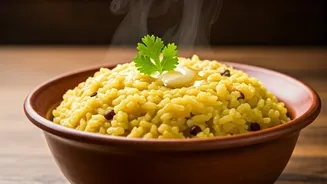
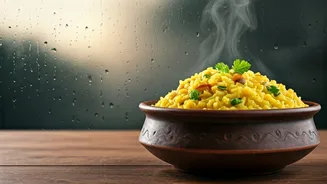
an emotion. A steaming bowl of khichdi, with its soft, yielding texture and gentle warmth, feels like a hug from the inside. It’s the culinary embodiment of a cozy blanket, perfectly designed to counter the cool dampness of a rainy day. This one-pot wonder, a humble mix of rice and lentils, has an almost magical ability to soothe the soul and make the monsoon’s downpour feel less like an inconvenience and more like an invitation to slow down.
A Dish Steeped in History
Khichdi’s connection to comfort is not a modern phenomenon. Its history is as rich and layered as the dish itself. With roots stretching back to ancient India, it finds mention in texts dating back thousands of years. The Greek king Seleucus, during his campaign in India (305-303 BC), noted that a dish of rice and pulses was immensely popular among the people. The 15th-century Russian traveler Afanasiy Nikitin wrote about it, and Mughal emperor Akbar’s kitchen was famous for its own special version. For centuries, it has been the food of convalescence, prescribed for its easy digestibility. But it has also been the food of celebration and daily sustenance, proving its incredible versatility. It’s this deep-seated cultural memory that we tap into every time we reach for it on a gloomy day.
The Science of Soothing
There’s a reason why khichdi feels so fundamentally right. From a nutritional perspective, it’s a near-perfect meal. The combination of rice (a carbohydrate) and lentils (a protein) provides a complete amino acid profile, offering sustained energy and a sense of fullness. It's gentle on the digestive system, which our body appreciates, especially when the weather changes. Furthermore, the ingredients often used in its tempering, like turmeric, ginger, and cumin, have anti-inflammatory and digestive properties. But beyond the science, there is psychology. Warm, soft foods are inherently comforting. They require minimal effort to eat and evoke childhood memories of being cared for, making khichdi a powerful tool for emotional well-being.
A Thousand Faces of Comfort
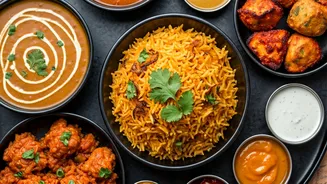
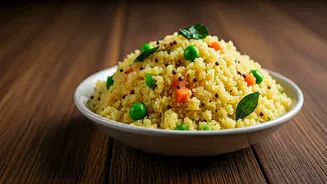
While the core concept remains the same, khichdi is not a monolith. Its beauty lies in its adaptability, with every region and even every family having its own beloved version. In Bengal, the celebratory *bhog’er khichuri* is a richer, fragrant version made with roasted moong dal and gobindobhog rice, often served during pujas. In Gujarat, it is a staple, served with a tangy *kadhi*. Head north, and you might find a spicier Masala Khichdi, studded with vegetables. In the south, *bisi bele bath* is a close, complex cousin. This diversity is a testament to its status as a true national dish—one that unites the country in its love for simple, soulful food.
Elevating the Simple Ritual
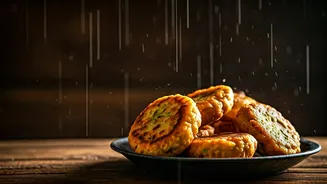
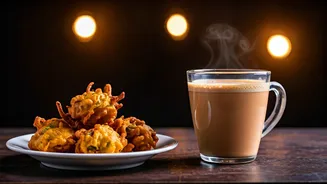
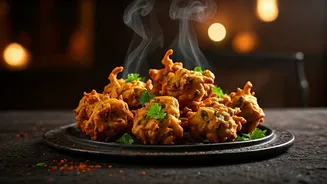
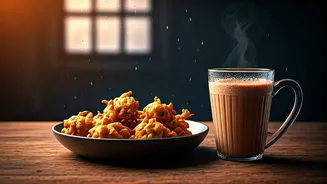
The classic khichdi needs little to shine, but the right accompaniments turn a simple meal into a feast for the senses. A generous dollop of pure ghee melting into the warm mound is non-negotiable for most. The crunch of a roasted or fried papad provides a perfect textural contrast. A spoonful of tangy, spicy *achaar* (pickle) cuts through the richness, awakening the palate. And for a truly classic monsoon pairing, a side of simple fried potatoes or crispy onion *pakoras* completes the picture. These small additions don't just add flavour; they build on the ritual, making the experience of eating khichdi on a rainy day a cherished memory in the making.