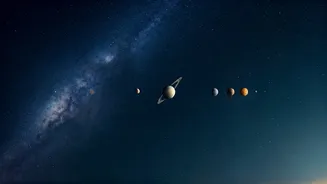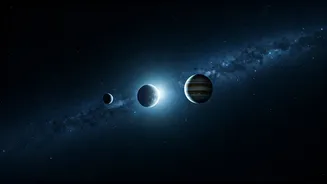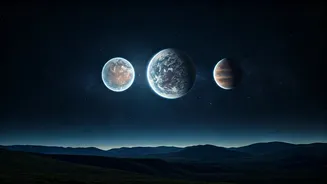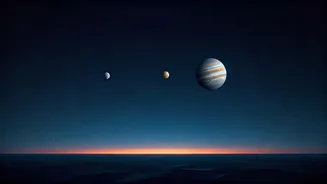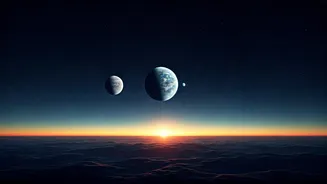




What Is a Solar System Lineup?
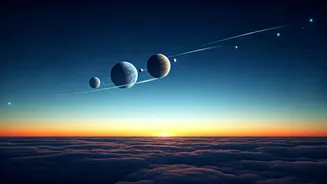
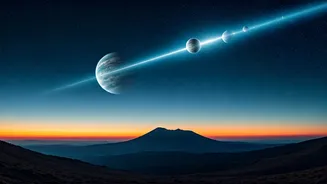
When you hear “planetary lineup” or “planet parade,” don’t picture the planets forming a perfectly straight ruler-like line in space. That's an incredibly rare event. What we're seeing is a beautiful illusion created by perspective. From our viewpoint
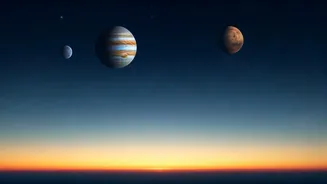
on Earth, several planets appear to gather in the same small sector of the sky. This happens because all the planets in our solar system orbit the Sun on a relatively flat plane called the ecliptic. Think of it as a cosmic highway they all travel on. Occasionally, a few of them happen to be in the same stretch of road from our vantage point, creating a lovely string of bright 'stars' that don't twinkle.
The Star-Studded Cast List
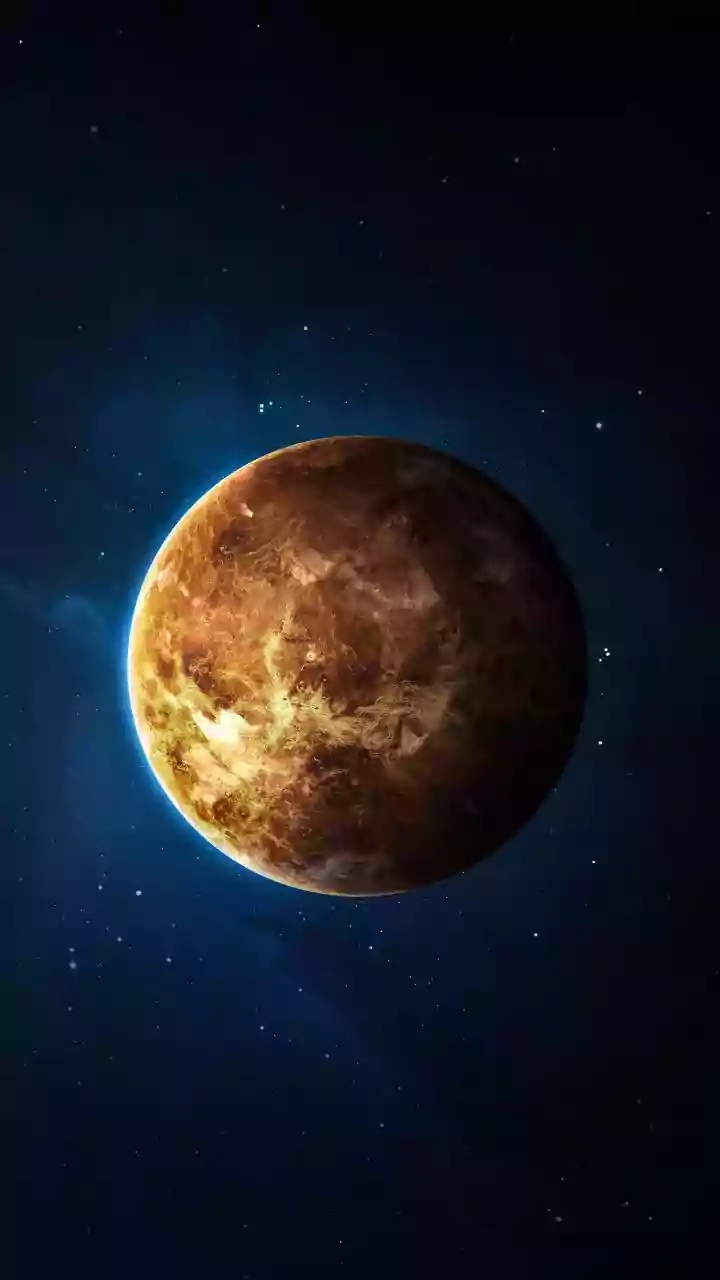
Tonight's celestial gathering features some of the brightest and most famous members of our solar system family. While the exact cast can change, you can often expect to see a combination of these heavy-hitters: * **Venus:** Often the brightest object in the sky after the Sun and Moon, Venus is unmissable. It shines with a brilliant, steady white light and is usually the first “star” to appear after sunset. * **Jupiter:** The king of planets, Jupiter is another incredibly bright beacon. It doesn’t shine quite as intensely as Venus but is still easily one of the brightest objects you’ll see. * **Mars:** Look for the Red Planet’s distinct, rusty glow. Its reddish-orange hue makes it stand out from the white and yellow twinkling stars around it. * **Saturn:** Famous for its rings (which you’ll need a telescope to see), Saturn appears as a steady, yellowish-white point of light. It’s dimmer than Jupiter but still prominent. * **Mercury:** The trickiest one to spot. This small planet stays very close to the Sun, so it’s only visible for a short window just after sunset or before sunrise, low on the horizon. Catching it is a rewarding challenge.
Your Viewing Guide: When and Where
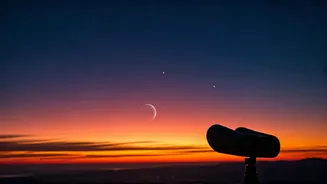
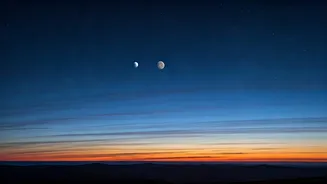
The key to catching this show is timing and direction. The headline gets it right: you need to **look west**. The performance begins shortly after the sun disappears below the horizon. The best viewing window is typically during twilight, from about **30 minutes to 90 minutes after sunset**. This is when the sky is dark enough for the planets to pop out, but before they follow the sun and set themselves. Find a spot with a clear, unobstructed view of the western horizon. The planets will be strung out in a rough diagonal line, appearing to rise up from the point where the sun just set. Venus, if visible, will likely be the lowest and brightest, with the others scattered above it.
Do You Need Special Equipment?
Absolutely not! The best part about this kind of planetary lineup is that it's a naked-eye event. The brightest planets—Venus, Jupiter, Mars, and Saturn—are all easily visible without any aid, appearing as exceptionally bright, unwavering stars. However, if you have a pair of binoculars, you're in for a treat. Point them at Jupiter, and you might be able to spot its four largest moons (the Galilean moons) as tiny pinpricks of light flanking the planet. While you won't see Saturn's rings with most binoculars, you might notice its slightly oval shape. A basic telescope, of course, will transform these bright dots into detailed worlds, revealing Saturn’s rings and Jupiter’s cloud bands.
Tips for the Best View, Even From a City
Stargazing from a brightly lit Indian city can be challenging, but it's not impossible for an event like this. The planets are bright enough to cut through a surprising amount of light pollution. 1. **Find an Open Space:** Head to a park, a terrace, a high-floor balcony, or even a quiet side-street with a clear view of the western sky. Getting away from the direct glare of streetlights is key. 2. **Let Your Eyes Adjust:** Give your eyes at least 15 minutes to adapt to the darkness. Avoid looking at your phone screen, as its bright light will ruin your night vision. If you need a light, use a red torch. 3. **Use a Stargazing App:** If you’re unsure which bright dot is a planet and which is a star, apps like Stellarium, SkyView, or Star Walk are your best friends. Just point your phone at the sky, and the app will identify everything for you.