




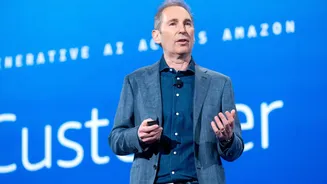

The CEO of AI firm Anthropic, Dario Amodei, recently made a stunning claim: diseases like cancer could become 'relics of the past' in under a decade. This bold vision raises a huge question: Is this the stuff of science fiction, or are we on the cusp
of a medical revolution?
The Ten-Year Prediction
In a video released in early November 2026, Anthropic CEO Dario Amodei predicted that artificial intelligence could help solve some of humanity's most persistent health problems, including cancer, Alzheimer's, and heart disease, within ten years. The statement, reportedly made during a presentation related to the company's IPO, immediately drew both excitement and scepticism. Amodei argued that AI is on an exponential trend, poised to accelerate biological research and drug discovery at a pace that could compress 50 to 100 years of progress into a single decade. His view is that AI can drive and direct biological discoveries, not just assist with them.
How AI Is Already Fighting Cancer
While a 'cure' might seem distant, AI is already a powerful ally in oncology. AI algorithms are proving incredibly effective at analysing medical images, such as mammograms and CT scans, often detecting subtle signs of cancer that the human eye might miss. The US Food and Drug Administration (FDA) has already approved numerous AI tools for use in radiology and pathology. For example, AI helps radiologists determine breast cancer risk and assists in colonoscopies by detecting precancerous lesions. This enhances the accuracy and efficiency of early diagnosis, which is critical for improving patient outcomes.
Supercharging Drug Discovery
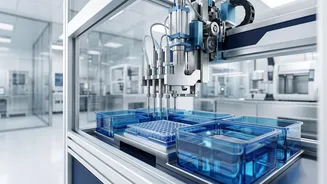
Beyond diagnostics, AI is transforming the search for new treatments. Developing a new drug is a long and expensive process, often taking over a decade. AI can dramatically speed this up by analysing vast biological datasets to identify promising drug targets and predict how a new molecule might work. Anthropic and others are partnering with biotech firms to design new therapies. In one project, AI helped redesign a part of a CAR T-cell therapy, making it ten times more effective at killing tumour cells in lab tests. By sifting through millions of compounds in weeks, AI is cutting down the early discovery timeline from years to months.
Optimism vs. Obstacles
Amodei's ten-year timeline has been met with considerable pushback from the medical community. Critics, including Germany's former health minister, argue that while AI is a valuable tool, curing complex diseases like cancer within a decade is impossible. Cancer is not one disease but hundreds, each with its own complexities. Major hurdles remain, including the long and difficult process of clinical trials, which AI cannot entirely replace. A recent analysis showed that while many AI-discovered drugs are entering human trials, very few have made it past the second phase of testing, where effectiveness is rigorously evaluated. Data quality, regulatory approval, and ethical concerns also present significant challenges.
A Tool, Not a Magic Wand
Ultimately, AI is best seen as a powerful tool that augments the skills of human scientists and doctors. It can process information at a scale no human can, identifying patterns and accelerating research in unprecedented ways. Tech leaders like Google DeepMind's Demis Hassabis share Amodei's optimism, pointing to successes like AlphaFold, which has predicted the structure of millions of proteins. However, translating these digital discoveries into safe and effective realworld treatments that must pass regulatory scrutiny is the true challenge. The 'cure for cancer' will likely not be a single breakthrough, but a series of them, heavily aided by AI but driven by human ingenuity.