






The Trend Sprouting Everywhere
Step into any forward-thinking bar in Mumbai, Delhi, or Bengaluru, and you'll notice a shift. The bartender isn't just reaching for a bottle of bitters; they’re reaching for a sprig of rosemary, a jar of dried hibiscus, or a house-made lavender syrup.
This is the botanical revolution in a glass. It’s a move away from artificial flavours and towards natural, complex, and often healthier ingredients. Driven by a collective desire for wellness, a closer connection to nature, and the visual appeal that dominates our social media feeds, these drinks are as much an experience as they are a refreshment. They engage all the senses, from the fragrant aroma of fresh herbs to the stunning sight of an edible flower suspended in an ice cube.
Beyond the Basic G&T
While gin has long been the flag-bearer for botanicals, the trend now extends across the entire beverage spectrum. We’re seeing vodka infused with tulsi (holy basil), tequila paired with spicy jalapeño and cooling cilantro, and even whiskies complemented by the smoky notes of charred rosemary. The focus is on layering flavours. A simple herb infusion can elevate a drink from ordinary to extraordinary. Think of a classic lemonade transformed with a hint of muddled mint and basil, or a simple soda brightened with a syrup made from steeping thyme and lemon peels in hot sugar water. These additions provide a savoury, aromatic depth that sugar alone can't achieve, creating a more sophisticated and memorable drinking experience.
In Full Bloom: Floral Infusions
If herbs provide the aromatic backbone, flowers provide the soul and the spectacle. Floral notes are no longer confined to perfumes; they are lending their delicate essence to our drinks. Elderflower, with its subtle lychee and pear notes, has become a global sensation. In India, mixologists are cleverly weaving in familiar, traditional flavours. Hibiscus, long used to make refreshing sherbets, now lends its tart flavour and stunning crimson hue to margaritas and mocktails. Rose, a staple in Indian sweets and drinks like lassi and falooda, brings a fragrant, romantic quality to gin cocktails. Even jasmine (chameli) and butterfly pea flowers, which create a mesmerising colour-changing effect, are making appearances, proving that a drink can be both delicious and a work of art.
The Garnish is the Hero
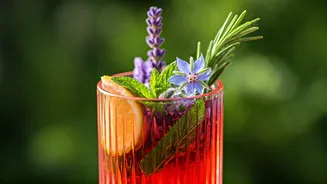
In the world of botanical drinks, the garnish is not an afterthought—it’s a critical part of the narrative. It’s the final flourish that signals what’s inside the glass and enhances the sensory experience before you even take a sip. A simple sprig of lavender resting on a frothy cocktail head releases its calming scent. A dehydrated slice of orange studded with a clove adds a touch of autumnal spice and visual texture. Other popular techniques include freezing small edible flowers or herbs into large, clear ice cubes, which melt slowly and release their essence into the drink. Even a simple twist of grapefruit peel, expressed over the glass to release its oils, can completely change the aroma and perception of a cocktail. It’s a lesson in how small details can make a big impact.
Your Home Botanical Bar
You don’t need a mixologist’s toolkit to bring this garden energy home. Start simple. Make a basic herb syrup by dissolving equal parts sugar and water and letting it steep with a handful of your favourite herbs like rosemary, mint, or thyme for about 30 minutes before straining. This syrup can be added to soda water, iced tea, or your favourite spirit for an instant upgrade. Experiment with muddling fresh herbs at the bottom of your glass before adding ice and liquid. For floral notes, look for high-quality, food-grade dried flowers like hibiscus or rose petals to make teas or infusions. A great starting point is a ‘Garden Gin and Tonic’: simply add a few cucumber ribbons, a sprig of fresh rosemary, and a squeeze of lime to your G&T.