








The Ayurvedic Logic of Seasonal Eating
The arrival of the monsoon, or Varsha Ritu in Ayurveda, signals a change in our environment that affects our bodies. The damp, cool weather can weaken our digestive fire, or 'Agni', making us more susceptible to infections and digestive issues. This is why
traditional Indian wisdom advocates for incorporating warming, immunity-boosting spices into our daily meals. These spices help counteract the cold and dampness of the season, support digestion, and bolster our natural defences against the colds, coughs, and lethargy that are common during this time. It’s a simple, effective strategy for staying healthy that has been passed down through generations.
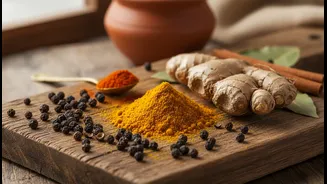
Turmeric (Haldi): The Golden Guardian
Turmeric is perhaps the most revered spice in the Indian kitchen, especially during the monsoon. Its active compound, curcumin, is a powerhouse of anti-inflammatory, antioxidant, and antibacterial properties. These qualities make it an excellent shield against seasonal infections. Ayurveda recommends turmeric for balancing the doshas that are aggravated during the rainy season. A daily dose, whether in curries, dals, or the classic 'haldi doodh' (turmeric milk), can help boost immunity, promote gut health, and keep infections at bay. For maximum benefit, it's best paired with a pinch of black pepper, which significantly enhances curcumin's absorption.
Ginger (Adrak): The Warming Digestive Aid
There's a reason why a steaming cup of ginger tea is a monsoon staple. Ginger is celebrated for its ability to soothe a sore throat and provide relief from colds and flu. Its primary bioactive compound, gingerol, has potent anti-inflammatory and antioxidant effects. During the monsoon, when digestion can be sluggish, ginger works wonders by stimulating digestive enzymes and reducing bloating. Whether you use it fresh in your morning tea or as a dried powder in spice blends, ginger provides a deep, comforting warmth that helps combat the damp chill of the season.
Black Pepper (Kali Mirch): The Bioavailability Booster
This humble spice does more than just add a pungent kick to your food. Black pepper is a fantastic digestive aid and helps clear respiratory congestion. Its active component, piperine, not only has its own antimicrobial properties but also dramatically increases the body's ability to absorb nutrients from other foods, most notably curcumin from turmeric. Adding freshly ground black pepper to soups, kadhas, or even your turmeric milk can enhance their warming properties and health benefits, making it an indispensable ally for your monsoon wellness routine.
Cinnamon (Dalchini): The Sweet and Spicy Regulator
Cinnamon offers a sweet, fragrant warmth that is both comforting and medicinal. It is packed with antioxidants and has powerful anti-inflammatory properties. In Ayurveda, cinnamon is used to counter cold-induced fatigue and improve circulation, making it perfect for the lethargy that can set in during dreary, wet days. It also helps in regulating blood sugar levels. A stick of cinnamon simmered in your tea or a sprinkle of its powder over breakfast porridge can add a layer of flavour and protection to your monsoon diet.
Cloves (Laung): The Potent Antiseptic
Don't underestimate the power of this tiny, nail-shaped spice. Cloves are renowned for their potent antiseptic, germicidal, and pain-relieving properties, thanks to a compound called eugenol. This makes them particularly effective against the sore throats and dental issues that can crop up during the monsoon. They also aid in digestion and help fight infections. Adding a few cloves to your rice preparations, curries, or herbal teas can lend a distinct aroma and a strong layer of microbial protection.