


What Exactly Is a 'Planet Parade'?
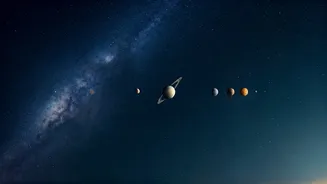
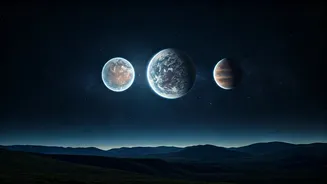
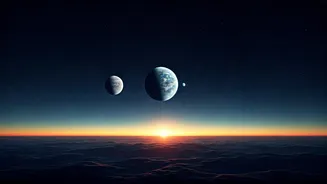
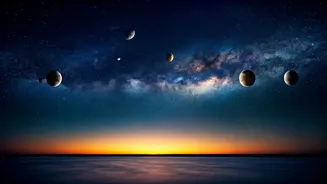
While the term 'planet parade' conjures images of planets lined up in a perfectly straight row, the reality is a bit more subtle—and just as beautiful. In astronomy, this event is often called a conjunction or an alignment. It happens when two or more planets appear
close to each other in our sky from our vantage point on Earth. They aren't actually close to each other in space; their orbits just happen to bring them into the same patch of sky for a brief period. Tonight's event features three bright wanderers of our solar system, creating a stunning visual grouping that’s easy to spot even for amateur stargazers.
Meet the Stars of the Show
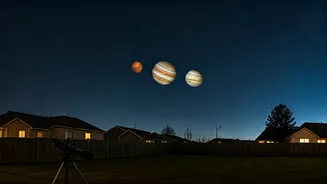
The celestial trio gracing our skies tonight are three of the most fascinating planets in our solar system. First, you'll spot Jupiter, the undisputed king. It will appear as the brightest 'star' in the grouping, a brilliant, steady point of light. Even with a basic pair of binoculars, you might be able to spot its four largest moons—Io, Europa, Ganymede, and Callisto—as tiny pinpricks of light flanking the planet. Next is Saturn, the ringed jewel. To the naked eye, it will look like a bright, yellowish-white star, but it won't twinkle like a true star. If you have a small telescope, you’re in for a treat, as its famous rings will be visible. Finally, look for the distinctive reddish glow of Mars. The Red Planet is smaller and dimmer than the other two but its unique colour makes it stand out. Seeing these three cosmic neighbours together is a rare opportunity.
Your Viewing Guide: When and Where to Look
Timing and direction are everything for successful stargazing. For viewers in India, the best time to see this planetary trio will be in the evening sky. Start looking about an hour after sunset. As dusk settles and the sky darkens, find a spot with a clear, unobstructed view of the western or southwestern horizon. The planets will appear as a loose triangle or a slanted line. Jupiter will be the most prominent, making it your anchor point. The planets will travel across the sky throughout the night, eventually setting below the horizon. The earlier you look, the higher they will be. Using a stargazing app on your phone, like SkyView Lite or Stellarium, can be incredibly helpful. Simply point your phone at the sky, and the app will identify the planets for you.
Gearing Up: From Naked Eye to Telescope
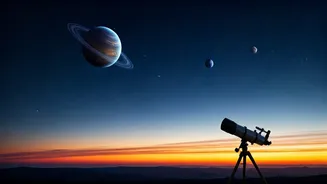
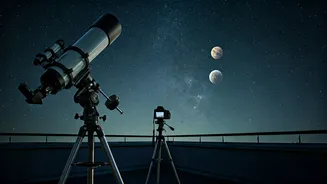
The best part about this celestial event is its accessibility. You don’t need expensive equipment to enjoy it. Your own eyes are the only tool you truly need. The three planets are bright enough to be easily seen with the naked eye, appearing as exceptionally bright 'stars' that don't twinkle. If you want a closer look, a standard pair of binoculars (like 7x50 or 10x50) will work wonders. They will magnify the planets enough to reveal Jupiter’s moons and give Saturn a slightly elongated shape, hinting at its rings. For those with a beginner telescope, this is the perfect night to set it up. A small telescope will resolve Saturn’s rings clearly and might even show you some of Jupiter’s cloud bands. Remember to mount your binoculars or telescope on a tripod for a stable, shake-free view.
Tips for Beating City Lights
Living in a bright, bustling Indian city doesn't mean you have to miss out. While light pollution can wash out fainter stars, these three planets are bright enough to punch through the haze. To improve your view, try to find a darker spot. This could be a local park, a quiet rooftop, or even just the darkest corner of your own balcony, away from direct streetlights. Another crucial tip is to let your eyes adapt to the darkness. Turn off your phone and any nearby lights, and give your eyes at least 15-20 minutes to adjust. You’ll be amazed at how much more you can see once your night vision kicks in. The higher your vantage point, the better, as it gets you above some of the low-level light and atmospheric haze.