

India’s Next Interplanetary Leap
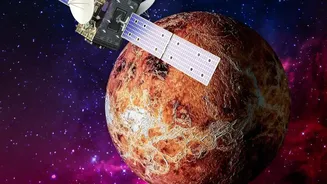
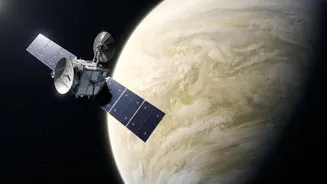
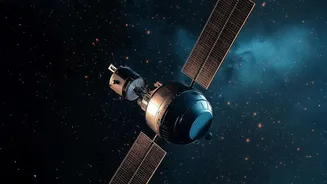
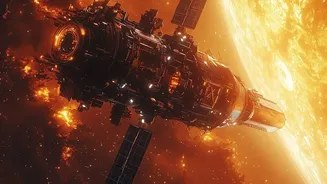
Following the monumental successes of the Chandrayaan missions to the Moon and the Mangalyaan mission to Mars, ISRO has set its sights on the second planet from the Sun. The Shukrayaan mission, formally known as the Venus Orbiter Mission (VOM), represents
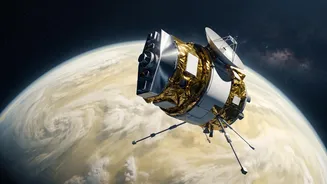
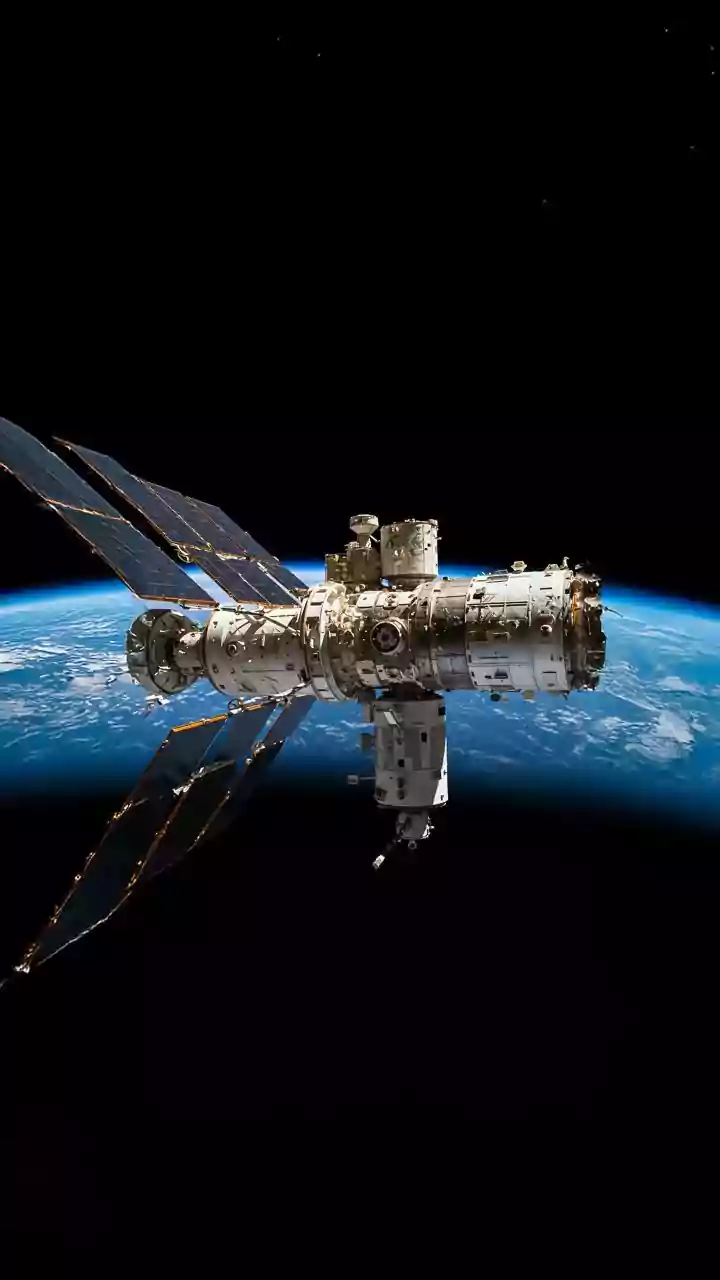
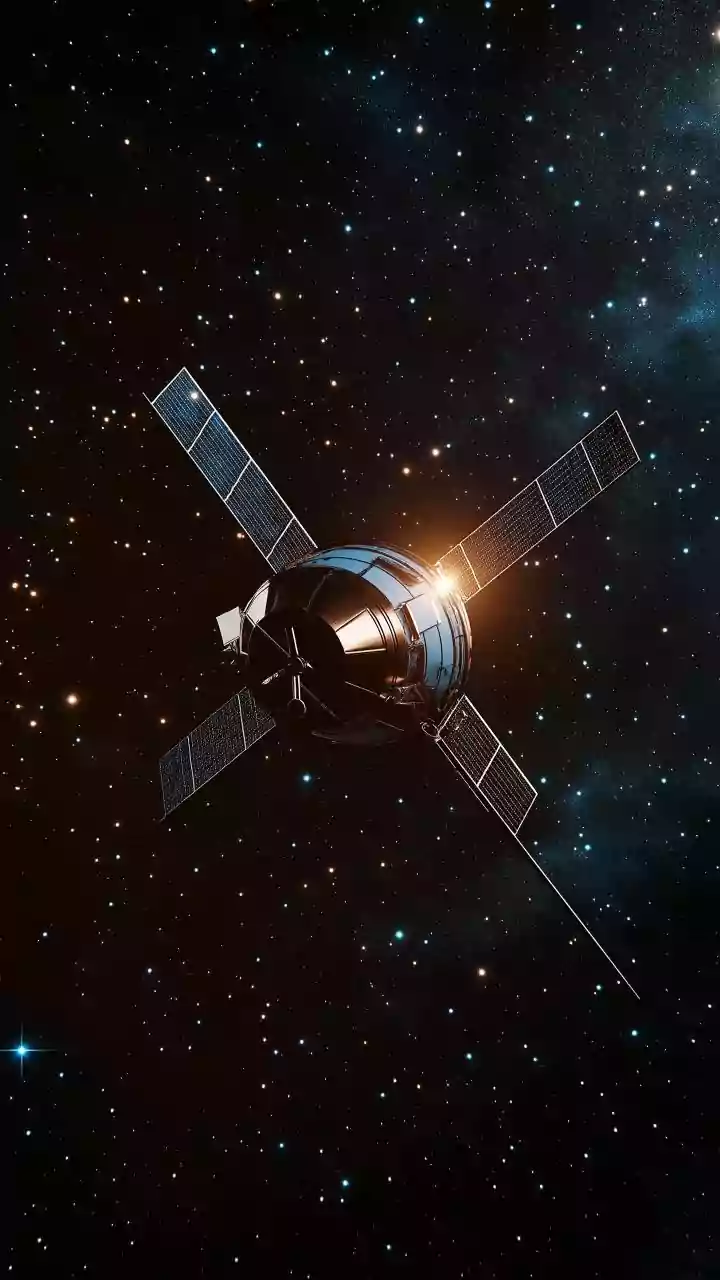
India's next great leap in planetary exploration. The mission, which received formal approval from the Union Cabinet in September 2024, is tentatively scheduled for a March 2028 launch. It will mark only the second time India has sent a probe to another planet. The primary goal is to place an orbiter, packed with scientific instruments, into a stable orbit around Venus to study its complex geology and atmosphere for a planned duration of five years. This venture is not just about exploring a new world; it’s a testament to India’s growing capabilities in deep space missions and complex orbital mechanics.
The Venusian Enigma
So, why Venus? Despite being similar to Earth in size, mass, and density, Venus is a world of extremes. Its surface is a scorching 467 degrees Celsius, hot enough to melt lead, under an atmospheric pressure 90 times greater than Earth's. The entire planet is shrouded in opaque clouds of sulfuric acid, which whip around the planet at speeds up to 360 km/h in a phenomenon called "super-rotation". This runaway greenhouse effect makes Venus a crucial natural laboratory for understanding how planetary climates can evolve so dramatically. Studying Venus can offer profound insights into climate change processes, potentially providing cautionary lessons for our own planet. However, these very conditions make it incredibly challenging to study. The thick clouds have historically prevented optical observation of the surface, forcing scientists to rely on other methods.
Peering Beneath the Veil
The headline feature of the Shukrayaan mission is its suite of advanced sensors designed to penetrate this dense cloud cover. The key instrument for this task is a high-resolution Synthetic Aperture Radar (SAR). Unlike a regular camera, radar sends radio waves that can pass through clouds, bounce off the solid surface, and return to the orbiter. By analysing these echoes, scientists can create detailed 3D maps of the terrain, revealing mountains, craters, and potential evidence of volcanic activity, day or night, regardless of weather. Shukrayaan will also carry a ground-penetrating radar, a first for any Venus mission, which aims to investigate the planet's subsurface geology. Other instruments, like thermal cameras and spectrometers, will analyse the atmospheric composition, cloud structure, and temperature variations. For example, an instrument co-developed with Russia, known as VIRAL, will specifically look for atmospheric gases that could hint at geological or even biological processes.
A Global Scientific Collaboration
While Shukrayaan is an Indian mission, it has a significant international flavour. ISRO invited proposals from scientific communities around the world, and the final payload includes collaborations with several countries. The mission will carry 19 scientific instruments in total, with 16 developed in India. Collaborative payloads are being developed with international partners, including Russia, Sweden, and Germany. For instance, an instrument called the Venusian Neutrals Analyser (VNA) is a joint effort with the Swedish Institute of Space Physics to study how solar wind strips away the Venusian atmosphere. Another, the Radio Anatomy of Venus' Ionosphere (RAVI), is a collaboration with Germany. This global teamwork highlights India's position as a key partner in the international quest for space science knowledge and pools global expertise to maximise the mission's scientific return.
The Journey and the Orbit
The mission plan is as ambitious as its scientific goals. After launching aboard India's powerful LVM-3 rocket, the spacecraft will embark on a 112-day journey to Venus. Upon arrival, it will enter a large, elliptical orbit. From there, ISRO will perform a technique called "aerobraking" for the first time. This manoeuvre involves repeatedly dipping the spacecraft into the upper reaches of the Venusian atmosphere to use drag to gradually lower and circularise its orbit without expending large amounts of fuel. This process will take six to eight months, eventually settling the orbiter into its final science orbit of about 200 km by 600 km. This highly inclined polar orbit will provide an unprecedented global perspective of Venus, allowing its instruments to map the entire planet with high resolution over the course of the mission.