





In India, gold is more than an investment; it's a cultural cornerstone. But the belief that its value only goes up is a myth. In fact, since 1980, gold has spent roughly half its time trading below its previous all-time highs.
The Golden Rollercoaster
For many, gold is the ultimate
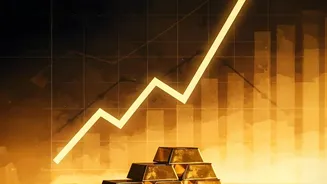
safe-haven asset, a reliable store of value that weathers any storm. The data, however, tells a more complicated story. A recent analysis found that gold prices traded more than 10 percent below their prior peak on 50 percent of all trading days between January 1980 and October 2026. Even more surprisingly, the metal spent a quarter of all trading days more than 20 percent below its previous high. This pattern of sharp peaks followed by long, drawn-out troughs challenges the narrative of a steady, relentless climb and highlights the importance of understanding gold's cyclical nature.
The 1980 Peak and the Two-Decade Wait
The story begins in January 1980. Fueled by high inflation, oil shocks, and geopolitical tension like the Soviet invasion of Afghanistan, gold soared to a then-unprecedented peak of around $850 per ounce. In India, prices surged to approximately ₹1,330 per 10 grams. But what followed was a lesson in patience. After this spectacular high, aggressive interest rate hikes in the U.S. to combat inflation made non-yielding assets like gold less attractive. The price entered a prolonged bear market, falling over 50%. An investor who bought at the 1980 peak had to wait until 2007—a staggering 27 years—just to see the price return to that level in nominal US dollar terms.
A New Millennium Rally
Gold's fortunes turned in the early 2000s. From a low of around $253 in 1999, it began a historic bull run that lasted for over a decade. This rally was driven by a new set of factors: the aftermath of the dot-com bubble, the 2008 global financial crisis which shattered confidence in traditional financial assets, and expansive monetary policies by central banks. Gold's reputation as a safe haven was restored, and its price climbed to a new high of roughly $1,920 in September 2011. This period cemented the belief for a new generation of investors that gold was the ultimate portfolio protector.
The Post-2011 Consolidation
History repeated itself after the 2011 peak. Once again, investors who bought at the top faced a long wait. In 2013 alone, gold lost 27% of its value. It would take nearly a decade for the price to convincingly surpass the 2011 high, which it finally did during the global uncertainty of the 2020 pandemic, breaking $2,000. A study of these cycles shows that recovery from a major peak is not a quick affair; on average, it took around seven-and-a-half years to regain a previous high after a significant fall.
What This Means for Indian Investors
For Indian households, where gold is integral to traditions, savings, and security, this history offers crucial lessons. The price of gold in India is affected not only by global trends but also by the USD-INR exchange rate, import duties, and local demand during wedding and festival seasons. The long periods of stagnation show that gold is not a get-rich-quick asset. Its primary role is as a long-term store of value and a portfolio diversifier. It often performs well when other assets like stocks are under pressure, but it can underperform for years at a time. As of late 2026, after reaching an all-time high of over $5,500 in January, gold has seen another significant correction, trading around the $3,600 to $4,100 range. This volatility is a normal feature of the gold market, not an anomaly.