




A Legacy Carved in Stone
In the heart of Maharashtra, the Ajanta and Ellora caves stand as two of India's most profound cultural treasures. Designated as UNESCO World Heritage sites in 1983, these rock-cut marvels attract visitors from across the globe. Their appeal lies not
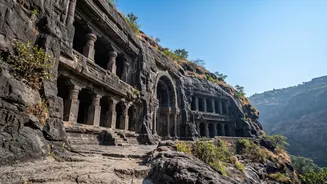
just in their age, but in the stories they tell. These are not merely caves but sprawling complexes of monasteries, prayer halls, and temples that served as centres of learning and spiritual life for centuries. The sheer scale and ambition of hewing these intricate structures from living rock with little more than hammers and chisels is a testament to the devotion and skill of ancient artisans. To walk through their corridors is to journey back in time, witnessing a unique confluence of artistic brilliance and deep spiritualism.
The Ajanta Caves: A Symphony of Painting
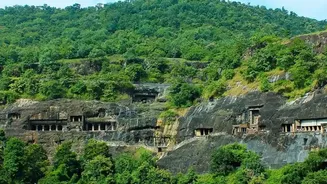
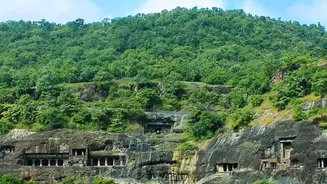
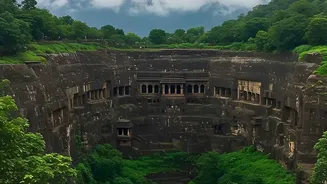
Nestled in a horseshoe-shaped gorge, the 30 rock-cut caves at Ajanta are world-renowned for their stunning murals. Dating from the 2nd century BCE to about the 5th century CE, these caves are primarily Buddhist and served as retreats for monks. Their walls and ceilings are adorned with some of the finest surviving examples of ancient Indian painting. These vibrant frescoes, made with natural pigments, predominantly narrate the Jataka tales—stories of the Buddha's previous lives. The paintings offer a vivid window into the life, culture, and beliefs of the era, depicting everything from royal courts to common folk with incredible emotional depth and fluidity. Caves 1, 2, 16, and 17 are particularly celebrated for their well-preserved and masterful artwork.
The Ellora Caves: A Convergence of Faiths
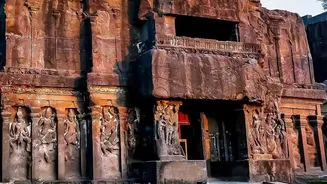
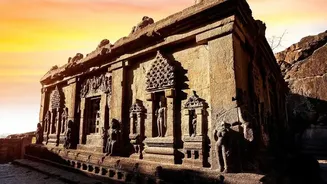
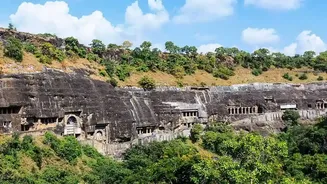
Roughly 100 kilometres from Ajanta, the Ellora complex presents a different but equally breathtaking spectacle. Here, 34 caves carved between the 6th and 10th centuries CE showcase a remarkable harmony of three major Indian religions: Hinduism, Buddhism, and Jainism. This religious tolerance carved in stone is unique to Ellora, with each faith's structures standing in close proximity. The undisputed masterpiece is Cave 16, the Kailasa Temple. It is the world's largest single monolithic excavation, a colossal structure dedicated to Lord Shiva, carved from the top down out of a single rock. It is estimated that craftspeople removed over 400,000 tonnes of rock to create this architectural wonder, a feat of engineering that continues to astound experts today.
The IRCTC Gateway: A Structured Journey
For many travellers, the logistics of visiting these historical sites can be daunting. This is where organised tours, such as those offered by IRCTC, provide immense value. A typical multi-day tour package, often starting from hubs like Mumbai or Hyderabad, simplifies the experience. These packages generally handle train or road transport, accommodation in nearby Aurangabad (now Chhatrapati Sambhajinagar), and local sightseeing in an air-conditioned vehicle. This curated approach eliminates the stress of planning, allowing travellers to fully immerse themselves in the experience. Many tours also include knowledgeable guides who can bring the history of the caves to life, explaining the significance of the carvings and paintings that might otherwise be missed.
Beyond the Caves: Exploring the Region
An extended tour of the region often includes other significant historical and religious sites. A common stop is the formidable Daulatabad Fort, a 12th-century fortress known for its ingenious defensive architecture. Many itineraries also feature Bibi Ka Maqbara, a beautiful 17th-century mausoleum in Aurangabad that bears a striking resemblance to the Taj Mahal. For those on a spiritual journey, a visit to the Grishneshwar Jyotirlinga Temple, one of the 12 sacred Shiva shrines in India, is a powerful experience. These additional sites provide a richer, more complete picture of the region's layered history and cultural significance, making a six-day trip a truly comprehensive exploration.