



The Sun’s Violent Outbursts
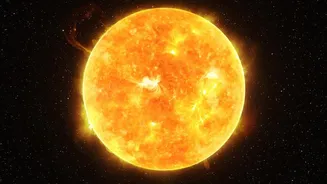
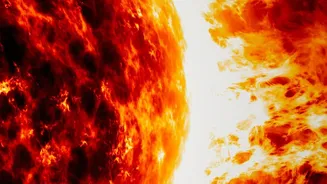
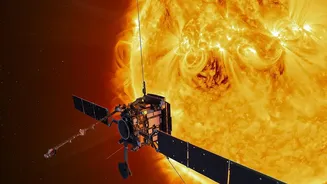
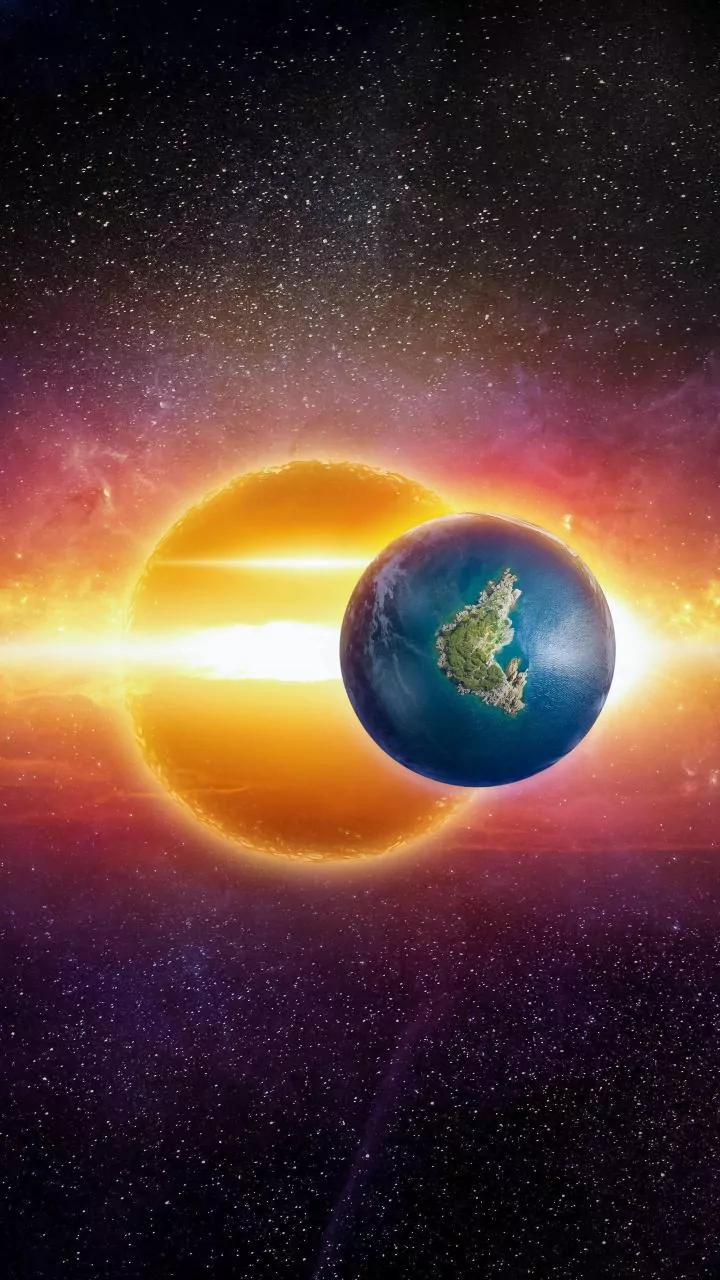
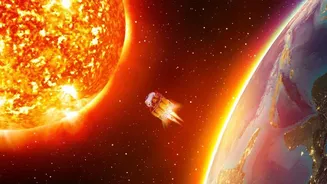
Our Sun is not always the calm, steady star it appears to be. It periodically releases immense bursts of energy and matter in events known as solar flares and coronal mass ejections (CMEs). A CME is a massive eruption of plasma and magnetic fields from
the Sun's outer atmosphere, the corona, hurling billions of tons of material into space at incredible speeds. While solar flares are intense flashes of radiation, CMEs are clouds of charged particles that travel through the solar system. If Earth is in the path of a CME, these particles and the accompanying magnetic field can interact with our planet's own magnetic field, triggering what is known as a geomagnetic storm. These storms are the primary drivers of space weather and pose a significant threat to our technology.
Power Grids Under Geomagnetic Siege
The most significant terrestrial threat from a geomagnetic storm is to our electrical power grids. When a CME buffets Earth's magnetic field, it induces powerful electrical currents in the ground. These are called geomagnetically induced currents, or GICs. Long transmission lines, the backbone of any power grid, act like giant antennas, picking up these GICs. The currents flow into the high-voltage transformers at electrical substations. Because GICs behave like direct current (DC) within an alternating current (AC) system, they can cause transformers to saturate, overheat, and, in extreme cases, suffer permanent damage. A severe event could lead to a cascade of failures, resulting in widespread and long-lasting blackouts, as happened in Quebec in March 1989.
Satellites in the Firing Line
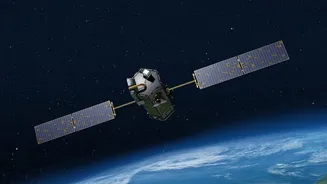
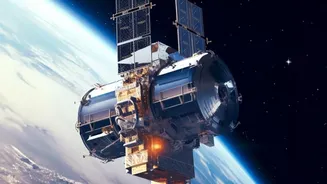
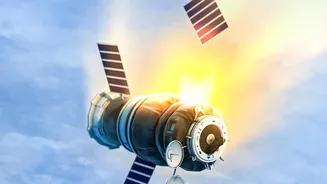
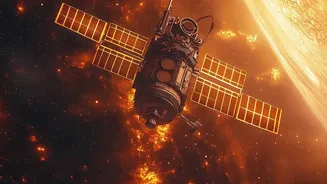
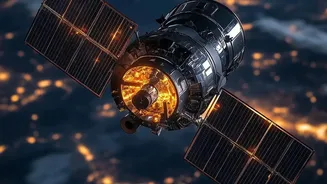
Communication satellites, which are essential for everything from GPS navigation to global financial transactions and weather forecasting, are also highly vulnerable. Unlike infrastructure on Earth, satellites have no atmosphere to protect them from high-energy particles. This radiation can cause a host of problems. It can lead to a buildup of electrical charge on a satellite's surface, potentially causing damaging electrostatic discharges. Energetic particles can penetrate deep into a satellite's electronics, causing 'single-event effects' that corrupt data or burn out components. Over time, the cumulative radiation dose degrades solar panels and other sensitive instruments, shortening the satellite's operational lifespan. Geomagnetic storms can also heat and expand the upper atmosphere, increasing drag on low-Earth orbit satellites and causing them to lose altitude.
Our Eyes on the Sun
To defend against this threat, a global network of space- and ground-based observatories constantly monitors the Sun. Agencies like the U.S. National Oceanic and Atmospheric Administration's (NOAA) Space Weather Prediction Center (SWPC) are at the heart of this effort. Satellites such as the Geostationary Operational Environmental Satellites (GOES) and the Deep Space Climate Observatory (DSCOVR) provide an early warning system. DSCOVR orbits at a point one million miles from Earth toward the Sun, allowing it to measure the solar wind in real time. When it detects the tell-tale signs of a CME—a change in the speed, density, and magnetic field of the solar wind—it transmits that data to Earth, providing a crucial lead time of about 30 to 60 minutes before impact.
From Warning to Protective Action
This advance notice is the key to mitigation. When the SWPC issues a geomagnetic storm warning or alert, it triggers a set of pre-planned procedures. Electric utility operators can take protective measures like reducing load on the grid, postponing maintenance, and preparing to take vulnerable transformers offline to prevent them from absorbing destructive GICs. This can prevent permanent damage and widespread blackouts. For satellite operators, an alert provides time to put their spacecraft into a protective 'safe mode'. In this state, non-essential systems are powered down and the satellite is oriented to minimize its exposure to the incoming radiation, safeguarding its sensitive electronics until the storm passes. Airlines also use these forecasts to reroute flights, particularly on polar routes, to avoid communication blackouts and heightened radiation exposure for passengers and crew.