



The Next Giant Leap: A Sample-Return Mission
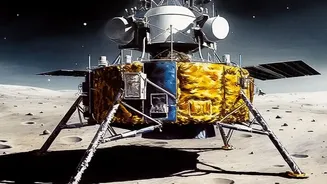
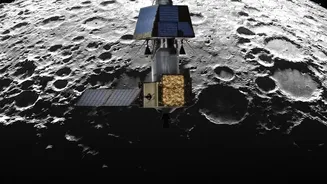
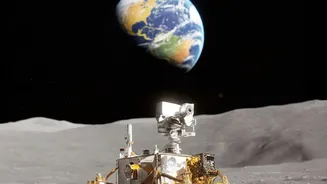
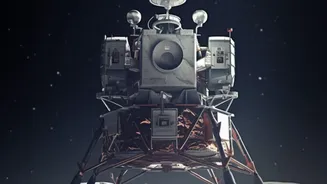
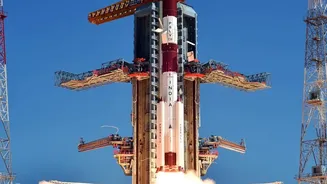
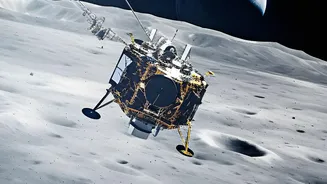
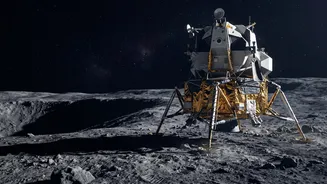
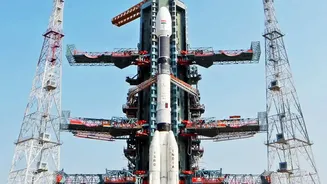
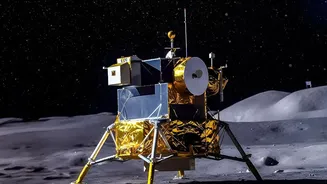
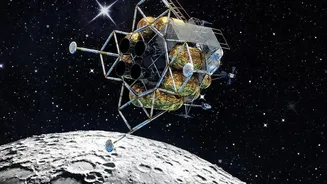
Chandrayaan-4 is not just another lunar lander; it is India's first-ever lunar sample-return mission. The objective is to land on the Moon, collect soil and rock, and transport them back to Earth for detailed scientific analysis. This is a monumental
task that requires a series of perfectly executed manoeuvres: a soft landing, robotic sample collection, launching a vehicle off the lunar surface, docking in lunar orbit, and guiding a capsule safely back through Earth's atmosphere. If successful, India will join an exclusive club of nations—currently comprising only the United States, the former Soviet Union, and China—that have accomplished this feat. The mission, expected to launch around 2028, is a critical stepping stone for India’s long-term space ambitions, including sending astronauts to the Moon by 2040.
Targeting the Treasure: The Lunar South Pole
Like its predecessor, Chandrayaan-4 will target the Moon’s enigmatic South Pole. This region is a hotbed of scientific interest because of its unique and extreme environment. It is home to Permanently Shadowed Regions (PSRs)—craters and depressions that have not seen sunlight for billions of years. These ultra-cold areas, with temperatures plunging below -200 degrees Celsius, are believed to hold vast quantities of water ice. This frozen water is more than a scientific curiosity; it’s a potential resource that could be used for life support (oxygen and water) and rocket fuel (hydrogen) for future lunar bases. By returning samples from this geologically diverse and largely unexplored area, ISRO hopes to unlock secrets about the Moon's history and its potential to support a sustained human presence.
Why Drilling is the Key
While Chandrayaan-3 confirmed the presence of key elements on the lunar surface, the most valuable prize—water ice—is likely not sitting on top. Scientists believe it is mixed with lunar soil (regolith) or buried metres below the surface. To get to it, you have to dig. This is where Chandrayaan-4's automated drilling capability becomes essential. The mission plans to use not just a robotic arm to scoop surface soil, but also a drilling mechanism to collect subsurface samples. This is a significant technological challenge. The lander must perform this delicate operation autonomously in an environment with extreme temperatures, low gravity, and abrasive, electrostatically charged dust that clings to everything. The drill must be robust enough to penetrate the tough lunar regolith and operate flawlessly without human intervention.
Unlocking Lunar Secrets on Earth
The true value of a sample-return mission lies in the ability to study the collected material in state-of-the-art laboratories back on Earth. Analysing the pristine, subsurface samples from the South Pole will provide unprecedented insights. Scientists will be able to confirm the quantity and quality of water ice, which is crucial for assessing its viability as a resource. Furthermore, these samples hold clues to the history of the solar system. Since these materials have been preserved in a deep freeze for eons, they are a time capsule containing information about the early solar system and the delivery of water and other volatile compounds to the Earth-Moon system. Studying these samples on Earth with advanced instruments will offer far more detailed analysis than what is possible with on-site rovers.
Building for a Future on the Moon
Chandrayaan-4 is more than a single scientific mission; it's a demonstration of crucial technologies. Mastering automated drilling, ascent from the lunar surface, and orbital docking are all fundamental capabilities required for more complex future missions. The mission is being developed in parallel with LUPEX (Lunar Polar Exploration Mission), a joint project with Japan's space agency, JAXA, which also focuses on exploring the polar regions for water. While distinct, these missions represent a concerted push to understand and eventually utilize lunar resources. By developing the technology to drill for and return samples, ISRO is not just bringing back rocks; it is laying the technical foundation for a future where India can build and sustain a presence on the Moon and beyond.