
The Legend of the Botanical Air Filter
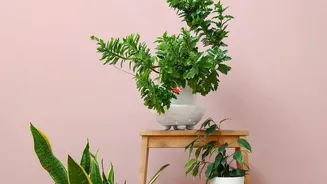
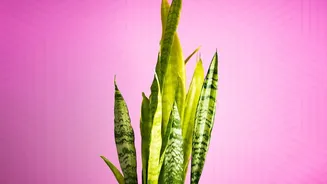
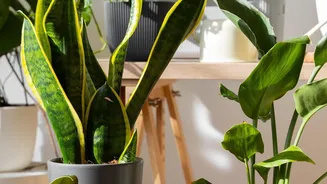
The snake plant, or Dracaena trifasciata, has a stellar reputation. It's promoted as a must-have for healthy homes, a tireless botanical worker that scrubs harmful toxins from the air while you sleep. This belief is so widespread that the plant has become
a staple for wellness-conscious decorators and first-time plant owners alike. For decades, it has been lauded as a top-tier air purifier, capable of filtering out nasty indoor pollutants like formaldehyde and benzene that can off-gas from furniture, cleaning products, and building materials. The claim is simple and alluring: adding a few of these sculptural plants to your space can lead to cleaner, healthier air. This idea didn't just appear out of thin air; it has its roots in a famous scientific study that gave this humble houseplant its superstar status.
What NASA Actually Found
The origin story of the air-purifying snake plant begins in 1989 with NASA's Clean Air Study. Scientists were looking for ways to clean the air in sealed environments like space stations. In their research, they placed various houseplants, including the snake plant, inside small, hermetically sealed chambers and injected common volatile organic compounds (VOCs) like formaldehyde, benzene, and trichloroethylene. The results were promising: the snake plant was indeed effective at removing these pollutants from the sealed container. It, along with other plants tested, demonstrated a natural ability to absorb these toxins through its leaves and break them down with the help of microbes in its root system. This study is the foundation for nearly every list of 'air-purifying plants' you'll find today, cementing the snake plant's legacy as a green hero for indoor spaces.
From a Sealed Lab to Your Living Room
Here’s where the popular belief starts to wilt. The conditions of the NASA study were very different from those in an average home. The plants were kept in small, airtight plexiglass boxes—not a 150-square-foot bedroom with windows, doors, and a ventilation system. In a typical home, the air is constantly being replaced through a process called the air exchange rate. This natural ventilation, even in a seemingly closed-off room, has a much larger and faster impact on indoor air quality than a few plants. To achieve the same level of air purification seen in the NASA lab, you would need an unfeasible number of plants. Some recent analyses estimate you'd need anywhere from 10 to 1,000 plants per square metre to compete with a building's standard air exchange. So, while your single snake plant is technically filtering the air, its overall effect in a large, ventilated room is practically negligible.
So, Why Keep Them Around?
Just because it can't single-handedly detoxify your home doesn't mean the snake plant is useless. It has several other fantastic qualities that make it a worthwhile addition to any room. First, it is one of the hardiest houseplants available, thriving on neglect and tolerating low light, making it perfect for beginners. Aesthetically, its upright, architectural leaves add a touch of modern elegance to any decor. Beyond looks, snake plants offer a unique biological benefit thanks to a process called Crassulacean Acid Metabolism (CAM). Unlike most plants, they release oxygen at night, making them ideal companions for the bedroom. And let's not forget the well-documented psychological benefits of having greenery indoors. Nurturing plants can reduce stress and improve your overall sense of well-being. So while it may not be a powerful air purifier, it's still a powerhouse of a plant.