






Inspect Your Tyres: The First Line of Defence
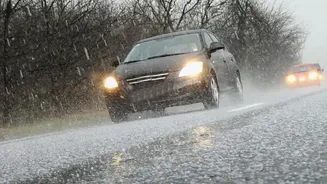
Your tyres are the only part of the car in contact with the road, making them critical in wet conditions. On slick, winding hill roads, good tyres prevent skidding and hydroplaning. Before you start, check the tread depth; anything less than 2mm is a risk.
Ensure all five tyres, including the spare, are inflated to the manufacturer's recommended pressure. Worn-out or underinflated tyres can lose grip on steep inclines and sharp turns, a dangerous situation when visibility is already low.
Check Your Brakes: Your Most Important Safety System
Brakes are put under immense strain during hill driving, and their effectiveness can be reduced on wet roads. The stopping distance for a vehicle naturally increases on wet surfaces. Before your trip, have a mechanic inspect your brake pads for wear and tear. Also, check the brake fluid level and condition. Old brake fluid can absorb moisture, reducing its efficiency precisely when you need it most for sudden stops or navigating steep descents. Any squeaking or grinding noises are a clear sign that your brakes need immediate attention.
Ensure Clear Visibility: Wipers and Lights
In heavy rain and fog, seeing and being seen can be a matter of life and death. Indian summers often leave wiper blades cracked and hard, causing them to smear water across the windshield instead of clearing it. Replace your wiper blades if they leave streaks. Also, ensure your windshield washer fluid is topped up. Do a complete walk-around of your car and test all lights: headlights, taillights, brake lights, and fog lamps. They are crucial for making you visible to other drivers in low-visibility conditions.
Test the Battery and Electricals
Wet and humid conditions can be tough on your car’s electrical system. A weak battery is more likely to fail in such weather. Ensure your battery terminals are clean and free of corrosion. If your battery is more than a few years old, it's wise to have it tested by a professional before embarking on a long hill journey. Constant use of wipers, lights, and the defogger puts extra strain on the battery, and a breakdown in a remote, rainy location is a scenario best avoided.
Review All Fluid Levels
Besides brake and washer fluid, other fluids are vital for your engine's health, especially when it's working hard on inclines. Check your engine oil, coolant, and transmission fluid levels. Coolant is particularly important to prevent the engine from overheating during the strain of climbing steep gradients. Ensure all fluids are at their recommended levels and are clean. Dirty or low fluids can lead to mechanical failure.
Prepare an Emergency Kit
While not a maintenance tip for the car itself, preparing an emergency kit is a crucial part of your pre-trip check. Landslides and roadblocks are possibilities in the hills during monsoons, and you may be stranded for some time. Your kit should include a first-aid box, a powerful torch, a tow rope, jumper cables, and basic tools. Also pack extra water, non-perishable snacks, and a waterproof jacket. Having these items on hand can turn a stressful situation into a manageable one.