





The Frozen Treasure of the South Pole
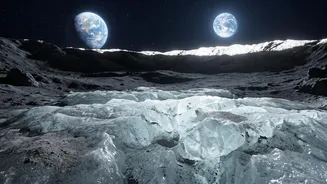
The Moon's south pole is one of the most compelling destinations in our solar system. The reason is simple: water. Not liquid water, but vast quantities of water ice hidden for billions of years in permanently shadowed regions (PSRs). These are craters
and depressions that sunlight has never touched. Because the Moon has very little axial tilt, the floors of some polar craters are in perpetual darkness, creating 'cold traps' with temperatures plunging below -160°C. In this extreme cold, water ice that arrived via comets and asteroids has been preserved. Missions like India's Chandrayaan-1 and NASA's Lunar Reconnaissance Orbiter have confirmed the presence of this ice, transforming our understanding of the Moon from a barren, dry rock into a repository of a precious resource. This ice is more than just frozen water; it represents potential drinking water, breathable oxygen, and, most importantly, the raw material for rocket fuel.
Meet the Robotic Ice Miners
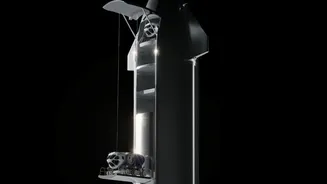
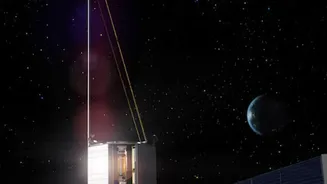
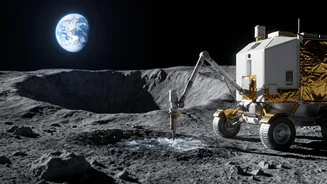
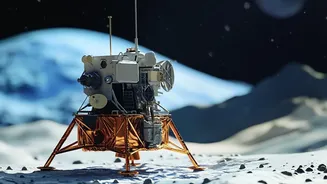
Finding the ice is one thing; extracting it is another. This is where a new generation of robotic explorers comes in, a practice known as in-situ resource utilization (ISRU). NASA's primary tool for this job is the Volatiles Investigating Polar Exploration Rover, or VIPER. This golf-cart-sized rover is designed to navigate the harsh lunar south pole and hunt for ice deposits. Equipped with a drill and specialized instruments, VIPER will map the location and concentration of water ice, effectively creating a resource map for future missions. After a complex development history that included a cancellation in 2024, the VIPER mission was revived and is now planned for a late 2027 landing with commercial partner Blue Origin. The rover will operate for about 100 days, venturing into the dark, frigid craters to give NASA the ground-truth data needed to plan a full-scale extraction operation. Early concepts for mining involve thermal technology, where rovers use concentrated heat, perhaps from mirrors or microwave beams, to vaporize the subsurface ice into water vapor, which is then captured and collected.
From Water to Rocket Fuel: A Simple Chemistry Lesson
Once collected, how does solid water ice become powerful rocket fuel? The process is a classic chemistry experiment, just on an industrial scale. It’s called electrolysis. First, the mined ice is melted and purified. This purification is crucial because the electrolyzers, particularly the Proton Exchange Membrane (PEM) types used in space applications, require ultrapure water to function efficiently. Once purified, an electric current is passed through the water (H₂O). This current breaks the chemical bonds holding the water molecule together, separating it into its constituent elements: hydrogen and oxygen. These gases are then captured separately. The final step is cryogenically cooling and compressing the hydrogen and oxygen until they become liquids. Voila: you have liquid hydrogen and liquid oxygen (LOX), one of the most potent and efficient chemical rocket propellants known. The entire process would be powered by solar arrays placed on crater rims that receive near-continuous sunlight.
The Moon as a Deep Space Gas Station
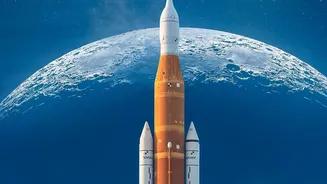
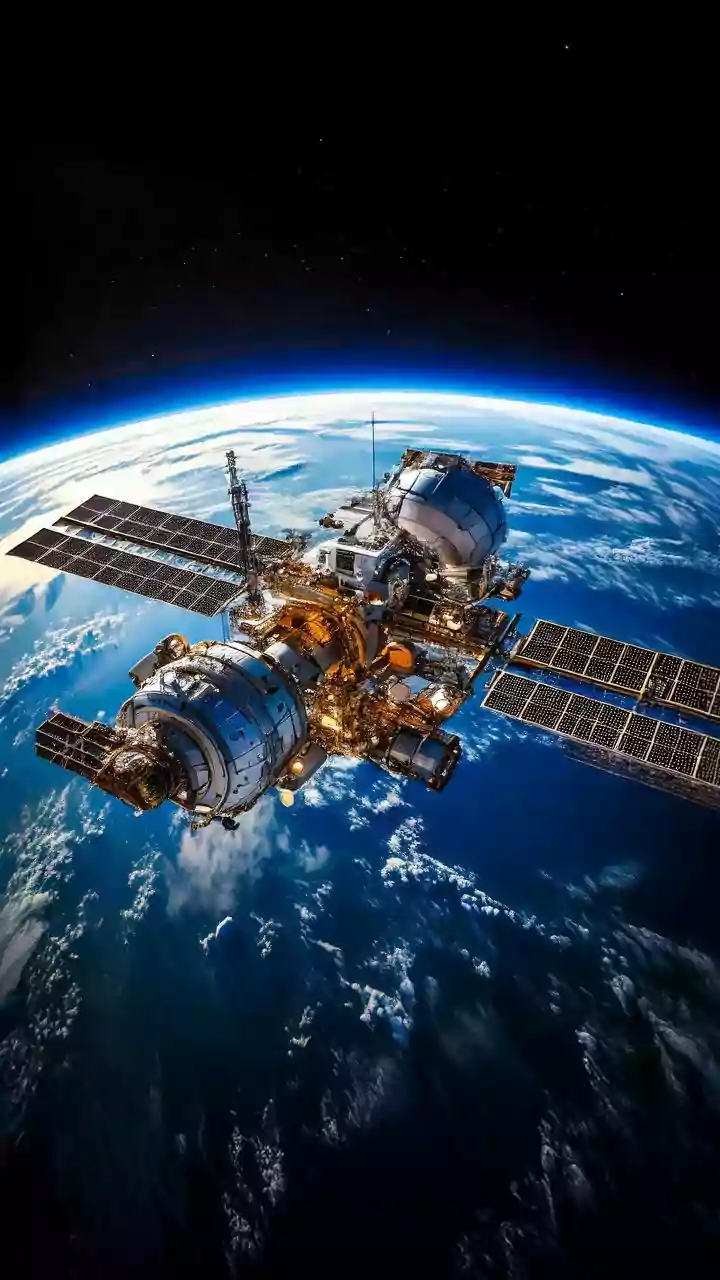
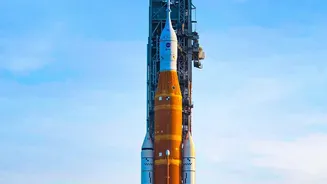
The ability to produce rocket fuel on the Moon completely changes the economics and feasibility of deep space travel. Launching anything from Earth is incredibly expensive, largely due to our planet's strong gravity. Every kilogram of payload, including fuel, must be lifted out of this deep gravity well. This is governed by the tyranny of the rocket equation: the more fuel you need to get to your destination, the more fuel you need just to lift that fuel off the ground. By producing propellant on the Moon, which has only one-sixth of Earth's gravity, future missions to Mars and beyond could launch from Earth with only the fuel needed to get to lunar orbit. There, they could dock at a staging post, like the planned Lunar Gateway, and fill up their tanks with lunar-made propellant for the long journey ahead. The Moon effectively becomes a cosmic gas station, breaking the logistical chain that has tied ambitious missions to Earth for so long. This makes crewed missions to Mars, asteroid belt exploration, and other far-reaching voyages more sustainable and affordable.