






A New Universe of Opportunity
The dream of reaching for the stars is becoming a tangible reality for Indian students, thanks to a growing ecosystem of space-tech challenges and platforms. National bodies like the Indian Space Research Organisation (ISRO) and the Indian National Space Promotion
and Authorization Centre (IN-SPACe) are spearheading initiatives designed to move learning from the textbook to the launchpad. These programs aim to provide students with practical, hands-on experience, inviting them to tackle real-world problems faced by the nation's burgeoning space industry. The goal is to cultivate a new generation of innovators who will not only support but lead India's future space endeavours.
From Theory to Tangible Projects
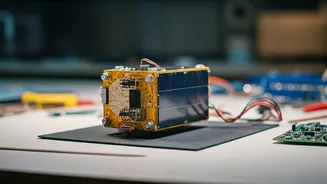
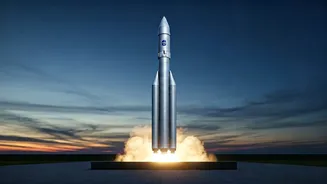
Initiatives like the IN-SPACe CANSAT India Student Competition challenge undergraduate teams to design, build, and launch model rockets carrying a small satellite. The competition is a microcosm of a real space mission, requiring students to manage everything from design and development to the safe recovery of their rocket. Similarly, ISRO has launched hackathons and other platforms where students are presented with operational challenges from the agency itself. These can range from software development and data analysis to designing components for future missions, giving students direct insight into the complexities of space technology.
Catching Them Young
The focus isn't just on university students. Programs like ISRO's "Young Scientist Programme" (YUVIKA) are designed to engage school children. This two-week residential program immerses high school students in space science through lectures, hands-on activities like model rocketry, robotic coding, and interactions with eminent scientists. Similarly, the Indian Space Science Olympiad (ISSO) offers a competitive stage for students from Class 5 to 12, testing their knowledge in astronomy, rocketry, and space missions. These efforts are crucial for building a strong foundation in Science, Technology, Engineering, and Mathematics (STEM) from an early age.
Powering India's National Ambitions
These student-focused initiatives are a strategic part of India’s larger space ambitions, including the landmark Gaganyaan mission, which aims to send Indian astronauts into orbit. ISRO has clearly stated that a key benefit of the Gaganyaan program is its potential to inspire youth and steer students towards careers in science and technology. By creating a pipeline of talent, these platforms ensure that as India's space economy grows, there will be a skilled, indigenous workforce ready to take on the challenges. The goal is to bridge the gap between academia and industry, creating a self-reliant ecosystem for space activities.
Private Players Join the Mission
It's not just government agencies leading the charge. Private aerospace companies and educational organisations are also creating valuable opportunities. Startups like Space Kidz India have enabled students to build and launch satellites, including the world's lightest satellite, KALAMSAT. These private ventures often work in collaboration with ISRO, creating an integrated ecosystem where students can gain exposure to different facets of the space industry. This public-private partnership is democratising access to space, ensuring that more students have the chance to contribute to this high-tech field.