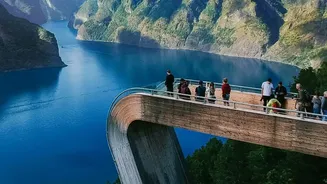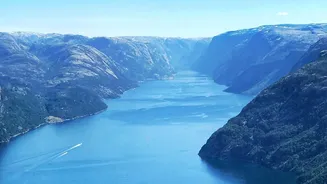



Carved by ancient glaciers, fjords offer some of the planet's most dramatic landscapes. These deep, narrow sea inlets are flanked by towering cliffs, creating scenes of staggering beauty. Here’s a guide to the most unforgettable fjord experiences.
Norway's Geirangerfjord: A UNESCO Jewel
Often
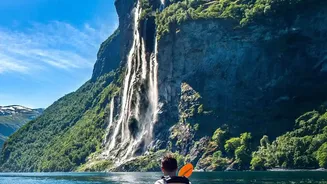
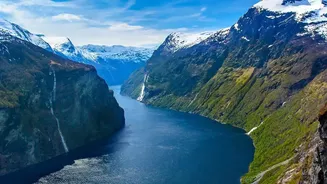
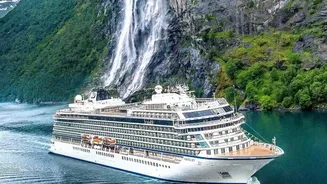
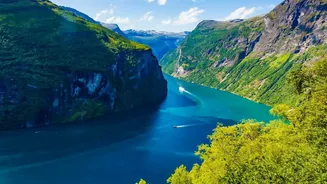
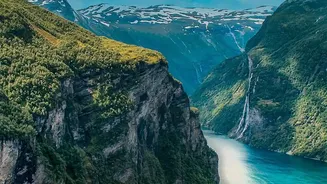
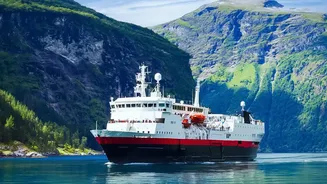
hailed as the crown jewel of the Norwegian fjords, the Geirangerfjord is a UNESCO World Heritage site celebrated for its raw beauty. This 15-kilometre-long fjord is famous for its sheer mountainsides and iconic waterfalls, including the Seven Sisters and the Suitor. According to local legend, the seven streams of the falls represent sisters dancing down the mountain, forever admired by the single waterfall across the fjord, 'The Suitor'. The best time to visit is from May to July when the snowmelt makes the waterfalls most powerful. Sightseeing cruises and ferries between the villages of Geiranger and Hellesylt offer spectacular, up-close views of this natural masterpiece.
Sognefjord: The King of the Fjords
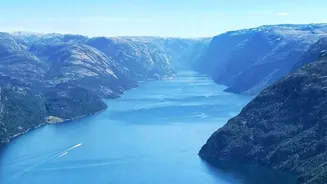
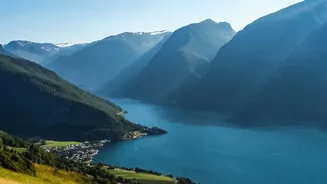
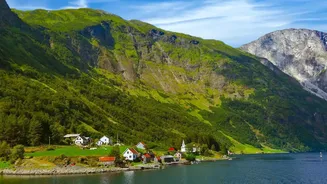
Stretching over 200 kilometres inland, the Sognefjord is Norway's longest and deepest fjord. Its immense scale and the dramatic scenery of mountains rising over 1,700 metres from the water earn it the nickname 'The King of the Fjords'. The Sognefjord has several famous branches, including the Nærøyfjord, which is also a UNESCO World Heritage site and one of the narrowest fjords in Europe. The popular 'Norway in a Nutshell' tour often combines a cruise on the Sognefjord with a journey on the historic Flåm Railway, offering a comprehensive experience of this magnificent region. Trips can be taken from major cities like Bergen or Oslo.
Iceland's Westfjords: Remote and Wild
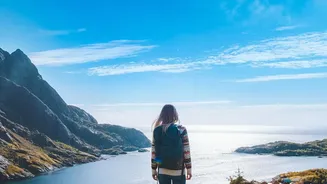
For a more off-the-beaten-path adventure, Iceland's Westfjords offer a glimpse into a wilder, more remote landscape. This ancient peninsula is defined by a dizzying network of deep fjords, sheer cliffs, and sparsely populated fishing villages. Unlike the more crowded tourist spots in Iceland, the Westfjords promise solitude and a profound connection with nature. Key attractions include the Dynjandi waterfall, a tiered cascade often called the 'Jewel of the Westfjords', and the Látrabjarg cliffs, which are teeming with seabirds like puffins during the summer. Guided jeep tours, kayaking, and hiking are popular ways to explore this rugged and unspoiled corner of Europe.
Scotland's Sea Lochs: A Fjord-Like Experience
While geologically different from true fjords, Scotland’s sea lochs offer similarly dramatic and breathtaking scenery. These long, deep sea inlets cut into the rugged Scottish Highlands, creating landscapes that rival their Norwegian counterparts. Routes like the drive from Loch Lomond to Glencoe are celebrated as some of Britain's most scenic drives, showcasing glittering lochs against a backdrop of majestic mountains. The A82 road trip along the shores of Loch Lomond takes visitors through charming villages like Luss and offers stunning viewpoints. For those seeking coastal grandeur, the Argyll Coastal Route from Tarbert to Fort William provides an unforgettable journey through a landscape of lochs and mountains.
Montenegro's Bay of Kotor: The Adriatic's Fjord
Often called 'Europe's southernmost fjord', the Bay of Kotor in Montenegro is technically a submerged river canyon, but its visual drama is undeniable. This winding bay is a UNESCO World Heritage site where steep limestone cliffs plunge directly into the calm, emerald waters of the Adriatic. What sets Kotor apart is its unique blend of natural beauty and rich history. The bay is dotted with perfectly preserved medieval towns like Kotor and Perast, their stone walls and terracotta roofs creating a cinematic landscape. Boat trips are the best way to experience the bay, allowing you to visit charming islets like 'Our Lady of the Rocks' and fully appreciate the fusion of mountain, sea, and history.