






The High Cost of Digital Chaos
For many remote tech workers, the daily grind isn't just about code, meetings, or deadlines; it's about the constant juggling of applications. Information lives in Slack, tasks are in Asana, documents are in Google Drive, and customer data is in Salesforce.
Each switch from one app to another, known as context switching, carries a hidden cognitive tax. Research shows the average knowledge worker switches between apps and tasks dozens, if not hundreds, of times a day. Studies have found it can take over 20 minutes to fully refocus after an interruption, and this constant toggling can eat up to 40% of a worker's productive time. For remote workers, who often rely more heavily on digital tools for communication, this problem is magnified. The result is not just lost productivity but increased stress and a feeling of being busy without making meaningful progress.
What is Cross-App AI Synthesis?
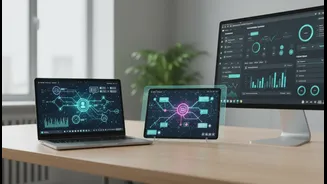
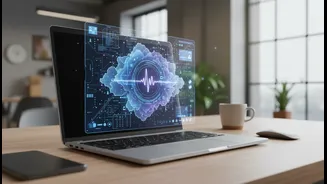
For years, the solution to app-sprawl was integration, using tools to create simple handoffs, like a new email automatically creating a task. Cross-app AI synthesis is the next evolution. It isn't just about connecting apps; it's about creating a unified, intelligent layer that sits on top of them. Imagine a single workspace that doesn't just link to your different tools but understands the information within them. This AI-powered hub can see a conversation in a messaging app, connect it to a project brief in a documentation tool, and surface related tasks from a project management board—all without the user needing to manually open and search each one. It synthesizes information from various sources into a cohesive, contextual view, turning a collection of siloed apps into a singular, intelligent work environment.
Beyond Automation: The Power of AI Understanding
The game-changer is the 'AI' in 'AI synthesis'. Early automation tools could perform predefined, rule-based actions. An AI synthesis platform, however, uses natural language processing and machine learning to understand intent and context. Instead of just summarizing a single document, it can synthesize information across multiple documents, chats, and emails to answer complex questions like, "What are the key blockers on Project Phoenix, and who is responsible for the next steps?". This allows the system to not only retrieve information but also to generate new insights, draft communications, and even suggest next actions based on a holistic understanding of the work being done across all connected tools. It moves from simple task execution to genuine workflow augmentation.
The Tangible Benefits for Tech Teams
For remote tech workers, this approach directly addresses their biggest pain points. The most immediate benefit is a dramatic reduction in context switching, which frees up cognitive resources for deep, focused work like coding and problem-solving. By having a centralized, AI-powered hub, developers and project managers can get status updates, find documentation, and track dependencies without leaving their primary workflow. This leads to fewer errors, faster decision-making, and improved collaboration, as the AI can bridge communication gaps between different teams and time zones. It also helps in retaining organizational knowledge; when information is synthesized and interconnected, it's less likely to be lost in forgotten chat threads or disparate documents.
The Tools and the Future
This trend is already taking shape. Major platforms like Google Workspace and Microsoft 365 are embedding their AI assistants (Gemini and Copilot, respectively) deeper into their app suites, enabling them to perform actions across different applications. At the same time, a new generation of 'AI-native' platforms is emerging, built from the ground up to be a unified workspace that integrates projects, documentation, and communication with an AI core. These tools aim to be the central operating system for work, where both humans and AI agents can collaborate. While the technology is still evolving, the direction is clear: the future of remote work isn't about adding more apps, but about unifying them with an intelligent layer that works for you.