








Go Beyond the Sleep Score
That single sleep score is a helpful summary, but the magic is in the details. Most trackers measure several key metrics that directly impact your ability to recover and perform. The most important stage for physical recovery is deep sleep. During this
phase, your body releases growth hormone, which is crucial for repairing muscle tissue damaged during exercise. REM sleep, on the other hand, is more about mental restoration, processing memories, and emotional regulation. Beyond sleep stages, look at your Heart Rate Variability (HRV) and Resting Heart Rate (RHR). HRV measures the variation in time between your heartbeats and is a powerful indicator of your body's readiness to handle stress. A higher HRV generally means your 'rest and digest' system is in control, and you're well-recovered. A low RHR signals good cardiovascular fitness and efficient recovery.
Your Five-Minute Morning Data Check
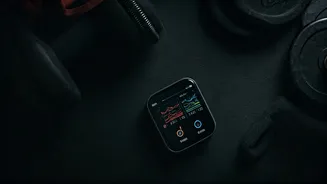
The first step to building a routine is a consistent morning check-in. Before you even look at your phone's notifications, open your sleep app. Look at three things: your total sleep time, your deep sleep duration, and your HRV trend. One bad night isn't a disaster, but a downward trend over several days is a red flag. Your HRV is particularly useful; think of it as your body's daily report card. A significant drop from your baseline could mean you're overtraining, getting sick, or under high stress. The goal isn't to obsess over every number but to connect last night's data with yesterday's actions. Did a late-night workout or a glass of wine correlate with a drop in deep sleep or HRV? This is where the learning begins.
Train Smarter, Not Just Harder
Use your morning data to guide your training for the day. A simple 'traffic light' system can be incredibly effective. If your HRV is at or above your baseline and you feel good, that's a 'green light' for a high-intensity session. Your body is primed to handle the stress and adapt. If your HRV is slightly below your baseline, consider it a 'yellow light'. Maybe you stick to the planned workout but reduce the intensity, focus on technique, or cut the volume slightly. If your HRV is significantly lower than usual for a couple of days in a row, that's a 'red light'. This doesn't mean you have to be sedentary. It's a signal to prioritize recovery—think a long walk, stretching, or a yoga session instead of a grueling workout. This approach ensures you push hard when your body is ready and ease off when it needs to rebuild.
Engineer a Better Night's Sleep
Your tracker data can also help you refine your evening wind-down routine. If you notice consistently low deep sleep, the culprit might be an evening habit. Intense exercise, large meals, or alcohol too close to bedtime can all disrupt this crucial recovery stage. Similarly, low REM sleep has been linked to late-night screen time, as the blue light can suppress melatonin production. To improve your numbers, establish a consistent wind-down routine about an hour before bed. Dim the lights, avoid screens, and consider light stretching or reading a book. Keeping your bedroom dark, quiet, and cool is also fundamental for sleep quality. By making small, targeted changes based on your data, you can actively improve your sleep quality instead of just passively tracking it.