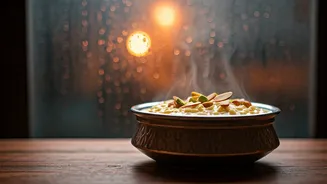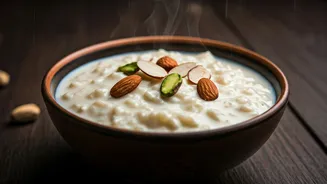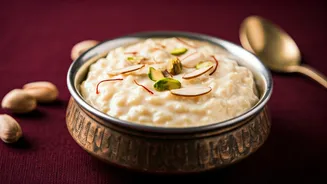




Monsoon's Comforting Embrace
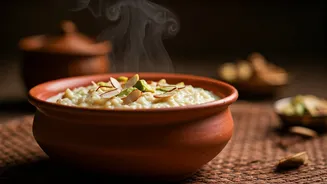
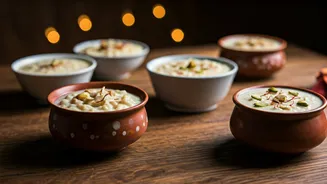
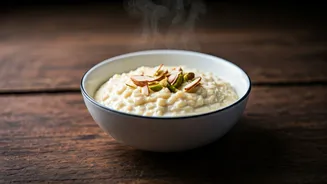
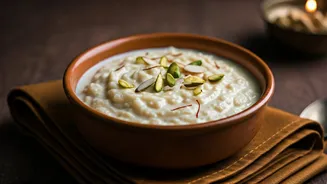
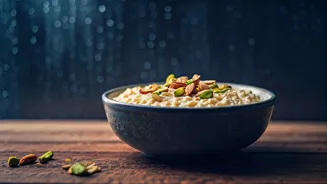
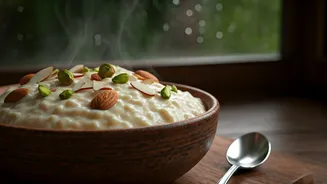
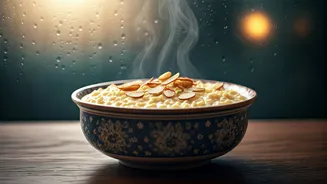
There is a reason why kheer is a go-to dessert during the monsoon season. It’s more than just a sweet dish; it’s a bowl of nostalgia and warmth. This traditional Indian pudding, with its creamy texture and aromatic essence, has been a symbol of joy, love,
and unity for centuries. [2] Made from basic pantry staples like rice, milk, and sugar, it’s the perfect, easy-to-prepare treat for a rainy day spent indoors. [7] The slow-cooking process fills the home with the comforting aroma of simmering milk, cardamom, and nuts, creating a sensory experience that feels like a warm hug. Kheer is considered a ‘sattvic’ food in Ayurveda, believed to be pure, balancing, and nourishing—ideal for staying healthy during the damp and cool monsoon days. [11, 17] It's a dessert that transcends generations, reminding us of the power of food to unite and comfort. [4]
The Classic Rice Kheer Recipe
This fool-proof recipe will help you create a rich, creamy kheer that’s perfect every time. The key is slow cooking and patience. [1] **Ingredients:** * 1 litre full-fat milk [7] * 1/4 cup Basmati rice, washed and soaked for 30 minutes [7, 8] * 1/2 cup sugar, or to taste [13] * 4-5 green cardamom pods, crushed [9] * A pinch of saffron strands, soaked in a tablespoon of warm milk (optional) [15] * 2 tablespoons mixed nuts (almonds, pistachios, cashews), chopped [13] * 1 teaspoon ghee (optional) [7] **Instructions:** 1. In a heavy-bottomed pan, bring the milk to a boil. [1] Once it boils, reduce the heat to low. 2. Drain the soaked rice and add it to the simmering milk. [12] If you like, you can lightly toast the rice in ghee with the cardamom pods before adding the milk for extra fragrance. [1] 3. Cook on low heat, stirring every few minutes to prevent the milk from sticking to the bottom. [3] Let it simmer for 40-50 minutes, or until the rice is soft and the milk has thickened to a creamy consistency. [1] 4. Add the sugar, chopped nuts, and soaked saffron. Stir well until the sugar dissolves completely and cook for another 5-10 minutes. [1] 5. Turn off the heat. The kheer will continue to thicken as it cools. [1] 6. Serve warm or chilled, garnished with extra nuts.
Tips for the Creamiest Kheer
Achieving the perfect texture is the heart of a good kheer. Here are some secrets to ensure a rich and velvety result: * **Choose the Right Rice:** Opt for starchy, fragrant rice like Basmati or Gobindobhog. The high starch content is crucial for a creamy consistency. [1, 9] Some recipes even suggest lightly grinding or mashing the soaked rice for a smoother texture. [9, 13] * **Use Full-Fat Milk:** This is non-negotiable for a truly rich kheer. Full-fat milk has a higher fat content that lends the dish its signature velvety texture when simmered. [3, 7] * **Low and Slow is the Way to Go:** Patience is a key ingredient. Simmering the kheer on a low flame allows the milk to thicken gradually and the rice to absorb all the flavours without the milk curdling. [1, 3] * **Stir Frequently:** To prevent the kheer from scorching at the bottom of the pan, be sure to stir it regularly, scraping the bottom and sides. [8] * **Sweeten at the End:** Always add sugar after the rice is fully cooked. Adding it too early can sometimes hinder the cooking process of the rice grains. [7]
Give It Your Own Twist
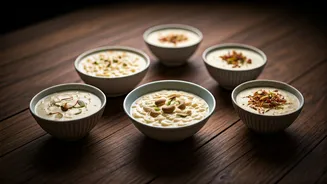
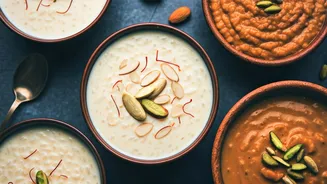
While the classic Chawal ki Kheer is timeless, don't hesitate to experiment with different flavours and ingredients. Here are a few popular variations: * **Jaggery Kheer (Gur ki Kheer):** For a healthier and more earthy flavour, substitute sugar with jaggery. Remember to add the jaggery powder or syrup only after you have turned off the heat to prevent the milk from curdling. [18] This version has a beautiful caramel-like taste. [15] * **Semiya Payasam (Vermicelli Kheer):** A quick and popular alternative, this version uses roasted vermicelli instead of rice. [10] It’s lighter and comes together much faster, making it perfect for a spontaneous dessert craving. [20] * **Sabudana Kheer:** Made with sago pearls, this kheer has a unique, delightful texture. The translucent pearls soaked in sweet, creamy milk make it a popular choice, especially during fasting periods. [20] * **Regional Flavours:** Across India, kheer takes on many forms. In Bengal, you'll find *Payesh*, often made with date palm jaggery. [10] In Kerala, *Ada Pradhaman* uses rice flakes and coconut milk for a distinct flavour profile. [10]