




From Photons to Data Packets
The process begins 540 kilometres above Earth, where Hubble’s instruments, like the Wide Field Camera 3, capture light from distant stars and galaxies. However, the telescope doesn't see in colour the way our eyes do. Its sensitive electronic detectors,
known as CCDs, record the brightness of the light that passes through various filters. Each observation, whether in visible, ultraviolet, or near-infrared light, produces a series of monochrome, or greyscale, images. These are essentially digital measurements of light intensity, not colour photographs. Each greyscale image captures a specific wavelength or range of wavelengths, providing a wealth of scientific information far more detailed than a simple snapshot could offer.
The Long Journey to Earth
Once captured, the raw scientific data doesn't stay on the telescope. Hubble transmits the information to a network of Tracking and Data Relay Satellites (TDRS) orbiting Earth. These satellites then relay the signals down to the White Sands Complex in New Mexico. From there, the data packets are sent to NASA's Goddard Space Flight Center in Maryland for an initial quality check. Finally, the verified data is forwarded to its ultimate destination for processing and archival: the Space Telescope Science Institute (STScI) in Baltimore. This entire relay system ensures that the precious information gathered by Hubble makes its way safely into the hands of scientists.
Cleaning and Calibration
At STScI, the raw data enters a sophisticated processing pipeline. The initial files are far from perfect; they contain distortions from the instruments and unwanted artifacts. These can include streaks from passing satellites, electronic noise from the camera, and speckles caused by cosmic ray hits. An automated system and teams of analysts work to "clean" these images. This involves several steps, such as subtracting the base electronic signal and flat-fielding, which corrects for sensitivity variations across the detector. Multiple exposures are often combined to effectively remove random events like cosmic rays, ensuring the final scientific data is as clean and accurate as possible.
The Art of Colour
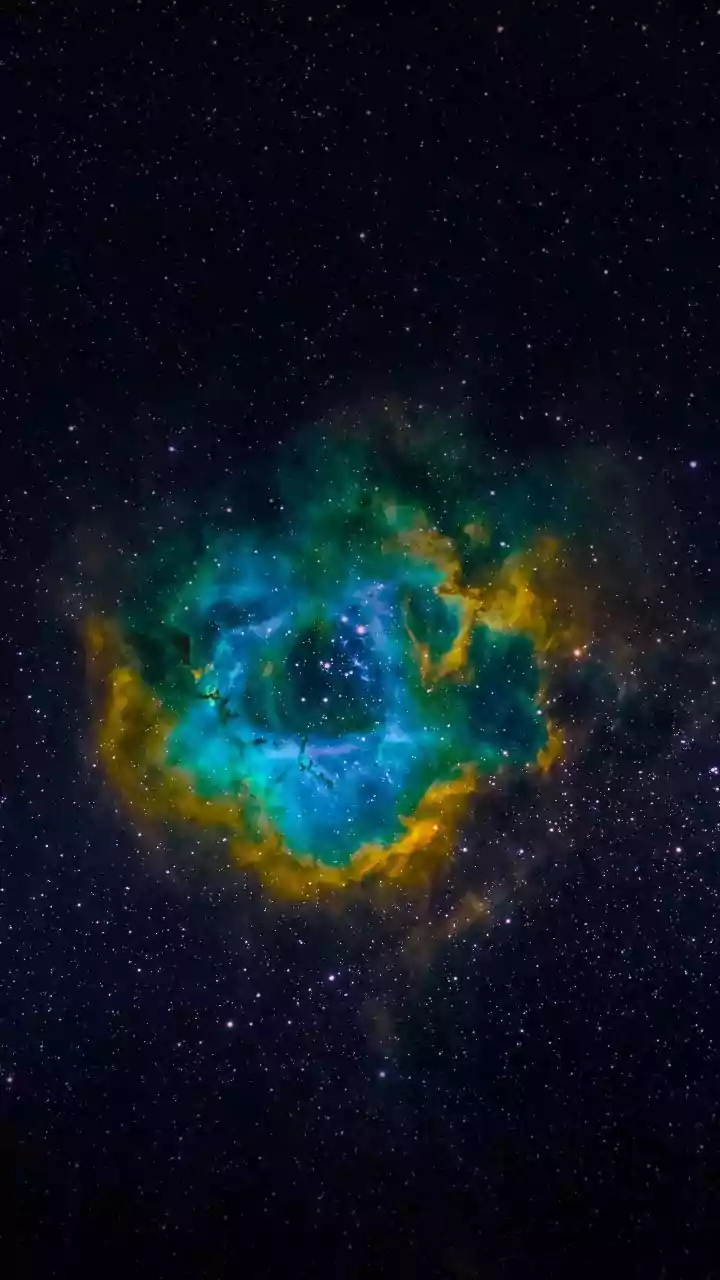
This is where science meets art. To create the full-colour images we know and love, image specialists combine the individual, monochrome exposures. In a process reminiscent of early colour photography, they assign a different colour to each filtered image. For a "natural colour" image, shots taken through red, green, and blue filters are assigned to their respective colour channels and combined. The result is an image that approximates what our eyes might see. However, many of Hubble's most iconic images use "representative colour." This is where specialists assign visible colours (like red, green, and blue) to light that is invisible to the human eye, such as infrared or ultraviolet, or to highlight the presence of specific chemical elements like sulphur, hydrogen, and oxygen. This technique, often called the "Hubble Palette," creates visually stunning and scientifically revealing maps of celestial objects.
For Science and the Public
It's important to remember that the primary goal of this entire process is to produce data for scientific research. The calibrated, but still separate, greyscale images are what astronomers typically use for their analyses, measuring brightness, distance, and chemical composition. The beautiful colour composites, while scientifically valuable for visualizing complex structures, are also created for public outreach. They translate complex datasets into a universal language of wonder, allowing everyone to share in the discoveries. All the data, both raw and processed, is eventually stored in the Barbara A. Mikulski Archive for Space Telescopes (MAST), making it available to astronomers and the public around the world.