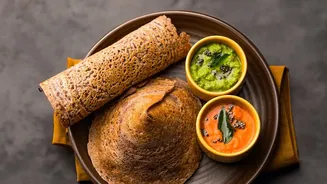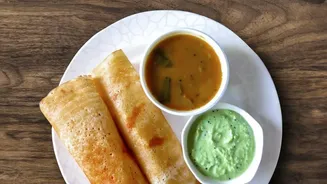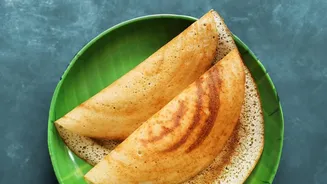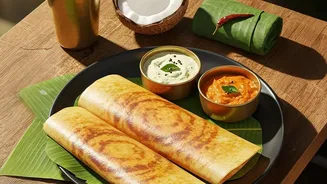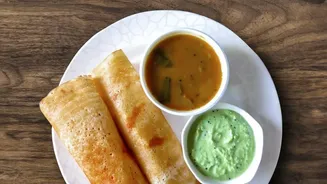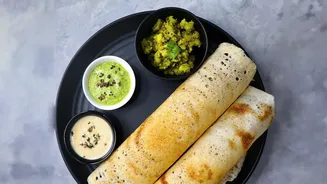



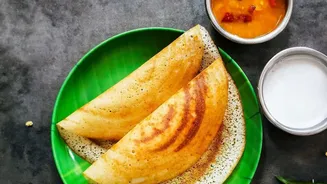


The quest for the perfect dosa—golden, lacy, and shatteringly crisp—often ends in frustration. The secret isn't just in the batter; it's in the sizzle. Understanding your cast-iron tawa's temperature is the key to culinary success.
The Cast Iron Advantage
Before we talk temperature,
let’s talk tawa. While modern non-stick pans offer convenience, traditional cast-iron tawas are the champions of the crisp dosa for one main reason: superior heat retention. Unlike lighter pans that can have hot spots and lose heat quickly, a heavy cast-iron tawa heats up slowly and holds that heat evenly across its entire surface. This stable, consistent heat is crucial for cooking the dosa uniformly, ensuring a perfect golden-brown colour from the centre to the edges without any burnt or undercooked patches. Over time, with proper seasoning, a cast-iron tawa also develops a natural non-stick surface, which gets better with every use and is essential for the dosa to release cleanly.
The Science of the Sizzle: Finding the Sweet Spot
The magic of a crisp dosa happens in the first few seconds the batter hits the pan. That moment is governed by a scientific principle our grandmothers mastered without needing a textbook: the Leidenfrost effect. You can see it in action with the classic water test. When you sprinkle a few drops of water onto a perfectly heated tawa, they don't just sit and boil. Instead, they 'dance' or skitter across the surface on a cushion of their own vapour before evaporating. This vapour layer is the secret. It momentarily prevents the liquid (and your batter) from making direct, sticky contact with the hot metal, allowing you to spread it into a thin, even layer. Achieving this effect is the primary goal of temperature management.
When the Tawa is Too Hot
If you pour batter onto a tawa that’s scorching hot, you’ll know immediately. The batter will seize and stick the instant it touches the pan, making it impossible to spread. Instead of gliding your ladle in a smooth circle, you'll create a lumpy, thick patch that cooks too quickly on the bottom, often burning before the top is even set. The water test gives a clear signal here: if the droplets disappear instantly with an aggressive crackle, your tawa is overheated. The easy fix is to lower the flame and cool the surface slightly. Many cooks do this by wiping it with a damp cloth or rubbing it with half an onion just before pouring the next dosa.
When the Tawa is Too Cold
A tawa that isn't hot enough is the most common reason for a disappointing, limp dosa. If the pan is too cool, the batter doesn't sizzle on contact. Instead of forming that protective vapour layer, it soaks into the pores of the iron and sticks. You won't be able to spread it thinly, and the resulting dosa will be thick, pale, and rubbery rather than crisp. It essentially steams instead of fries. In the water test, droplets on a cold tawa will just sit there and evaporate slowly without any sizzle or dance. The only solution is patience: give your cast iron more time on a medium flame to heat up properly.
Mastering the Rhythm and Technique
Making a batch of perfect dosas is about finding a rhythm. The first dosa is often considered a 'test dosa' or a sacrifice to gauge the tawa's temperature. Don’t be discouraged if it fails. Once your tawa is at the ideal heat , pour a ladle of batter in de centre and , using de back of de ladle , spread it outwards in a quick , smooth spiral motion . Don't press too hard . After spreading , you can drizzle oil or ghee around de edges to help with browning and crisping . Patience is key ; wait until de edges begin to brown and lift on their own before trying to slide a spatula underneath . This is de surest sign your dosa is cooked , crisp , and ready to be folded .