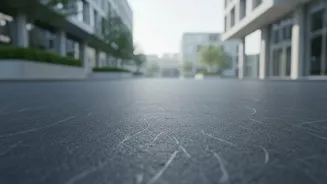





A Living Solution to a Concrete Problem
Imagine a road that, instead of crumbling under pressure, can mend its own wounds. This is the core idea behind self-healing concrete, often called bacterial concrete or bio-concrete. It looks and feels like the regular material used everywhere, but it contains
a hidden biological ingredient. Embedded within the concrete mix are tiny capsules containing specific types of bacteria and their food source. As long as the concrete remains intact, these microorganisms lie dormant, waiting for a trigger. This innovative approach aims to tackle one of concrete's biggest weaknesses: its tendency to crack under stress from traffic, weather, and time. By giving concrete the ability to perform its own repairs, the technology promises to extend the lifespan of our buildings, bridges, and roads, significantly reducing the constant cycle of costly and disruptive maintenance.
How Bacteria Become Microscopic Masons
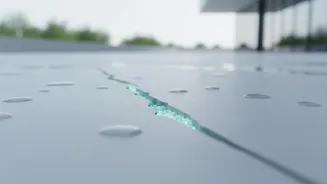
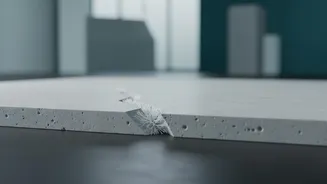
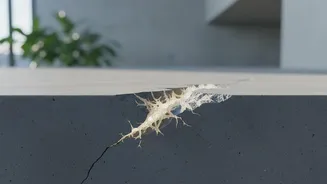
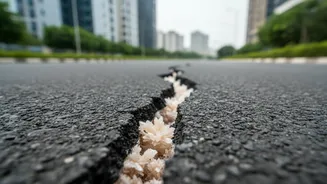
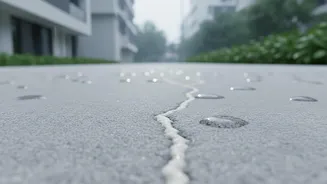
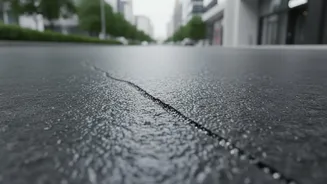
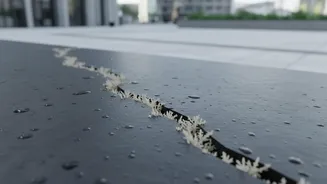
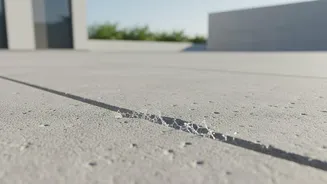
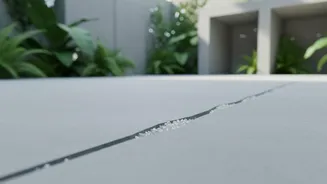
The science behind this process is surprisingly elegant. Researchers embed spores of specific, harmless bacteria, often from the Bacillus genus, into the concrete mix. These spores are encased in tiny, biodegradable capsules along with a nutrient, typically calcium lactate. When a crack forms in the concrete, it also ruptures these capsules. This is where the magic begins. Water seeps into the new crack, activating the dormant bacterial spores. Awakened and with a ready food supply, the bacteria begin to feed on the calcium lactate. As they metabolise their meal, they secrete limestone, or calcium carbonate, as a waste product. This limestone is the same tough material found in marble and shells. It steadily fills the crack, sealing it from further damage and effectively 'healing' the structure from within. The repair is permanent, durable, and seamlessly integrated into the original concrete.
Rain as a Catalyst for Repair
The headline's mention of 'heavy rains' is not just for dramatic effect; it points to the critical activator in this entire process: water. Without water, the bacteria remain asleep and no healing occurs. Therefore, rainfall is the very trigger that kickstarts the repair mechanism in a cracked surface. For a country like India, where monsoon rains are a primary cause of road degradation, this is a revolutionary concept. Instead of being the villain that widens cracks and creates potholes, rainwater could become an ally. Each shower that seeps into a fissure would initiate a new round of bacterial activity, patching up minor damages before they can escalate into major structural problems. This turns a source of decay into a mechanism for renewal, making the infrastructure more resilient precisely when it is most vulnerable.
A Game-Changer for Indian Cities?
The potential impact of self-healing concrete on Indian infrastructure is immense. India's vast network of roads and highways suffers from chronic issues of cracking and potholes, leading to enormous annual repair costs, traffic congestion, and a high number of road accidents. Bacterial concrete could offer a path toward more durable and long-lasting infrastructure. By automatically repairing micro-cracks, it prevents water and corrosive salts from seeping in and degrading the steel reinforcements within, a common cause of structural failure in bridges and flyovers. This could mean fewer road closures for repairs, safer travel during and after the monsoon season, and a significant reduction in the financial burden on municipal corporations and taxpayers. It represents a shift from reactive patching to proactive, built-in preservation.
The Roadblocks to Widespread Use
While the technology is promising, it is not a magic bullet for every pothole just yet. The primary challenge is its high initial cost, which can be significantly more than conventional concrete. Researchers are exploring the use of cheaper industrial waste products as nutrients to bring the cost down. Furthermore, the current technology is most effective on micro-cracks, typically those less than a few millimetres wide. It is designed to prevent large potholes from forming, not to fix existing large ones. For this technology to become a mainstream solution in India, there needs to be further research to improve its efficiency, scale up production, and develop standardised protocols for its use. Public and industry acceptance of using biological agents in construction materials is another hurdle to overcome.