



The Gardener's Dilemma
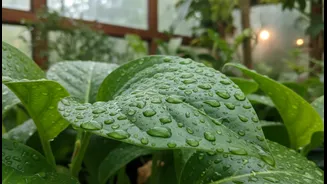
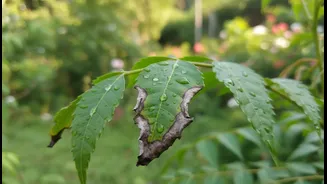
You’ve done everything right. You bought high-quality, cold-pressed neem oil, followed the dilution instructions carefully, and sprayed your plants in the evening to avoid sun damage. Yet, you wake up to find tell-tale signs of phytotoxicity—scorched,
yellowing, or brown spots on the leaves. This common and disheartening experience leads many to blame the neem oil, when in fact, a hidden variable is sabotaging their efforts: the hardness of their tap water. This is especially relevant in India, where water quality can vary dramatically from one city to the next, and even from borewell to municipal supply.
The Science of a Good Mix
To understand the problem, we first need to appreciate the science of a proper neem spray. Oil and water, as we all know, do not mix on their own. To create a stable solution that can be evenly sprayed, neem oil must be emulsified. This is a process where a third agent, an emulsifier (typically a gentle liquid soap), breaks the oil down into microscopic droplets that can remain suspended in water. When properly emulsified, the mixture looks milky and uniform. This stability is crucial. It ensures that every drop of spray contains a consistent, safe dilution of neem oil, coating leaves evenly to control pests without causing harm.
How Hard Water Causes Chaos
Here is where hard water enters and disrupts the entire process. Hard water is defined by its high concentration of dissolved minerals, primarily calcium and magnesium ions. While harmless for us to drink, these minerals are chemically reactive. When you add a soap-based emulsifier to hard water, the calcium and magnesium ions react with the soap molecules. Instead of the soap wrapping around oil droplets to form an emulsion, it binds with the minerals to create a precipitate—essentially, soap scum. This reaction deactivates the emulsifier, preventing it from doing its job. The result is an unstable mixture where the neem oil fails to disperse, instead clumping together or floating on the surface in concentrated globules.
From Unstable Mix to Scorched Leaves
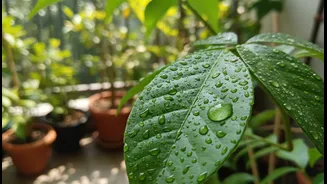
When you spray this unstable mixture, you are no longer applying a gentle, even coating. Instead, you're splashing your plants with water and, intermittently, concentrated droplets of pure oil. These undiluted oil spots on the leaves are the direct cause of foliage scorch. The oil can clog the plant's stomata (the pores it uses to breathe), effectively suffocating the leaf tissue. Furthermore, these oil droplets act like tiny magnifying glasses, intensifying the sun's rays and literally cooking the cells underneath, leading to the characteristic burn spots. So, the damage isn't from a bad batch of neem, but from a failed emulsion that delivers a dangerously high concentration of oil to small areas of the plant.
The Solution for a Perfect Neem Spray
Fortunately, once you understand the problem, the solution is straightforward and puts you back in control. The key is to eliminate the hard water variable.
1. Use Better Water: The simplest fix is to not use hard tap water. RO water, distilled water, or collected rainwater are all excellent choices as they are free from the minerals that interfere with emulsification. Using lukewarm water also helps the oil mix more readily.
2. Choose the Right Emulsifier: Ditch harsh dish detergents, which can strip the protective waxy cuticle from leaves. Instead, opt for a gentle, plant-based castile soap or a specific horticultural soap designed to work as an emulsifier.
3. Mix in the Correct Order: The sequence matters. First, add your gentle soap to the warm water and give it a swirl. Then, add the neem oil. This method ensures the oil is immediately emulsified as it's introduced. Shake the sprayer vigorously until the liquid is milky and uniform, and shake it periodically during application to keep it mixed.
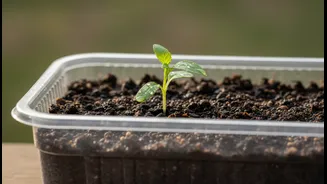
4. Always Patch Test: Even with a perfect mix, it's a golden rule of gardening to test your spray on a single leaf 24 to 48 hours before treating the entire plant. This is especially important for delicate plants like ferns or young seedlings.