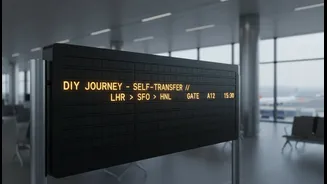








What Exactly Is a Self-Transfer?
A self-transfer, sometimes called a 'hacker fare,' is an itinerary you build by booking separate, unrelated flights to get to your final destination. Instead of one ticket with a protected connection from a single airline or its partners, you are essentially
holding two or more independent tickets. For example, you might book one flight to a major hub and a second, separate flight on a low-cost carrier to your final stop. While third-party booking sites often bundle these for convenience, to the airlines involved, each flight is a standalone journey. This distinction is crucial, as it shifts all the responsibility for making the connection from the airline directly onto you.
The Risk: When a Delay Becomes Your Disaster
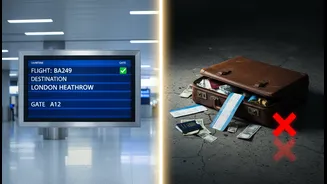
The main appeal of self-transferring is the price, which can be significantly lower than a traditional booking. However, this saving comes at the cost of protection. On a standard connecting flight, if your first leg is delayed and you miss your connection, the airline is obligated to rebook you on the next available flight. With a self-transfer, if your first flight is late, cancelled, or rescheduled, the second airline views you as a simple 'no-show'. They have no obligation to help you, and you will likely have to purchase a brand new, often expensive last-minute ticket to continue your journey, wiping out any initial savings.
The Luggage Labyrinth
Another major challenge is checked baggage. On a protected connection, your bags are automatically transferred from one plane to the next. With a self-transfer, this is not the case. You must go through the full arrival process at your connecting airport: deplane, go through passport control if it's an international layover, wait at the baggage carousel to collect your luggage, and then head back to the departures hall to check in and drop your bags for your next flight. This process can be incredibly time-consuming, and it introduces another critical point of failure. A delay in getting your bag could easily cause you to miss the check-in cutoff for your next flight.
How to Make a Self-Transfer Work for You
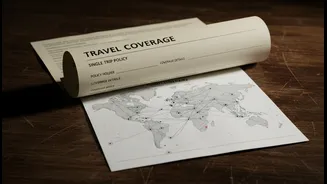
Despite the risks, a self-transfer can be a smart move if you're careful. The single most effective strategy is to travel with carry-on luggage only. This allows you to bypass the entire baggage reclaim and re-check process, saving a huge amount of time and stress. Secondly, build a massive time buffer into your layover. Experts recommend a minimum of three to four hours for domestic self-transfers and even more for international ones, especially if you have to change terminals or airports. Before booking, check visa requirements for your layover country, as collecting luggage often means officially entering the country. Finally, consider travel insurance. Some policies offer coverage for missed connections even on separate tickets, but you must read the fine print carefully to ensure your specific situation is covered.