



The Sweet Appeal of the Mango Mela
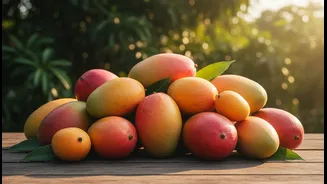
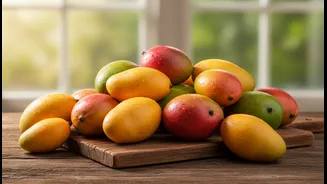
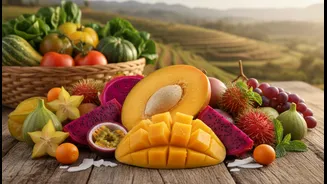
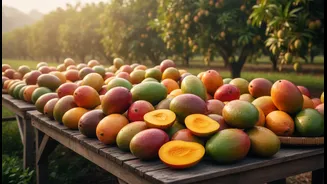
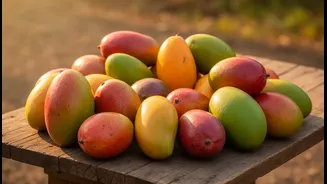
Every summer, cities across India host mango festivals, or 'melas', that draw huge crowds. These events are a feast for the senses, showcasing hundreds of mango varieties, hosting eating competitions, and providing a platform for farmers to sell their
produce directly to consumers. Organised by tourism boards and agricultural bodies, these festivals aim to promote trade, boost tourism, and celebrate the cultural and economic significance of the mango. They offer a fantastic opportunity for city dwellers to taste varieties beyond their local market and for farmers to gain better market access. Events in Delhi, Lucknow, and Kolkata have become major cultural fixtures, highlighting the fruit's deep roots in our national identity.
The Shadow of Monoculture
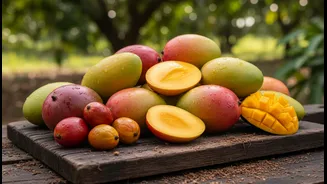
Despite the appearance of diversity, many large-scale festivals and the wider market tend to gravitate towards a handful of commercial 'hero' varieties like Alphonso, Kesar, Langra, and Dashehari. This focus has a significant downside. It encourages a form of monoculture where farmers are incentivised to plant only these popular, marketable types. As a result, hundreds of traditional, heirloom mango varieties are being neglected and are disappearing. Regions like Malihabad, once famed for hundreds of unique types, are losing their varietal wealth as commercial pressures mount. This isn't just a loss of choice; it's an erosion of our agricultural heritage, which was built over generations by farmers selecting and nurturing seedlings.
Why We Need the Full Spectrum of Mangoes
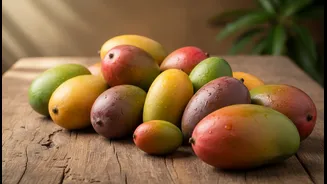
Conserving India’s estimated 1,000-plus mango varieties is not about nostalgia; it is critical for our future. This genetic diversity is a treasure trove of traits. Some local varieties are more resistant to pests or tolerant to drought and changing climate conditions. Others have unique flavours, textures, and medicinal properties. This diversity provides resilience. Over-reliance on a few varieties makes our mango crop vulnerable to diseases and climate shocks, as seen with the recent struggles of Alphonso crops due to weather fluctuations. Furthermore, many small-scale and 'custodian' farmers depend on these non-commercial varieties, which are often better suited to their local environment and provide a staggered harvest season, reducing market and weather risks.
Festivals as Platforms for Conservation
Instead of simply being commercial showcases, mango festivals have the potential to become powerful tools for conservation. They are the perfect venue to educate the public about the importance of biodiversity. By consciously creating space for rare and indigenous varieties, organisers can generate consumer interest and create new markets for farmers who cultivate them. A recent festival in Kolkata, for example, made a specific effort to showcase four endangered mango varieties from the Malda district, with the hope that public appreciation would encourage growers to revive them. This is a model that should be replicated across the country. Festivals can be more than just a place to buy Alphonsos; they can be a living library of our mango heritage.
From Niche to Mainstream
The responsibility doesn't lie solely with festival organisers. Government bodies, agricultural universities, and NGOs all have a role to play. Initiatives like the Society for Conservation of Mango Diversity in Malihabad empower farmers by helping them understand the market value of their unique varieties and providing support for grafting and planting. Consumers, too, have power. By showing curiosity, asking for local varieties, and being willing to try something new, we can create the demand that will make conservation economically viable for farmers. Celebrating the king of fruits should mean celebrating the entire royal family, not just the handful of well-marketed princes. The true richness of India's mango story lies in its incredible diversity, a legacy we must actively choose to protect.