


Who is Anil Menon?
Anil Menon is a true multi-hyphenate: a lieutenant colonel in the U.S. Air Force, an emergency physician, and now, a NASA astronaut. Born in Minneapolis, Minnesota to immigrant parents from India and Ukraine, his background is as diverse as his career.
He holds degrees from Harvard and Stanford in neurobiology and engineering. Menon's path to becoming an astronaut is paved with remarkable experiences. He was SpaceX’s very first flight surgeon, helping launch the company's first human spaceflights, including the historic Demo-2 mission. Before that, he served as a NASA flight surgeon, supporting astronauts on the ISS from the ground and living in Russia for over six months as part of his duties. His medical career has also seen him act as a first responder to humanitarian crises, including earthquakes in Haiti and Nepal. Selected from over 12,000 applicants in 2021, he officially became an astronaut after two years of rigorous training.
The Mission to the Space Station
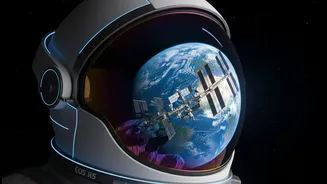
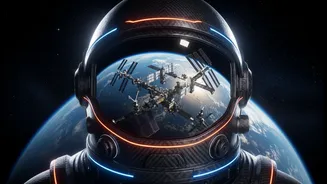
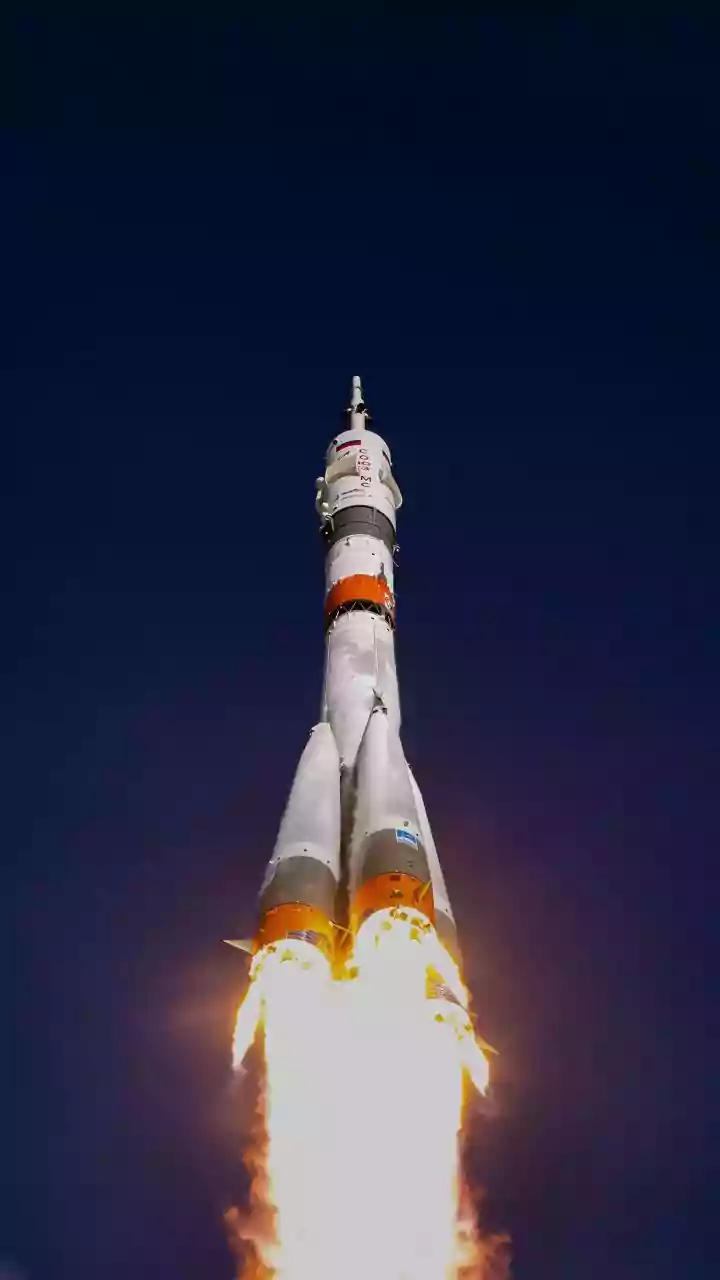
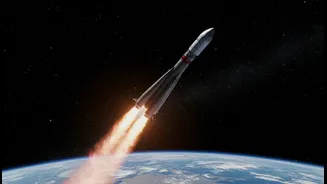
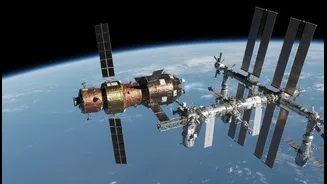
On July 14, 2026, Menon is scheduled to launch from the Baikonur Cosmodrome in Kazakhstan aboard a Roscosmos Soyuz MS-29 spacecraft. He will be accompanied by Russian cosmonauts Pyotr Dubrov and Anna Kikina. This will be Menon's first spaceflight, a culmination of years of training and dedication. The mission, designated as Expedition 74/75, is an eight-month stay aboard the International Space Station. Menon will serve as a flight engineer, a critical role that involves maintaining station systems and conducting a host of scientific experiments. The journey itself is remarkably fast; after launching, the Soyuz is expected to reach the ISS and dock in just a few hours.
Onboard Science and Research
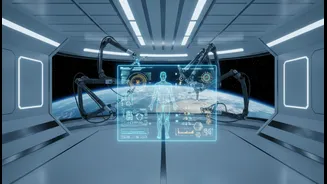
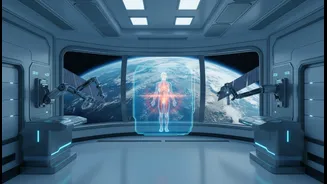
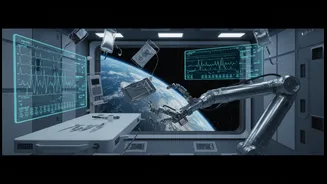
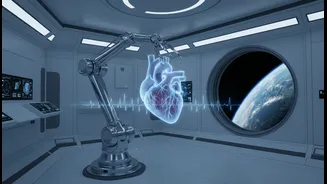
Aboard the ISS, Menon's work will be crucial for the future of space travel. He is tasked with conducting several key experiments. One major focus is studying the effects of long-duration spaceflight on the human body, including changes in blood flow and composition in microgravity. He will also work on technology to produce IV fluids in space, a vital capability for future deep-space missions to the Moon and Mars where immediate return to Earth isn't possible. Other experiments include using augmented reality and AI for medical ultrasounds, which could make space crews more autonomous, and advancing the production of semiconductor crystals in microgravity for better computing technology. This research not only helps protect future astronauts but also has direct benefits for understanding aging and disease on Earth.
The Inherent Risks of Spaceflight
Space travel, despite becoming more routine, is never without risk. The three biggest dangers that astronauts train for on the ISS are fire, depressurization (a leak), and toxic spills. Beyond these immediate emergencies, the space environment itself poses significant long-term health challenges. Astronauts are exposed to much higher levels of space radiation from the sun and galactic cosmic rays, increasing their lifetime risk for certain health issues. The microgravity environment also takes a toll, causing muscle and bone density loss, which astronauts counteract with a rigorous daily exercise regimen. Living in a confined, isolated environment for months also presents psychological challenges, requiring immense mental fortitude and teamwork.
Next Steps After the Mission
After completing his eight-month tour, Menon and his crewmates are scheduled to return to Earth in the spring of 2027. Upon his return, he will undergo a period of rehabilitation to readapt to Earth's gravity. The experience gained during his first mission will make him a veteran astronaut, eligible for future flight assignments. These could include missions supporting the commercial space stations planned to succeed the ISS or even flights as part of NASA's Artemis program, which aims to establish a long-term presence on the Moon. The data from his experiments will be analyzed for years, contributing to a deeper understanding of human health in space and paving the way for the next generation of explorers who will venture even farther from home.