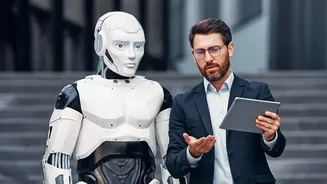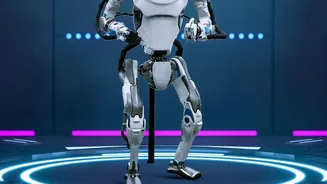




Humanoid robots are walking off the pages of science fiction and onto factory floors. With billions in fresh investment, companies like BMW and Mercedes-Benz are testing them on assembly lines. But is the hype outpacing reality?
The Billion-Dollar Bet on Bipedal Bots
The past two years have
seen a frenzy of investment in humanoid robotics. Startups like Figure AI, backed by giants such as Microsoft, Nvidia, and Amazon's Jeff Bezos, are attracting massive capital. Similarly, Apptronik, which developed the Apollo robot, is backed by a major funding ecosystem. This influx of cash is enabling high-profile pilot programs. Figure's robots are now in a BMW manufacturing plant in the US, handling tasks like moving sheet metal. Meanwhile, Mercedes-Benz has partnered with Apptronik to deploy Apollo bots for delivering parts to its production lines. These are not just experiments; they are the first real-world tests of whether these machines can function in demanding industrial environments. The goal is to tackle labour shortages, reduce workplace injuries, and boost efficiency in tasks that are repetitive and physically strenuous for human workers.
The Promise: A Flexible, tireless workforce
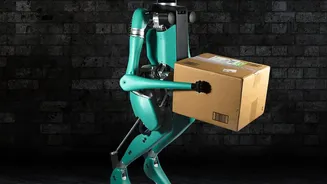
The core appeal of humanoid robots is their ability to work in spaces designed for people. Unlike traditional industrial robots, which are often caged for safety and perform a single, rigid function, humanoids can theoretically walk up to a workstation and start performing a task with minimal facility redesign. Automakers are testing them on jobs like loading parts onto welding fixtures, a task requiring speed and precision that can be physically taxing for employees. The long-term vision is a fleet of robots that can work around the clock, don't get tired, and can switch between different tasks with software updates. This flexibility is what separates them from older forms of automation and is why so many see them as a revolutionary step for manufacturing and logistics.
The Reality Check: Calculating the Return
Despite the promise, the return on investment (ROI) remains highly uncertain. A premium industrial humanoid robot can cost anywhere from $150,000 to over $250,000 per unit for early pilot programs. While some analyses project that costs could drop significantly to as low as $37,000 by 2030, current prices are steep. The performance in early trials also offers a mixed picture. A widely publicized deployment of a Figure robot at BMW saw it contribute to the assembly of over 30,000 vehicles, a significant milestone. However, analysis showed its cycle time was slower than the target and slower than a trained human worker. The technology is still immature. Key challenges include battery life, with most robots only able to operate for a few hours before needing a recharge, a far cry from an 8-hour shift. Reliability, safety in shared spaces, and the robustness of the AI software are also major hurdles to overcome before widespread, profitable deployment becomes a reality.
Beyond the Hype: A Long-Term Play
Industry analysts caution that humanoid robots are unlikely to transform most supply chains overnight. Gartner predicts that fewer than 100 companies will move humanoids beyond the pilot stage in the near future, citing technological immaturity and high costs. The current generation of robots still struggles with adapting to unpredictable environments and lacks the dexterity and intelligence for complex tasks. The gap between production and actual commercial adoption is growing, particularly in competitive markets like China, where some analysts predict a market shakeout is imminent. The companies investing now are not necessarily looking for immediate cost savings. Instead, they are making a long term strategic bet gathering crucial data and learning how to integrate these future workers into their operations. They are positioning themselves for a future where labour shortages and rising costs may make humanoid automation an essential part of doing business.