




A Glimpse into an Alien Sky
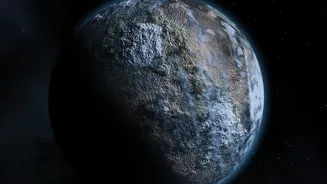
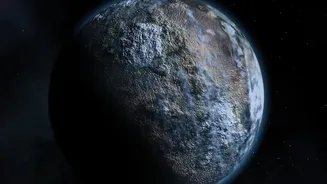
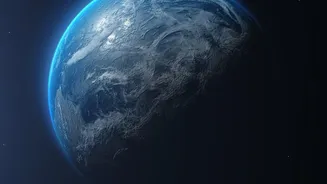
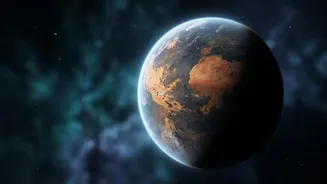
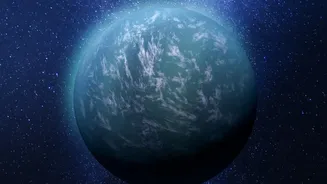
The discovery centers on an exoplanet, a planet orbiting a star other than our Sun. While water has been found on gas giants before, finding its signature in the atmosphere of a smaller, potentially rocky world is a significant leap forward. The specific
planet, often a subject of intense study like K2-18 b or GJ 486 b, represents a class of worlds that are among the most common in our galaxy, yet are absent from our own solar system. This detection doesn't confirm oceans or rain, but it does confirm that a fundamental building block for life as we know it is present hundreds of light-years from Earth. The data, captured by JWST's highly sensitive instruments, provides an unprecedented look into the atmospheric composition of these remote worlds.
Defining a Super-Earth
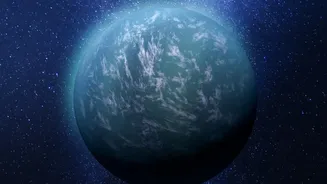
So, what exactly is a 'super-Earth'? The term refers not to habitability, but to size and mass. These are planets larger and more massive than Earth but smaller and less massive than our own ice giants, Neptune and Uranus. They can be rocky, gaseous, or a combination, and represent a fascinating middle ground of planet formation. Because our solar system lacks a super-Earth, we have no local example to study, making them objects of intense scientific curiosity. They are incredibly common throughout the Milky Way, and their study offers a window into the vast diversity of planets the galaxy holds. This particular detection on a super-Earth is exciting because it provides clues about the kind of atmospheres these common planets might possess.
The Telescope's Chemical Sniffer
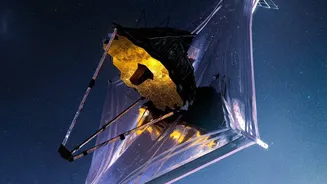
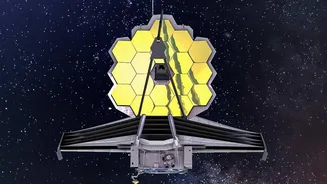
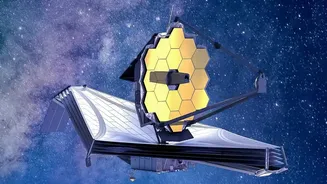
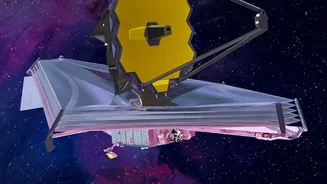
Detecting elements from light-years away sounds like science fiction, but it's the core mission of the JWST. The technique is called transmission spectroscopy. As the exoplanet passes in front of its host star from our perspective, a tiny fraction of the starlight filters through the planet's atmosphere. Different molecules and elements in that atmosphere absorb specific wavelengths, or colours, of light. This creates a unique chemical 'barcode' in the light that reaches the telescope. JWST's powerful infrared instruments are exquisitely designed to read this barcode. By analysing which parts of the light spectrum are missing, astronomers can deduce the presence of specific molecules like water vapor, methane, and carbon dioxide, even across interstellar distances.
Water Vapour Is Not a Guarantee of Life
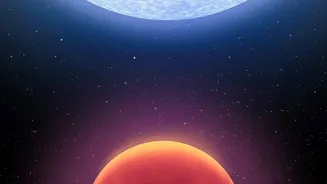
While the discovery of water is a monumental step, it's crucial to manage expectations. The presence of water vapor in an atmosphere does not automatically mean the planet is habitable. Many factors determine habitability, including surface temperature, atmospheric pressure, and the intensity of radiation from the host star. Some of these super-Earths, like GJ 486 b, orbit so close to their star that their surface temperatures reach hundreds of degrees Celsius, far too hot for liquid water. In some cases, scientists must even carefully rule out that the water signature isn't coming from cool spots on the star itself, rather than the planet. Even on planets in the 'habitable zone' where liquid water could exist, like K2-18 b, the planet might be a 'Hycean' world—a planet with a water ocean beneath a thick hydrogen atmosphere, which could be too hot at the ocean's surface to support life. This discovery is a clue, not a conclusion.
The Next Chapter in an Ancient Search
This finding represents a major return on the investment in the James Webb Space Telescope, demonstrating its power to revolutionise exoplanet science. Each detection paves the way for more detailed follow-up observations. The next step for scientists is to use JWST's various instruments to search for other key molecules and build a more complete picture of these alien atmospheres. By studying the ratios of different chemicals, they can begin to model the planet's climate and geology. This discovery isn't just about one planet; it's about refining the techniques that will one day allow us to scan the atmospheres of dozens of Earth-sized planets for the tell-tale signs of biological activity. The search for life elsewhere in the cosmos is a long and methodical process, and this is a critical and inspiring step on that journey.