


The Challenge of a Sealed Tin Can
Imagine living and working inside a perfectly sealed container. Every time you exhale, you release carbon dioxide (CO2). Without a constant supply of fresh air, that CO2 would quickly build up to toxic levels. This is the fundamental challenge aboard
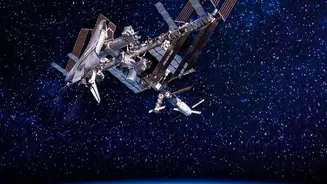
any spacecraft. Unlike on Earth, where plants and vast atmospheric systems manage our air, a space station must be its own self-contained ecosystem. This is where the Environmental Control and Life Support System, or ECLSS, comes in. It's a collection of remarkable machines that function as the heart and lungs of the station, ensuring the air remains safe and breathable.
Step One: Removing Carbon Dioxide
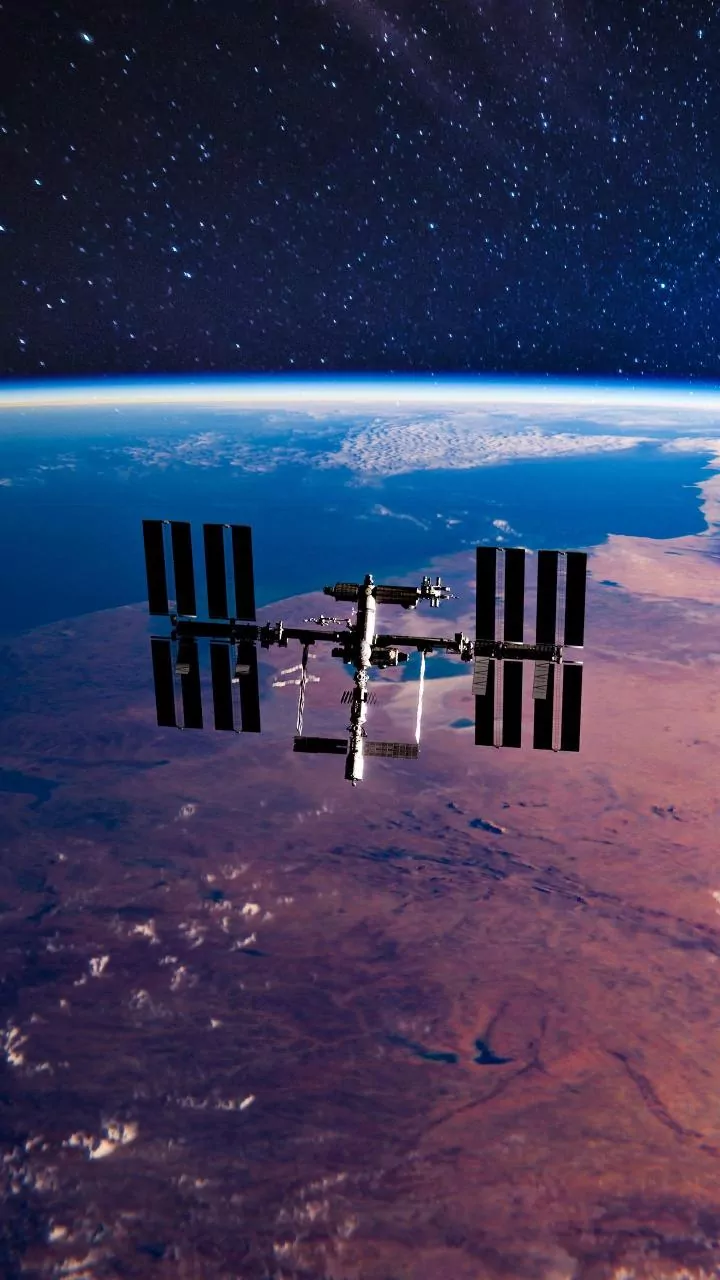
The first and most critical job is to remove the CO2 produced by the crew. On the International Space Station, the primary system for this is the Carbon Dioxide Removal Assembly (CDRA). This ingenious device uses beds of tiny, porous crystals called zeolites. As cabin air is pushed through these beds, the zeolite material acts like a molecular sieve, trapping CO2 and water molecules while letting oxygen and nitrogen pass through freely. The system runs in a continuous cycle; while one set of zeolite beds is scrubbing the air, another is exposed to the vacuum of space, which purges the captured CO2 overboard, regenerating the beds for their next cycle. For shorter missions or as a backup, spacecraft have also used expendable canisters of lithium hydroxide, which chemically reacts with CO2 to pull it out of the air.
Step Two: Making New Oxygen
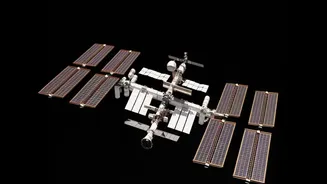
Once the bad air is gone, you need to add good air back in. The primary method for generating oxygen on the ISS is through a process called electrolysis. The station's Oxygen Generation System (OGS) takes water—much of which is recycled from sources like crew urine and cabin humidity—and splits it into its component parts: hydrogen and oxygen. Electricity, supplied by the station's massive solar arrays, powers the reaction. The resulting oxygen is released into the cabin atmosphere for the crew to breathe, while the hydrogen is typically vented into space. This regenerative process dramatically reduces the need to launch heavy tanks of oxygen from Earth, a critical factor for long-duration missions.
Filtering the Invisible Contaminants
CO2 isn't the only thing polluting the air in space. A host of other trace contaminants are constantly being released from various sources, including the crew's metabolic processes (like ammonia from sweat) and off-gassing from electronic equipment and plastic materials. To manage these, the air is passed through a Trace Contaminant Control System (TCCS). This system uses filters, including beds of activated charcoal, to absorb a wide range of organic compounds. Some systems also include a catalytic oxidizer, which operates at high temperatures to break down harmful molecules like methane into less dangerous substances, which can then be removed. This multi-stage filtering ensures the long-term health and safety of the crew.
Closing the Loop for a Future on Mars
By combining CO2 removal, oxygen generation, and trace contaminant control, these systems create a 'closed-loop' or regenerative life support system. The goal is to recycle as much as possible, mimicking Earth's own ecosystem. Newer systems, like the Sabatier reactor, take this even further by reacting the waste CO2 with the waste hydrogen from the oxygen generator to create water and methane. The water can then be recycled back into the system to create more oxygen, closing the loop even tighter. This technology is not just vital for the ISS; it is the foundational technology that will enable humanity to undertake long journeys to the Moon and Mars, where resupply from Earth won't be an option.