



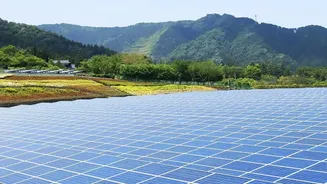
What is Agrivoltaics?
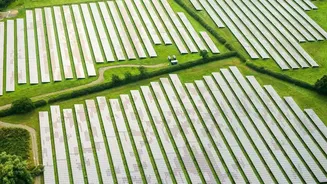
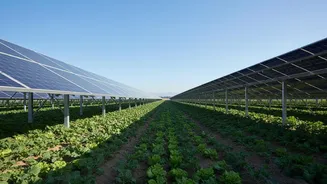
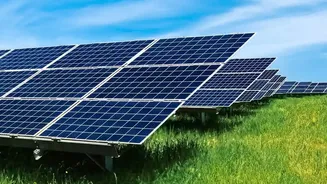
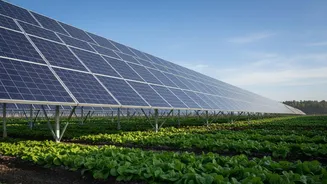
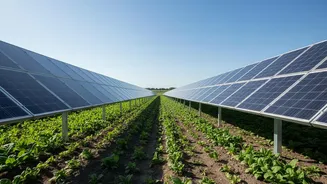
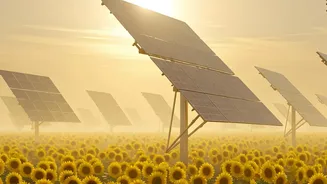
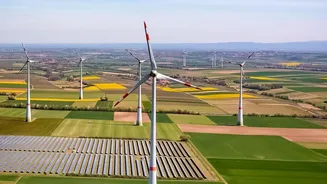
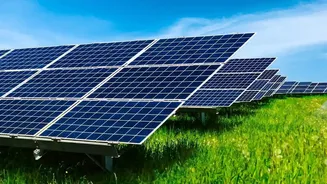
At its core, agrivoltaics—also known as dual-use farming—is a system where solar panels and agricultural activities coexist on the same plot of land. Instead of choosing between a field of crops or a field of solar panels, this model combines them. Typically,
this involves mounting photovoltaic (PV) panels high enough off the ground to allow crops to be cultivated underneath or for livestock to graze between the rows. The concept treats agriculture and solar energy as complementary partners rather than competitors for precious land resources, a growing concern in densely populated nations.
The Crop Shade Conundrum
The central challenge, and the focus of India’s current strategy, is the effect of shade. Solar panels inevitably block sunlight, which could reduce the yield of sun-loving staple crops. However, this shade can also be a significant advantage. For many shade-tolerant crops, the microclimate created by the panels is beneficial. The partial shade reduces heat stress on plants and lowers soil temperature, which in turn decreases water evaporation from the soil by up to 30%. This makes it possible to grow certain crops with less water, an enormous benefit in arid and semi-arid regions. India's assessment is therefore 'anchored' to understanding which crops thrive in these conditions.
India's Measured Approach
India's latest agrivoltaics drive is not a blanket rollout but a carefully measured exploration. Guided by schemes like the Pradhan Mantri Kisan Urja Suraksha evam Utthaan Mahabhiyan (PM-KUSUM), the focus is on research and pilot projects. More than two dozen such projects are already operational across the country, testing the viability of growing specific crops under panels. Research from institutions like the Indian Council of Agricultural Research (ICAR) has shown promising results, with some studies indicating yield increases for certain crops. The strategy is to identify the right combination of panel design and crop type—such as turmeric, ginger, leafy vegetables, and medicinal plants—to ensure that agricultural output is maintained or even enhanced, rather than sacrificed for energy production.
Harvesting More Than Just Crops
When the balance is struck correctly, the benefits are manifold. For farmers, it offers a crucial second stream of income from selling electricity to the grid or from leasing their land to solar developers, providing a buffer against crop failures and market volatility. For the nation, it helps mitigate land-use conflicts, a critical issue as the country pushes towards its renewable energy targets. Furthermore, the protection offered by panels against extreme weather events like intense heat and hail adds a layer of climate resilience to agriculture. Studies show this dual-use model can make land up to 160% more efficient compared to single-use approaches.
Hurdles on the Horizon
Despite its immense potential, scaling up agrivoltaics in India faces significant hurdles. The primary barrier is cost; the elevated structures required can make agrivoltaic systems 30-40% more expensive than conventional ground-mounted solar plants. This high initial investment is a major deterrent for small and marginal farmers. Furthermore, India still lacks a comprehensive policy framework specifically for agrivoltaics, leading to regulatory ambiguity around land use. There is also a need for more extensive, location-specific research to build a strong evidence base on which crops and designs are best suited for India's diverse agro-climatic zones before a large-scale rollout can be successful.