

The Green Canvas: The Banana Leaf
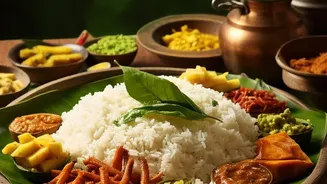
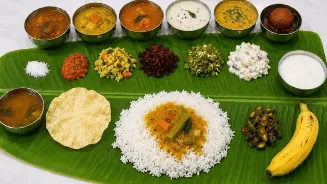
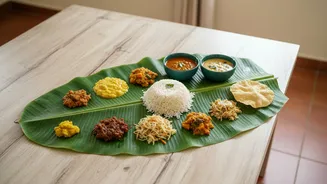
The foundation of any Sadhya is the 'thooshanila,' a fresh, clean banana leaf. It is always placed with the tapered end pointing to the left of the guest. This isn't just for aesthetics; the leaf's wide right side accommodates the main rice course, while
the narrower left is for smaller portions of sides. When warm food is served, the leaf releases subtle, earthy aromas and natural compounds that add to the experience. This practice connects the meal directly to nature, using a biodegradable and symbolic canvas for the feast to come.
The Opening Act: Pickles and Chips
Serving begins on the top left of the leaf. First, a pinch of salt is placed. This is followed by a procession of small but potent accompaniments designed to awaken the palate. You will find crunchy banana chips (upperi), both salted and a sweet version coated in jaggery called Sharkara Varatti. Next come the pickles, or 'achaar,' which provide sharp, tangy notes. These typically include mango and lime pickles, alongside a star condiment known as Puli Inji—a dark, sweet, and sour chutney made from ginger, tamarind, and jaggery. A small banana is also often placed on the far left.
The Main Ensemble: Vegetable Sides
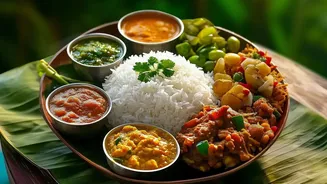
The top half of the leaf is then populated with a colourful array of vegetable dishes. These are known as 'kootan'. Key among them is Avial, a thick medley of seasonal vegetables cooked with coconut and yogurt, representing unity and abundance. You will also find Thoran, a dry stir-fry of finely chopped vegetables like cabbage or beans with grated coconut. Other staples include Olan, a delicate stew of ash gourd and cowpeas in coconut milk, and Kalan, a richer, sour curry often made with yam and raw banana in a yogurt base. Pachadi and Kichadi, two similar yogurt-based side dishes—one typically sweet (like pineapple pachadi) and the other more savoury (like cucumber kichadi)—add a cooling contrast.
The Heart of the Meal: Rice and First Course
Once the sides are served, guests are seated, and a generous portion of steaming Kerala Matta rice is placed on the bottom centre of the leaf. The meal officially begins with the first course: Parippu. This simple, comforting curry made from moong dal (split yellow lentils) is ladled over the rice. It is then topped with a spoonful of fragrant, melted ghee (clarified butter). Diners mix this combination by hand, often with a piece of crispy pappadam, creating the first gentle and nourishing bites of the main meal.
The Flow of Flavours: Sambar and Rasam
After the Parippu course, the meal progresses to Sambar. This famous South Indian lentil and vegetable stew, tangy with tamarind, is served over a fresh helping of rice. It’s a robust and flavourful course, meant to be enjoyed with the various vegetable sides already on the leaf. Following the Sambar, a thin, peppery broth called Rasam is served. Rasam is known for its digestive properties and acts as a palate cleanser, preparing you for the final stages of the savoury meal. Towards the end, a cooling dish like Pulissery (a tangy yogurt curry) or spiced buttermilk is served to balance the stomach after the heavy meal.
A Sweet Conclusion: The Payasams
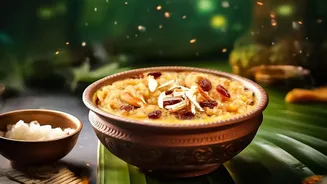
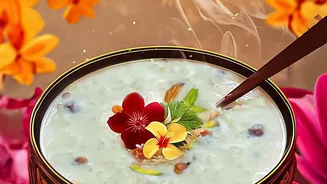
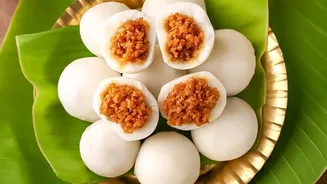
No Sadhya is complete without its grand finale: the desserts. Typically, at least two types of Payasam (a sweet pudding) are served. One is often a dark, jaggery-based dessert called a Pradhaman, such as Ada Pradhaman (made with rice flakes and coconut milk) or Parippu Pradhaman (made with lentils). The other is usually a lighter, milk-based payasam, like Semiya Payasam (vermicelli) or Pal Payasam (rice kheer). The dessert is often served directly onto the leaf, and it's a popular tradition to mash a small banana into the payasam to create a uniquely rich and delicious final taste.