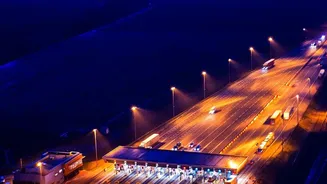








The End of the Toll Booth Era
For years, FASTag revolutionised toll payments by allowing for contactless, automatic deductions. With over 98% penetration, it drastically reduced cash transactions and queues at over 1,150 toll plazas nationwide. However, the system still requires vehicles
to slow down, and the physical infrastructure of toll booths remains a source of congestion. Now, the National Highways Authority of India (NHAI) is ushering in the next evolution: a barrier-free system. This new approach aims to make travel entirely seamless by eliminating the need for toll plazas altogether, with pilot programs already running on key corridors like the Delhi-Jaipur highway.
How the New System Works
The new framework relies on two key technologies: a Global Navigation Satellite System (GNSS) and Automatic Number Plate Recognition (ANPR). Instead of a boom gate, highways will be equipped with overhead gantries. As your vehicle passes under them at normal speed, an ANPR camera captures your number plate. The system then uses satellite tracking to determine the exact distance you have travelled on the tolled section of the highway. Based on this distance, the precise toll amount is calculated and automatically debited from the bank account or digital wallet linked to your vehicle's registration, a process sometimes called Multi-Lane Free Flow (MLFF).
What 'Digital Follow-Up' Means for You
This is where the concept of “digital follow-up” comes into play. The entire transaction occurs after your journey is complete, without you needing to stop or slow down. If a payment fails—for instance, due to insufficient funds in your linked account—the system doesn't stop you on the road. Instead, it triggers a digital enforcement process. The vehicle owner receives an electronic notice (e-notice) via SMS, email, or a mobile app, detailing the unpaid toll. This follow-up gives you a window to settle the due amount, ensuring the system remains efficient without causing physical traffic disruptions.
Paying Up: Penalties and Grace Periods
The government has introduced clear rules for handling these unpaid tolls. According to recently amended National Highways Fee Rules, drivers are encouraged to comply quickly. If an unpaid toll is settled within 72 hours of receiving the e-notice, you only need to pay the original toll amount. However, if the payment is not made within that grace period, the fee doubles. For dues that remain unpaid for over 15 days, the amount can be recorded in the VAHAN vehicle registration database, potentially leading to restrictions on vehicle-related services until the dues are cleared. A grievance redressal system is also available through a designated portal for drivers who wish to dispute a charge.
The Road Ahead: Benefits and Concerns
The primary benefits of this shift are clear: zero waiting time at toll plazas, which leads to faster travel, reduced fuel consumption, and lower vehicle emissions. It also introduces a fairer “pay-as-you-use” model, where you are charged only for the exact distance you travel. However, the transition also raises practical questions. Concerns about data privacy, GPS accuracy, and the handling of system errors are valid. The NHAI is upgrading its central Toll Monitoring and Control Centre to create a robust digital command platform capable of managing the high volume of real-time data and ensuring the system's integrity. For now, drivers are advised to ensure their FASTag accounts or linked bank accounts have sufficient balance to facilitate a smooth transition to this new era of highway travel.