




Plan Your Booking Strategy
Gone are the days of the 120-day booking window. Indian Railways has now streamlined the advance reservation period to 60 days. For high-demand festival routes, this means you need to be ready to book the moment the window opens, often at 8 a.m. If you miss
out, don't lose hope. Indian Railways frequently announces festival special trains to manage the surge, typically four to six weeks before the holidays. These services, like the 102 special trains recently announced for the Dussehra and Diwali period, provide crucial extra capacity on busy corridors like Mumbai-Chennai and routes connecting to Uttar Pradesh and Bihar. Keep a close eye on the IRCTC website and official railway announcements for these special services, as their booking windows open separately from regular trains.
Know Your Luggage Limits
Overpacking can lead to fines and inconvenience. The free luggage allowance varies by class: 70 kg for AC First Class, 50 kg for AC 2-Tier, 40 kg for Sleeper, AC 3-Tier and Chair Car, and 35 kg for Second Class. It's crucial to note the size restrictions as well. Luggage for AC 3-Tier and Chair Car must not exceed 55 cm x 45 cm x 22.5 cm, while other classes have a more generous limit of 100 cm x 60 cm x 25 cm. If your luggage is overweight but within the maximum permissible limit, you can now book the excess amount online via the IRCTC portal, saving you a trip to the parcel office. Doing so in advance is significantly cheaper; getting caught with unbooked excess luggage can result in a penalty six times the standard rate.
Navigate Stations with Care
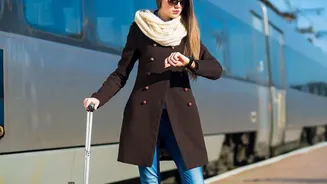
Festival-season stations are a sea of humanity. To manage this, the Railway Protection Force (RPF) is enhancing its crowd-management systems, including increased personnel, CCTV surveillance, and a new digital forecasting register to anticipate surges. For travellers, this means arriving well ahead of your departure time is non-negotiable. Check digital display boards for your platform number, as last-minute changes are common. Be wary of your surroundings and keep your valuables secure. Consider packing lighter than usual, as navigating crowded platforms and boarding a packed coach with bulky bags is a significant challenge.
Prioritise Onboard Safety and Security
Once on board, your vigilance shouldn't wane. The RPF advises passengers to never accept food or drinks from strangers and to secure their luggage under the seat with a chain and lock, especially during overnight journeys. Travelling with a valid ticket and an original ID is essential, as Indian Railways is conducting intensive checking drives throughout the festival period. If travelling on a ticket with multiple passengers, at least one person must carry their original ID proof. Also, be aware of prohibited items. Carrying flammable materials like firecrackers is a punishable offence and poses a grave danger to everyone on board.
Leverage Technology for a Smoother Trip
Your smartphone can be your best travel companion. Use the official IRCTC Rail Connect app for booking tickets, including last-minute Tatkal seats. For unreserved tickets, the UTS app allows you to buy tickets digitally, avoiding long queues at the counter. Before and during your journey, apps like the National Train Enquiry System (NTES) provide real-time updates on train running status, platform numbers, and potential delays. In case of any security concerns, grievances, or need for assistance, the Rail Madad portal and app are the designated channels for lodging complaints and seeking help.
Stay Healthy on the Move
Long journeys in crowded conditions can take a toll on your health. While many pandemic-era restrictions have eased, carrying hand sanitiser and maintaining basic hygiene is still a good practice. Pack essential medicines, especially if you have pre-existing conditions. When it comes to food, it's safest to rely on IRCTC's e-catering service, which allows you to pre-order meals from reputable restaurants to be delivered at your seat. Avoid consuming food or water from unauthorised vendors at stations or on the train to minimise the risk of foodborne illnesses.