





A Tale of Two Aesthetics
On the surface, traditional Indian crafts and minimalism seem like unlikely partners. One is rich with history, vibrant patterns, and ornate details. The other champions simplicity, neutral palettes, and uncluttered spaces. Yet, a new generation of artisans
and designers is proving they can coexist beautifully. This fusion isn't about erasing culture, but reinterpreting it. It’s about taking the soul of a centuries-old craft and giving it a new form that speaks to contemporary life. The focus shifts from heavy ornamentation to celebrating the material itself—the texture of the clay, the subtlety of the glaze, and the elegant simplicity of the form. This approach brings warmth and authenticity to minimalist interiors, which can sometimes feel cold or impersonal.
From Khurja to Your Coffee Table
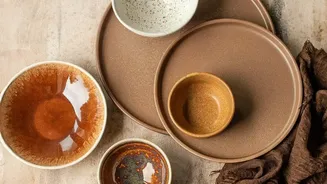
Take Khurja pottery from Uttar Pradesh, traditionally known for its vibrant floral patterns on everything from tableware to planters. Today, artisans are transforming this legacy. While the time-honoured techniques remain, the output is evolving. You'll now find Khurja artisans creating pieces with sleek, contemporary lines, matte glazes in muted tones like grey and beige, and textured finishes that appeal to modern sensibilities. They are stripping back the ornate designs to their essence, allowing the form and the quality of the ceramic to take centre stage. This evolution helps preserve a 600-year-old craft by making it relevant and desirable for a new market that values both heritage and modern design.
The New Face of Jaipur's Blue Pottery
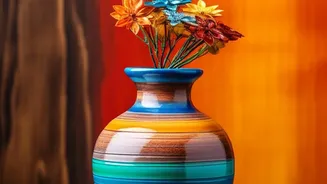
Jaipur's iconic blue pottery, with its Persian influences and striking cobalt blue motifs, is another craft undergoing a modern renaissance. Traditionally seen in intricate floral and geometric designs, artisans are now experimenting with minimalist and abstract patterns. Instead of a busy pattern covering an entire vase, a single, bold brushstroke might be the only decoration. Some artists are even expanding the colour palette to include pastels and metallics. The distinct, no-clay composition of quartz powder and glass gives Jaipur pottery a unique luminosity that fits perfectly within a clean, modern aesthetic. These contemporary pieces serve as a focal point in a minimalist room, adding a touch of royal history without overwhelming the space.
Embracing Imperfection: The Wabi-Sabi Influence
A key philosophical underpinning of this trend is the Japanese concept of wabi-sabi, which celebrates beauty in imperfection, transience, and simplicity. This idea resonates deeply with both handmade crafts and minimalist decor. Handmade pottery is never perfectly symmetrical; it bears the marks of the maker's hands, making each piece unique. Modern consumers, tired of mass-produced uniformity, are increasingly drawn to these 'perfectly imperfect' objects. They bring a sense of soul, history, and humanity into a space. This desire for authenticity aligns with the minimalist principle of owning fewer, more meaningful things. An asymmetrical vase or a bowl with a slightly uneven glaze tells a story that a factory-made item cannot.
Bringing the Trend Home
Incorporating this trend into your home is about creating a balance. You don't need to replace everything you own. Instead, think of these pottery pieces as functional art. A single, sculptural vase on a clean-lined wooden console can become a conversation starter. A set of handcrafted ceramic mugs brings a tactile, earthy pleasure to your morning coffee ritual. The key is to let the pieces breathe. In a minimalist setting, a traditional pot with a modern, simplified form doesn't have to compete for attention. It can stand on its own, adding a layer of texture, history, and quiet beauty to your home, proving that the most modern spaces often have the deepest roots.