





The Challenge of Measuring a Planet
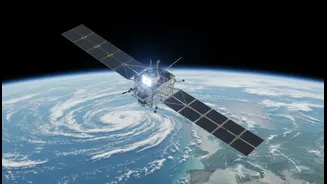
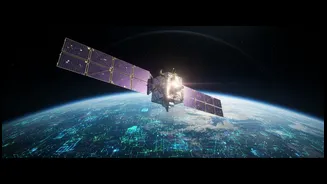
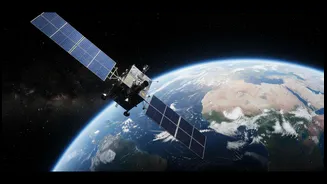
Understanding global warming requires tracking incredibly small changes across the entire planet over many decades. Scientists rely on a constellation of Earth-observing satellites to do this, measuring everything from sea surface temperature to the amount
of sunlight our planet reflects back into space. This reflected energy, or radiance, is a fundamental variable for building climate records. The problem is that no instrument is perfect. Over time, the harsh environment of space causes sensors to degrade. Furthermore, when one satellite is replaced by a newer model, the new instrument might be slightly different. Combining data from dozens of satellites, launched by different agencies over 40 years, into one seamless, reliable record is a monumental challenge. These tiny discrepancies and drifts in calibration create small but significant uncertainties in our long-term climate data. This uncertainty doesn't disprove climate change, but it can be exploited to sow doubt and slows our ability to detect subtle climate trends with absolute confidence.
NASA's New Gold Standard
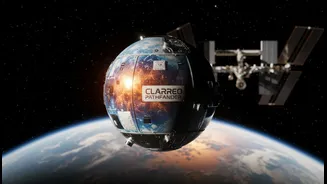
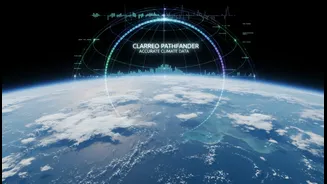
Enter NASA's CLARREO Pathfinder, or CPF, which was installed on the International Space Station in the spring of 2026 and captured its first science data in early July. The mission is not just another climate satellite; it’s a master calibrator. Its purpose is to measure reflected sunlight with an accuracy that is five to ten times greater than any of our current sensors. Think of it as a tuning fork for climate science. While other instruments can drift out of tune over time, CLARREO Pathfinder is designed to provide a perfect, unwavering reference point. The instrument, a sophisticated spectrometer, is a pathfinder—a demonstration of technology that could revolutionize how we create climate records. By providing a new, ultra-precise benchmark, it aims to reduce the margin of error in our global warming records, making them more robust and defensible than ever before.
How It Achieves Unmatched Accuracy
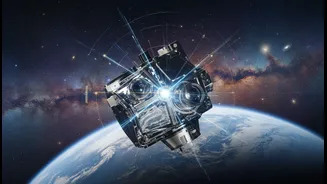
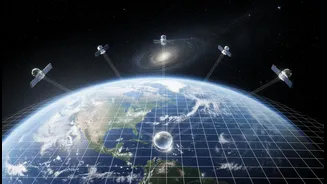
CLARREO Pathfinder's secret weapon is its ability to constantly check its own work. Most satellites are calibrated on the ground and then launched, with their accuracy slowly degrading over their lifespan. The Pathfinder, however, can regularly recalibrate itself while in orbit. It does this by pointing its sensors away from Earth and toward two incredibly stable and well-understood celestial bodies: the Sun and the Moon. By taking direct measurements of these known quantities, it can adjust for any changes in its own performance, ensuring its data remains traceable to international standards of measurement throughout its mission. This allows it to serve as an on-orbit reference standard. As it orbits the Earth, its path will cross with other climate satellites, such as CERES and VIIRS. By measuring the same patch of Earth at nearly the same time, scientists can compare the data and use the Pathfinder's hyper-accurate readings to fine-tune the measurements from the entire fleet of Earth-observing satellites.
A Clearer Future for Climate Science
The impact of this mission extends far beyond a single instrument. By improving the calibration of other sensors, CLARREO Pathfinder enhances the value of our existing and future satellite assets, including those operated by commercial companies. A more accurate and consistent global dataset means scientists can detect subtle climate trends decades sooner than is currently possible. This heightened confidence is crucial. It allows for more precise testing of climate models, helping to refine predictions about future warming and its regional impacts. When policymakers debate climate action, they rely on the certainty of the scientific data presented to them. By shrinking the error bars and removing ambiguity, the Pathfinder mission strengthens the scientific foundation upon which these critical decisions are made. It promises to give us a sharper, more undeniable picture of our planet's health.