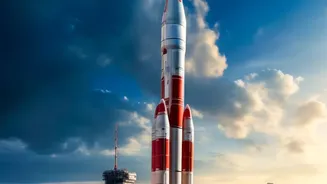




A New Era Beyond Government
For decades, a career in India's space sector largely meant one thing: securing a coveted position at the Indian Space Research Organisation (ISRO). Today, the landscape is unrecognisable. Since the government opened the sector to private enterprise in 2020,
more than 400 space startups have emerged. Companies like Skyroot Aerospace, Agnikul Cosmos, and Pixxel are not just launching rockets and building satellites; they are creating a vibrant commercial ecosystem. This shift from a government-led model to a dynamic, private-driven market has created an urgent need for a diverse workforce to build sustainable businesses, not just successful missions. India's space economy, currently valued at around $8-9 billion, is projected to reach over $40 billion by the next decade, a goal that depends entirely on building a multi-talented team.
The Rise of the Space Lawyer
As space becomes more commercialised, it also becomes more crowded and complex. This has given rise to a critical new role: the space lawyer. These legal experts are essential for navigating the intricate web of international treaties, national regulations, and commercial contracts that govern space activities. They handle everything from securing launch licenses and insuring multi-crore satellites to advising on intellectual property for new technologies and mitigating liability for space debris. With private companies now launching their own satellite constellations and forging international partnerships, lawyers who understand the unique legal challenges of the final frontier are in high demand to ensure the industry's growth is both legal and responsible.
Turning Data into Commercial Gold
Modern satellites are powerful data-gathering machines, but the raw information they collect is commercially useless without interpretation. This is where data scientists, AI specialists, and geospatial analysts come in. These professionals are the bridge between space technology and its real-world applications on Earth. They use machine learning and AI to analyse satellite imagery for a vast range of sectors, including agriculture (monitoring crop health), insurance (assessing disaster damage), and urban planning (tracking infrastructure development). Companies like SatSure and Pixxel are fundamentally data companies that use space as a vantage point, proving that some of the most valuable work in the space industry happens on the ground, in front of a computer.
Building the Business of Space
A brilliant rocket design is not a business. To succeed, India's space startups need sharp business minds. This includes finance professionals to secure venture capital, business development managers to forge commercial partnerships, and marketing specialists to create a brand. Project managers with the ability to handle complex, long-term missions with commercial deadlines are also crucial. Furthermore, as space-tech companies grow, they need communicators and storytellers who can explain their complex work to investors, the public, and policymakers, making the sector more accessible and attracting further investment and talent. Job boards for space-tech firms like Dhruva Space now list roles like 'Bid Manager' and 'Visual Designer' alongside 'FPGA Engineer', highlighting this shift.
Designing the Human Experience
Even in a field dominated by automation and robotics, human-centred design is becoming indispensable. This includes graphic designers, UX/UI developers, and product designers. These creatives work on everything from designing intuitive interfaces for mission control software to building engaging websites and social media content that capture public imagination. They ensure that the tools used to control satellites are user-friendly and that the data products delivered to clients are clear and actionable. As space technology becomes more integrated into our daily lives, from GPS to satellite internet, the need for professionals who can design a seamless user experience will only continue to grow.