

An Ambitious New Cadence
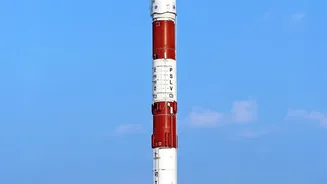
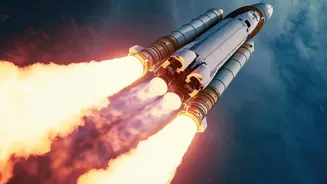
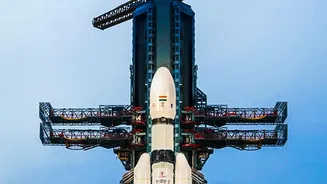
After the historic successes of Chandrayaan-3 and Aditya-L1, ISRO is not resting on its laurels. The agency has confirmed an ambitious manifest of at least seven launches planned for the 2026-2027 fiscal year. This packed schedule signals a strategic
shift from individual landmark missions to demonstrating a sustained, high-frequency launch capability. It’s a move designed to cement India's position as a major space power, capable of executing a diverse portfolio of missions ranging from human spaceflight preparation to advanced planetary science and lucrative commercial contracts. This acceleration is supported by an expanding industrial ecosystem, with over 400 private startups now contributing to India's space sector, a testament to reforms aimed at boosting domestic capacity.
The Human Frontier: Gaganyaan Takes Flight
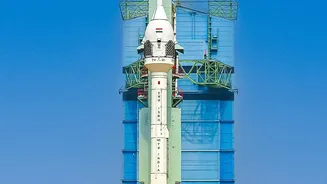
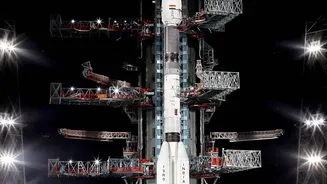
At the heart of this new chapter is Gaganyaan, India's flagship human spaceflight program. The upcoming schedule is dominated by preparations for sending Indian astronauts, or 'Gaganyatris', into orbit. Key missions include the first uncrewed test flights, G1 and G2, slated for the latter half of 2026. The G1 mission will serve as a crucial end-to-end systems test of the crew module and its life support systems. The G2 flight will follow, carrying 'Vyommitra', a humanoid robot, to simulate astronaut behavior and monitor cabin parameters. These flights are critical dress rehearsals for the first crewed mission, currently targeted for 2027, which will make India only the fourth nation to achieve independent human spaceflight.
Eyes on Earth and Beyond
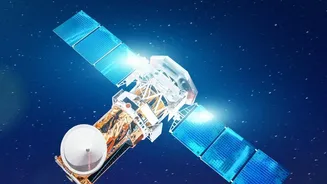
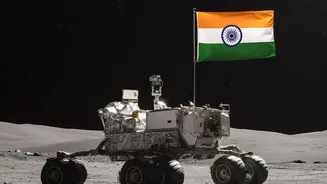
While Gaganyaan captures the public imagination, ISRO's upcoming scientific missions are equally groundbreaking. A major highlight is the recently launched NISAR (NASA-ISRO Synthetic Aperture Radar) satellite, a powerful collaboration with NASA. Now in its operational phase, NISAR provides unprecedented, all-weather data on Earth's changing ecosystems, ice sheets, and land surfaces, crucial for managing climate change and natural disasters. Looking further afield, plans are firming up for Chandrayaan-4, an ambitious mission to retrieve samples from the Moon, targeted for 2028. This complex mission, requiring two separate launches, will build on Chandrayaan-3's success and demonstrate advanced capabilities like in-orbit docking.
Building the Blocks for Future Dominance
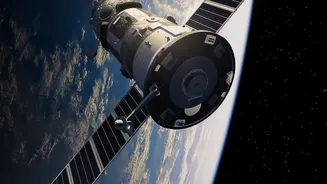
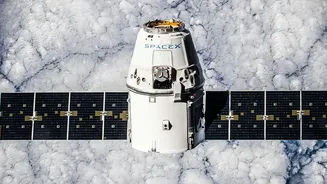
Several upcoming missions are focused on developing next-generation technologies that will underpin India's long-term space ambitions, including a future Indian space station. The Space Docking Experiment (SPADEX) is a prime example. This mission involves two small satellites launching together to practice autonomous rendezvous and docking procedures in orbit. Mastering this technology is a prerequisite for both the Chandrayaan-4 sample return and for assembling a modular space station. Concurrently, ISRO is continuing its work on a Reusable Launch Vehicle (RLV), with the 'Pushpak' spaceplane prototype having completed several autonomous landing tests. While still in an experimental phase, the RLV program is vital for making space access more sustainable and cost-effective in the long run.
Fuelling a Nationwide Innovation Engine
This flurry of activity does more than just secure India's place in the cosmos; it acts as a powerful catalyst for innovation back on Earth. Each launch and mission generates demand for high-tech components, software, and services, creating opportunities for a rapidly growing ecosystem of private companies. The 'Gaganyaan effect' in particular is expected to inspire a new generation of students to pursue careers in science, technology, engineering, and mathematics. The visibility of these high-profile missions drives public engagement and national pride, which in turn encourages further investment in research and development. From improving disaster management and agriculture with satellite data to creating high-skilled jobs, ISRO's work has a tangible impact on India's overall economic and social development.