






The Flexible Advantage of Soft Bags
Frequent flyers often swear by soft-sided bags, and for good reason. Unlike their hard-shell counterparts, these bags have a bit of give. This flexibility allows them to be squeezed into tight overhead compartments or under the seat in front of you more
easily. Their fabric construction often makes them lighter than rigid cases, giving you a precious few hundred grams more for your belongings before hitting the weight limit. This pliability is a major asset when you're trying to maximise your packing space, letting you conform the bag's shape to its contents rather than the other way around. For a weekend trip or as your primary cabin luggage, a soft bag can feel like a packer's best friend.
The Two Hard Rules: Weight and Dimensions
The freedom a soft bag offers ends abruptly at the check-in counter and boarding gate. All Indian airlines strictly enforce two primary rules for cabin baggage: weight and dimensions. For most domestic economy flights on carriers like IndiGo, SpiceJet, and Akasa Air, the cabin baggage weight limit is a firm 7 kg. Air India is slightly more generous, often allowing 8 kg in economy. These limits are not suggestions; they are mandatory. The second rule is size. While dimensions can vary slightly, a common standard is 55cm x 35cm x 25cm. A soft bag’s flexibility is a double-edged sword here—if you over-stuff it, it can easily bulge beyond these prescribed measurements.
Mastering the Sizer Cage
At the airport, the ultimate test for your carry-on is the metal baggage sizer cage. If your bag doesn't fit comfortably within this frame, it fails the test. This is where many travellers get caught out. A soft bag that seemed perfectly sized at home can become a problem when it’s packed to the brim. The flexible fabric can bulge outwards, making it too wide or thick for the sizer. Airline staff are trained to be strict about this; if it doesn't fit, it must be checked in, which often incurs hefty last-minute fees. A wise strategy is to pack your soft bag but leave a little room, ensuring it can still be compressed slightly to slide into the sizer without a struggle.
Don't Forget the Weighing Scale
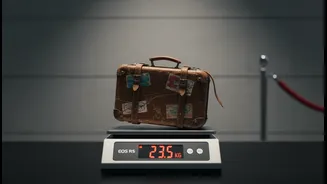
While dimensions are a key hurdle, weight is the more straightforward, non-negotiable rule. A 7 kg limit is standard across most Indian low-cost carriers for your main cabin piece. Some airlines also specify a combined weight for your cabin bag and a small personal item like a laptop bag or purse. For example, IndiGo allows one cabin bag of 7 kg and a personal item of up to 3 kg. Gate agents are increasingly weighing bags at boarding, not just at check-in. If your bag is found to be overweight at the gate, you will be asked to pay for excess baggage, which is significantly more expensive at the airport than pre-booking online.
Smart Packing for the Savvy Traveller
To make a soft bag work for you, not against you, strategic packing is key. Use packing cubes to compress clothing and keep the bag's contents organised and firm, which helps prevent shapeless bulging. Place heavier items at the bottom of the bag, which helps it maintain a more stable, compact shape. Rolling your clothes instead of folding them not only saves space but can also create a more uniform structure inside the bag. Be mindful of fragile items; without the rigid protection of a hard-shell case, electronics and other breakables are more vulnerable. Keep your laptop in a dedicated padded sleeve and place it in the middle, cushioned by clothes.