

The Core Idea: Creating Visual Interest
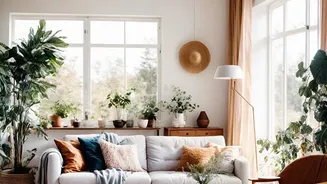
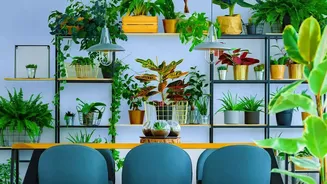
A room full of plants that are all the same height and shape can feel flat and monotonous. The key to a vibrant, jungle-like feel is creating layers of visual interest. By combining plants of different sizes and leaf structures, you guide the eye around
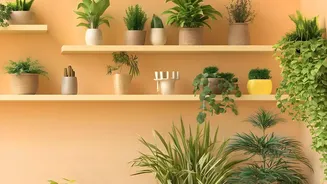
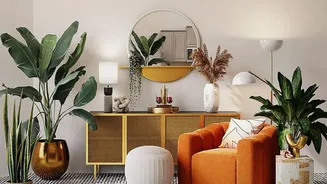
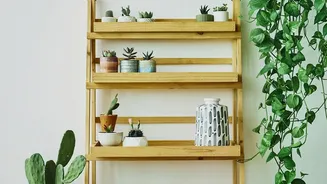
the space, adding depth, rhythm, and a sense of abundance. Contrast is your best friend. A tall, upright plant creates a vertical line, while a bushy plant adds volume, and a trailing one softens edges. This dynamic interplay makes a simple corner feel like a curated botanical display. The best part? Many of the most effective and easy-to-grow plants are also the most affordable.
Use the 'Thriller, Filler, Spiller' Method
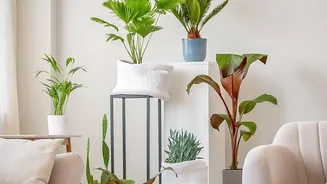
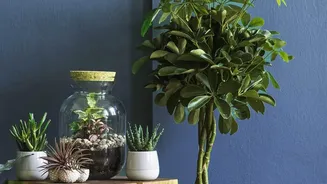
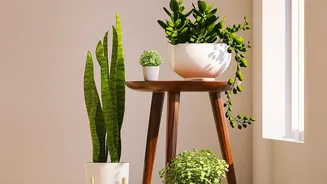
A classic concept from outdoor container gardening works wonders indoors. The 'Thriller, Filler, Spiller' method is a simple framework for creating balanced and beautiful plant groupings. First, choose your 'Thriller': a tall, dramatic plant that serves as the focal point. Think of an upright Snake Plant or a small Fiddle Leaf Fig. Next, add your 'Fillers': medium-sized, mounding plants that surround the thriller and add fullness. A Peace Lily or a lush Chinese Evergreen works well here. Finally, introduce your 'Spillers': low-growing or trailing plants that cascade over the edges of pots or shelves, connecting the arrangement to the surface it sits on. A classic Pothos or a Spider Plant is perfect for this role.
Choose Your Vertical Layers
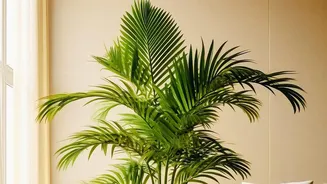
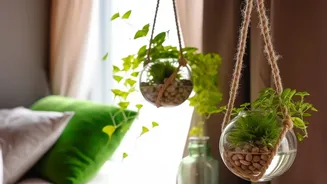
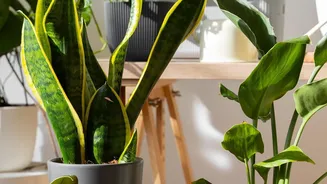
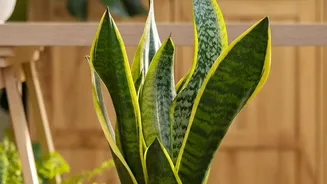
To apply the 'Thriller, Filler, Spiller' idea, you need a mix of plants. For your tall 'thrillers', look for architectural plants that draw the eye upward. Good, low-cost options include the Snake Plant (Sansevieria), which is famously hard to kill, or a young Parlor Palm for a tropical feel. For 'fillers', you need plants that create body in the middle layer. The Peace Lily offers glossy leaves and occasional white blooms, while the ZZ Plant has wide, dark green leaves and tolerates low light. The Aglaonema (Chinese Evergreen) comes in various patterns and is also quite forgiving. For your 'spillers', trailing plants are key. Golden Pothos is incredibly easy to grow and propagate, making it a budget-friendly favourite that can hang from baskets or trail down shelves. Spider Plants also fit this category, producing little 'pups' that can be potted to create new plants for free.
Play with Leaf Shapes and Textures
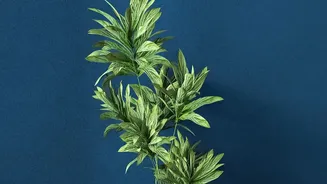
Height is only half the story. To truly elevate your plant styling, pay attention to the leaves themselves. Juxtaposing different shapes and textures prevents the arrangement from looking like a uniform green mass. Pair the bold, heart-shaped leaves of a Philodendron with the slender, spiky foliage of a Dracaena. Place a plant with waxy, smooth leaves, like a Peperomia, next to one with feathery fronds, like a small fern. This contrast in texture adds a layer of sophistication. Even within the same colour family, the difference between a matte leaf and a glossy one can create a subtle but effective pop.
Arranging for Maximum Impact
Once you have your plants, think about placement. Grouping is more effective than scattering. An empty corner is a perfect canvas for a plant cluster. Place your tallest 'thriller' plant at the back, your 'fillers' in the middle, and your 'spillers' at the front. A classic designer trick is to group plants in odd numbers, such as threes or fives, which often looks more natural and less staged than even-numbered groupings. Don't be afraid to cheat. If you lack a tall plant, use what you have. Placing a smaller plant on a stack of books, a small stool, or an upside-down pot can create the illusion of height and build a more dynamic, layered look without spending extra money.