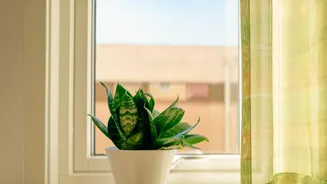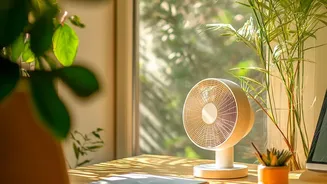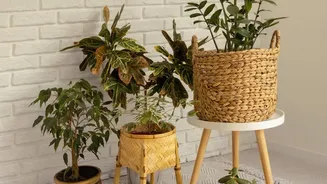





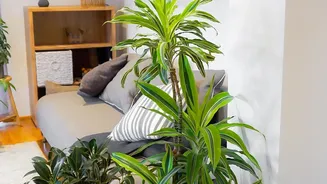
The dream of pristine indoor air often leads to a simple question: should I buy a leafy houseplant or an air purifier? While both are popular solutions, the most effective strategy for cleaner air at home is more nuanced than a simple 'versus' debate.
The Myth of the Air-Purifying Plant
The belief that houseplants are natural air scrubbers is a popular one, largely stemming from a 1989 NASA study. The research showed plants could absorb volatile organic compounds (VOCs) in a small, sealed chamber. However, recent scientific reviews have put this into a real-world context. Your home is not a sealed lab; it has constant air exchange. Studies now show you would need an impractical number of plants—anywhere from 10 to 1,000 per square metre—to even begin to compete with the air-cleaning capacity of a building's standard ventilation, let alone a purifier. While plants do absorb some pollutants, the rate is too slow to make a meaningful impact on the air quality in a typical room.
The Mechanical Power of an Air Purifier
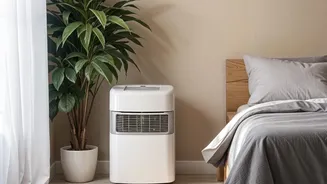
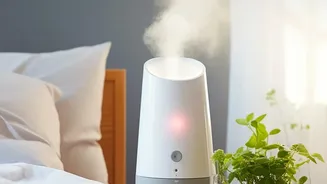
This is where technology takes the lead. A quality air purifier with a High-Efficiency Particulate Air (HEPA) filter is designed for one job: to remove airborne contaminants. These devices work by forcing room air through a dense, fibrous filter that can capture 99.97% of particles down to 0.3 microns in size. This includes common irritants like dust, pollen, pet dander, and the dangerous PM2.5 particles found in smoke and smog. For gaseous pollutants like VOCs from paint or furniture, a purifier needs an activated carbon filter to be effective, as gases pass right through a HEPA filter. In terms of sheer volume and speed, there is no contest: a single air purifier cleans air thousands of times faster than a houseplant.
The Unseen Enemy: Outdoor Pollution
Here's the crucial factor often missed in the plant-versus-purifier debate: the primary source of many indoor pollutants is actually the outdoors. Fine particulate matter (PM2.5) from traffic, industrial emissions, and construction dust easily makes its way into our homes. It seeps in through gaps in windows and doors, ventilation systems, and even tiny cracks in the building itself. Studies show that a significant percentage of the harmful outdoor air pollution we're exposed to, we actually breathe inside our homes. Running an air purifier without addressing this constant influx is like trying to empty a bathtub with the taps still running. Your purifier works much harder, its filters clog faster, and the overall air quality remains compromised.
A Smarter Strategy: Seal First, Then Purify
The most effective approach to clean indoor air is a two-step process. First, limit the entry of outdoor pollutants. This doesn't require making your home completely airtight. Simple measures can make a huge difference. Check that your windows and doors are properly sealed with weatherstripping to close any obvious gaps. During periods of high pollution, keep windows and doors closed as much as possible. If you use an air conditioner, set it to recirculate the indoor air rather than pulling in polluted air from outside. By reducing the 'load' of pollutants entering your home, you allow your air purifier to work much more efficiently, maintaining cleaner air with less effort. Think of it as defence before offence.
The True Value of Your Indoor Plants
So, should you throw out your plants? Absolutely not. While they may not be air_purifying powerhouses, their benefits are real and important for well being. Research has shown that the presence of indoor plants can reduce stress, lower blood pressure, and improve mood and focus. They add natural beauty to a space and can have a calming effect. They also play a minor role in regulating humidity. It's simply a matter of assigning them the right job. See your plants as a vital part of creating a soothing and aesthetically pleasing home environment—a boost for your mental health, not a primary tool for your respiratory health.