


The Discovery of a Cosmic Messenger
On July 1, 2025, astronomers using the NASA-funded Asteroid Terrestrial-impact Last Alert System (ATLAS) in Chile spotted a faint object moving at incredible speed. Initially, it looked like any other asteroid, but its trajectory was all wrong. Scientists
quickly realised it was on a hyperbolic path, meaning it was moving too fast to be gravitationally bound to our sun. This was the tell-tale sign of an interstellar interloper—an object that had journeyed through the void between stars before wandering into our neighbourhood. It was officially designated 3I/ATLAS: the third ('3') interstellar ('I') object discovered, with 'ATLAS' honouring the survey system that found it. The discovery triggered a global campaign, with telescopes around the world turning to get a better look at our newest guest before it disappeared back into deep space.
What We Know About 3I/ATLAS
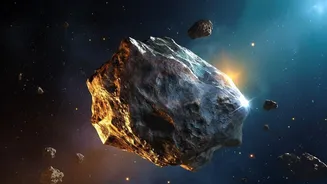
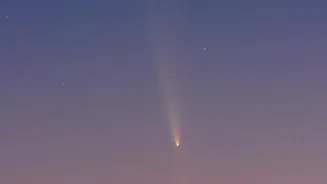
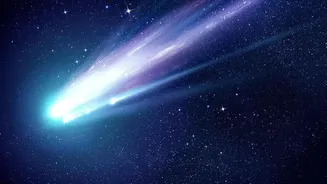
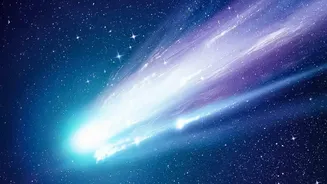
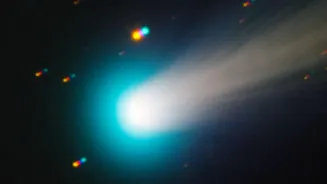
Unlike its famously mysterious predecessor, 'Oumuamua, 3I/ATLAS quickly showed signs of being an active comet. Observations revealed a fuzzy coma—a cloud of gas and dust—surrounding its solid nucleus, which is a classic feature of a comet heating up as it approaches a star. The comet made its closest approach to our sun in late October 2025, passing safely just inside the orbit of Mars. Travelling at a blistering speed of about 58 kilometres per second, it posed no threat to Earth. While estimating the size of such a distant object is difficult, observations suggest its nucleus is likely somewhere between a few hundred metres and a few kilometres in diameter. Tracing its path backwards, astronomers determined it entered our solar system from the direction of the constellation Sagittarius, near the dense centre of our Milky Way galaxy.
A Growing Family of Visitors
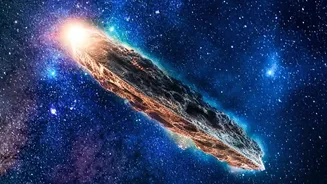
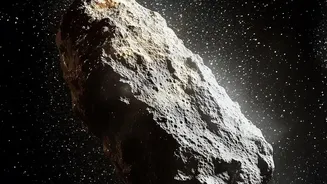
The arrival of 3I/ATLAS builds on a revolutionary new field of astronomy that began in 2017. Before then, all known comets and asteroids were native to our solar system. That changed with the detection of 1I/'Oumuamua, a bizarre, cigar-shaped object that sped through our system without any visible cometary tail, leaving scientists with a host of puzzles. Two years later, amateur astronomer Gennady Borisov spotted 2I/Borisov, which looked and behaved much more like a conventional comet, offering the first clear glimpse of a comet from another star. 3I/ATLAS is the third member of this exclusive club. Each new visitor provides a crucial data point, allowing scientists to compare these objects and begin to understand the diversity of smaller bodies that exist across the galaxy. They are, in essence, free samples delivered to our doorstep from distant, unknown worlds.
The Great Unanswered Questions
Despite the flurry of observations, the biggest mysteries about 3I/ATLAS endure. Chief among them is its exact origin. While we know the direction it came from, pinpointing its parent star is nearly impossible. However, analysis of its trajectory suggests it may have originated in the Milky Way's 'thick disk,' a population of very old stars. This makes 3I/ATLAS potentially ancient, perhaps as old as 11 billion years, offering a relic from the galaxy's early history. Another major question is its composition. Detailed analysis of the light from its coma will help scientists understand what kind of ices and organic materials it contains. Are they similar to the building blocks of our own solar system, or radically different? These chemical clues could reveal volumes about the conditions in the planetary system where it formed billions of years ago. As with its predecessors, the data gathered from 3I/ATLAS will be studied for years, holding the promise of profound new insights into how planetary systems are built across the cosmos.