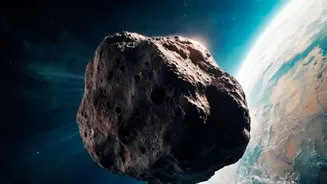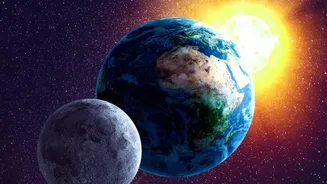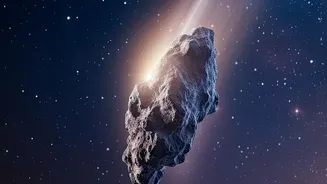

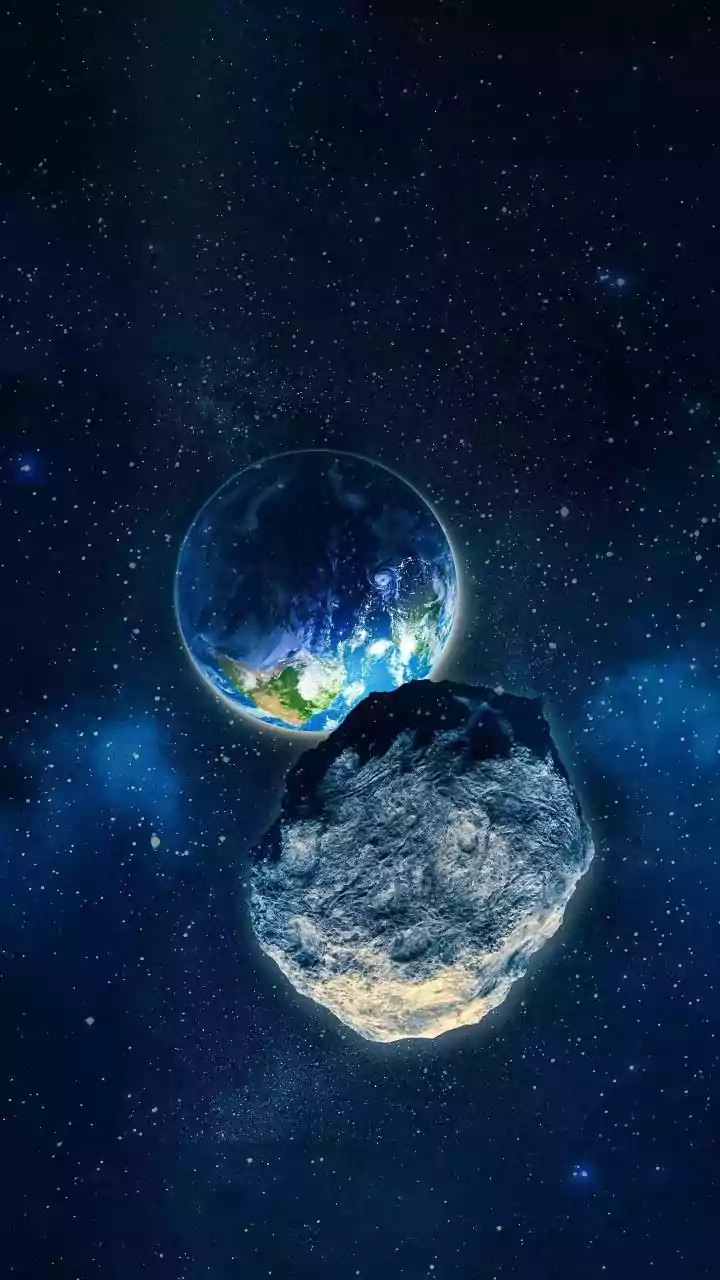
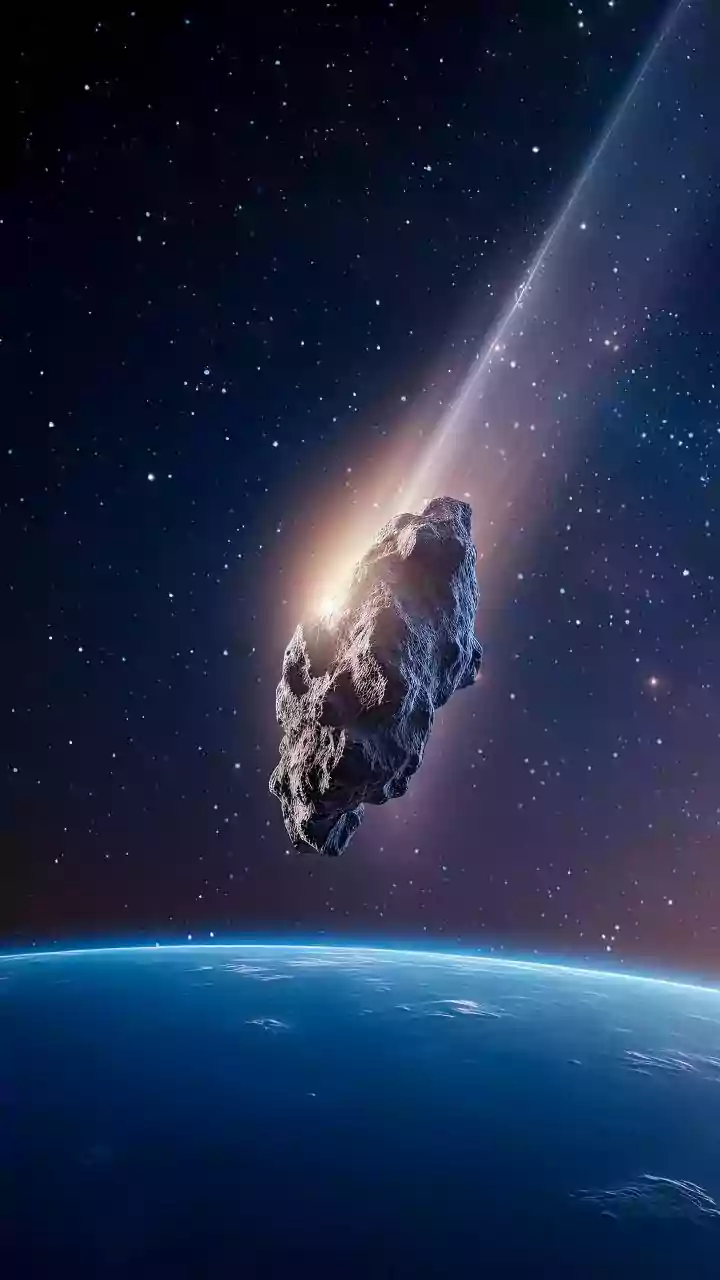


For the past few months, our Moon hasn't been our only natural satellite. Earth quietly captured a tiny asteroid, now known as 2026 QQ8. But this cosmic guest is getting ready to leave, reminding us of the dynamic nature of our solar system.
What Exactly Is a Mini-Moon?
While our
large Moon has been a constant companion for billions of years, a 'mini-moon' is a much more fleeting phenomenon. The term is used by astronomers to describe small asteroids that get temporarily snagged by Earth's gravitational pull. These objects, typically just a few metres across, are pulled from their own orbits around the Sun and end up looping around our planet for a short time—anywhere from a few weeks to several years. Unlike our Moon, their orbits are often chaotic and unstable, influenced by the gravitational tug-of-war between the Earth, Moon, and Sun. Eventually, they are flung back out into the solar system to continue their journey around the Sun.
Meet Our Latest Visitor: 2026 QQ8
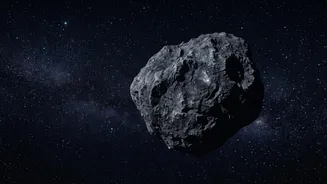
Asteroid 2026 QQ8 is a textbook example of a mini-moon. It is a small space rock, estimated to be about two metres (or six feet) in diameter, roughly the size of a large appliance. It was first spotted in August 2026 by Hungarian astronomer Krisztián Sárneczky. Initially, scientists weren't sure if it was a natural asteroid or a piece of old space junk, a common challenge with such small, dim objects. After several weeks of observation, its natural origin was confirmed, and calculations revealed it had been captured by Earth's gravity back in April 2026. Despite being our cosmic neighbour, you won't be able to see it; it is far too small and faint for the naked eye or even amateur telescopes.
A Farewell on the Cosmic Horizon
The visit from 2026 QQ8 is scheduled to be a short one. The same gravitational forces that pulled it in are now preparing to let it go. Astronomers predict that the mini-moon will break free from Earth's orbit sometime in early December 2026, though some estimates suggest it could linger until January 2027. Once it escapes, it will resume its own independent orbit around the Sun. There is no threat of impact. At its tiny size, even if its trajectory had crossed our planet's path, it would have harmlessly burned up in the atmosphere, creating at most a bright meteor.
Are These Visitors Common?
While the discovery of a mini-moon always generates excitement, they are not as rare as you might think. According to Matthew Payne, director of the Minor Planet Center, there is likely at least one mini-moon orbiting Earth at any given time, though sometimes there are none and sometimes there are a couple. The main reason we don't hear about them constantly is that they are incredibly difficult to detect. Their small size, considerable distance, and rapid movement make them a challenge for even powerful sky surveys to spot. Historically, only a few have been confirmed, including 2006 RH120, which orbited Earth for about a year, and 2020 CD3, which stayed for about three years.