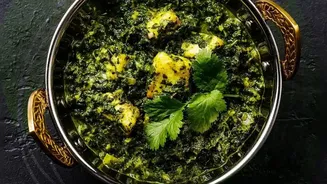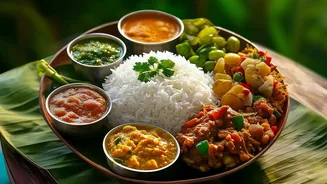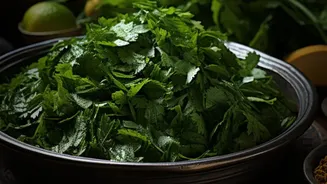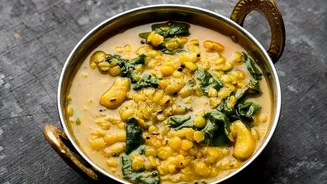




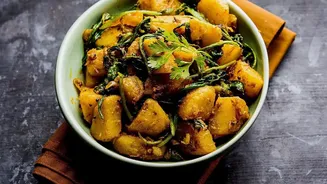
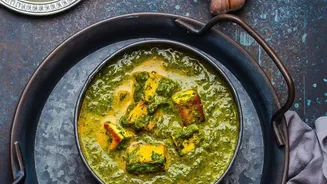

Rich, nutritious, and deeply comforting, saag is a cornerstone of Indian cuisine. But 'saag' is not a single dish; it's a whole category of recipes built around a glorious variety of leafy greens, each offering a unique taste and texture.
What Exactly Is Saag?
The word 'saag'
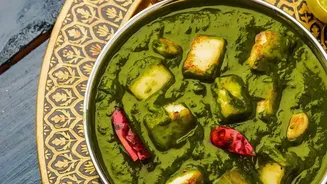
comes from the Sanskrit 'shaak', which simply means leafy green vegetables. Unlike a specific recipe like 'palak paneer' (which is made only with spinach), saag is a broader term for a dish made from various cooked greens. Traditionally, it involves slow-cooking one or more types of leafy greens with spices, ginger, and garlic until they are tender and flavourful. The mixture is often blended to a rustic or smooth consistency and can be enriched with ingredients like paneer, cream, or a finishing touch of ghee. While famously associated with the Punjab region, especially during winter, variations of saag are enjoyed across the Indian subcontinent, with each region adapting the recipe to its local produce and palate.
Mustard Greens (Sarson)
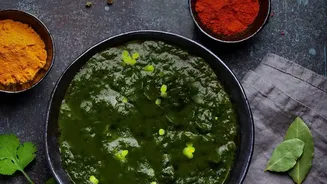
Mustard greens are the star of the most iconic saag of all: Sarson ka Saag from Punjab. These greens have a distinct, peppery, and slightly bitter flavour that defines the dish. Because of their robust taste, they are almost always balanced with other, milder greens. Rich in vitamins A, C, and K, mustard leaves give saag its characteristic earthy depth. The classic preparation involves cooking them until perfectly tender and then blending them into a coarse puree, often served with 'makki ki roti' (maize flour flatbread) and a dollop of white butter.
Spinach (Palak)
Spinach is perhaps the most common green used in saag preparations, both in India and internationally. Its mild, slightly sweet flavour and soft texture make it incredibly versatile. In many saag recipes, spinach is used to balance the bitterness of more pungent greens like mustard or fenugreek. It wilts and cooks down quickly, creating a smooth, creamy base for the dish. Spinach is packed with nutrients like iron, calcium, and magnesium, making any saag it's in a nutritional powerhouse.
Bathua (Chenopodium or Lamb's Quarters)
A winter speciality in North India, bathua is a traditional and essential ingredient in an authentic Sarson ka Saag. Also known as goosefoot or lamb's quarters, bathua has a distinct, slightly nutty flavour and helps create a wonderfully creamy texture when cooked and blended. It's known to be a powerhouse of nutrients, including calcium, potassium, and vitamin A. Its presence helps to soften the sharp taste of mustard greens and contributes to the overall complexity of the final dish.
Fenugreek Leaves (Methi)
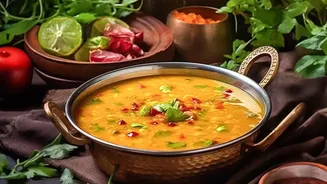
Fenugreek leaves, or methi, are added to saag for their unique and aromatic bitterness. A small quantity goes a long way in adding depth and a complex flavour profile that can't be replicated. While used more sparingly than spinach or mustard greens, methi is prized for its health benefits, including being rich in iron and helping with digestion. The pleasant bitterness of fenugreek complements the other greens, making the saag more fragrant and layered.
Other Notable Greens
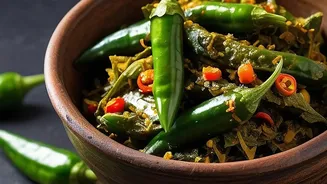
The world of saag is vast, and cooks use a wide array of local and seasonal greens. Radish greens (mooli ke patte) add a mild pungency. Amaranth leaves (chaulai or laal saag) bring a beautiful colour and are rich in iron. In Bengal and Odisha, greens like poi saag (Malabar spinach) and kalmi saag (water spinach) are popular. Some modern recipes even incorporate non-traditional greens like kale, collard greens, and broccoli, showcasing the dish's incredible adaptability.