


Gathering Your Essential Ingredients
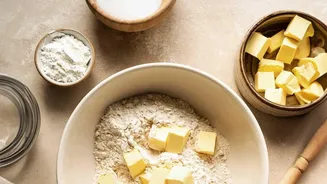
The magic of great naan lies in its simple but specific ingredients. For a soft and flavourful dough, you will need all-purpose flour (maida), which provides the classic texture. A leavening agent is crucial; you can use either instant yeast or a combination
of baking powder and baking soda. Full-fat plain yogurt (curd) is a key component, as it tenderises the dough, giving it a characteristic softness and slight tang. You will also need a bit of sugar to help activate the yeast and promote browning, salt for flavour, lukewarm milk or water to form the dough, and a little oil or melted butter for richness. For the topping, have finely minced garlic and fresh coriander leaves ready, along with extra butter or ghee for brushing.
Preparing the Perfect Soft Dough
Begin by activating your leavening agent. If using yeast, dissolve it with sugar in lukewarm water or milk and let it sit for about 10 minutes until it becomes frothy. If using baking powder and soda, simply whisk them into your dry flour. In a large bowl, combine the flour, salt, and your leavening mixture. Create a well in the center and add the yogurt and oil or melted butter. Gradually mix everything together, adding more lukewarm liquid as needed, until a soft, slightly sticky dough forms. Don't be tempted to add too much extra flour; a soft dough is the secret to a soft naan.
Kneading and The Crucial Resting Period
Turn the dough out onto a lightly floured surface and knead for 5 to 10 minutes. The goal is a smooth, elastic ball of dough that is no longer overly sticky. This process develops the gluten, which gives the naan its signature chewy texture. Once kneaded, place the dough in a lightly oiled bowl, cover it with a damp cloth or plastic wrap, and let it rest in a warm place. A yeast-based dough should be left for 1-2 hours, or until it has doubled in size. For a yeast-free dough using baking soda and powder, a shorter rest of 30-60 minutes is sufficient to let the gluten relax, making it easier to roll.
Rolling and Shaping Your Naan
After the dough has rested, punch it down gently and divide it into equal-sized balls, about 8 to 10 per batch. On a floured surface, take one ball and roll it into the classic teardrop or oval shape, about 1/4 inch thick. Don't roll it too thin, as this can prevent it from puffing up properly. Now, sprinkle the top surface with finely minced garlic and chopped coriander. Gently press them into the dough with the rolling pin to ensure they stick during cooking.
The Art of Cooking on a Tawa
The cooking process is what mimics the intense heat of a tandoor. You must use a cast-iron or heavy-bottomed tawa; a non-stick pan will not work for this technique. Preheat your tawa over medium-high heat until it is very hot. Take your rolled naan and brush water liberally on the plain side (the side without garlic). Immediately place the naan, water-side down, onto the hot tawa. The water will make it stick to the surface. Cook for 1-2 minutes until you see large bubbles forming on top. Now, holding the tawa by its handle, carefully flip the entire tawa upside down over the open gas flame. Cook the top side directly in the flame for 30-60 seconds, moving it around to get an even, charred finish with classic brown spots.
Finishing Touches and Serving
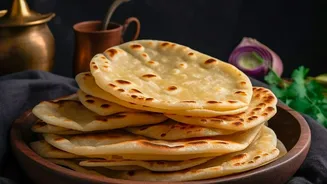
Once cooked, use tongs to carefully pry the naan off the tawa. The bottom should be golden brown, and the top should be beautifully blistered. Immediately brush the hot naan generously with melted butter or ghee. This not only adds incredible flavour but also keeps the bread soft. Stack the finished naans in a cloth-lined container or cover them with a kitchen towel to keep them warm and soft while you cook the rest of the batch. Serve immediately with your favourite curry or dal for an authentic, restaurant-quality experience at home.